Interview with Soul to Soul Reissue Producer David Peck

As the popular music documentary got off the ground in the late 1960s and early 1970s, there weren’t nearly as many centered on soul music as white rock music. One of the few from soul’s early ’70s heyday will be re-released May 12 on DVD and, for the first time, on Blu-ray. Soul to Soul focuses on a March 6, 1971 concert in Accra, the capital of Ghana, with a spectacular lineup featuring Wilson Pickett; Ike & Tina Turner; the Staple Singers; Santana; Les McCann & Eddie Harris; and the Voices of East Harlem. It’s not strictly soul, as Santana were a rock band fusing blues, Latin, jazz, and psychedelia, with just one black member; Les McCann & Eddie Harris were more jazz than soul, although their most celebrated song, “Compared to What,” certainly had a lot of soul; and the Voices of East Harlem drew most upon gospel. But it spans a wide spectrum of African-American and soul-influenced music, even if not all of the performers would be filed under “soul” in record stores.
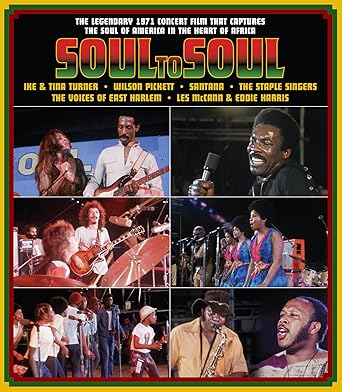
The 2026 Blu-ray re-release of Soul to Soul.

In the early 1970s, just a few other feature-length documentaries showcased soul music. Wattstax, a one-day August 1972 soul festival in the football stadium where the Los Angeles Rams played at the time, featured Stax Records label stars like Rufus Thomas, the Bar-Kays, and Isaac Hayes. The more obscure Save the Children, held in early fall 1972 in Chicago at the PUSH Expo, had a star-studded lineup including Marvin Gaye, Gladys Knight, the Jackson Five, the Temptations, Jerry Butler, and Bill Withers. Soul Power spotlighted a concert held in conjunction with the 1974 heavyweight bout in Zaire between Muhammad Ali and George Forman, with James Brown the top attraction, but also including the Spinners, Miriam Makeba, B.B. King, and Manu Dibango, among others.

Soul to Soul is different from these in its scope, also devoting plenty of screen time to the visiting US performers’ interaction with everyday West African life, whether in markets, with local musicians, or visiting the Elmina Castle, from where Africans were shipped to slavery in the Americas. The approximately 100,000-strong audience, too, was not the usual soul crowd, comprised almost wholly of Africans. Directed by Denis Sanders, the camera operators included some pros who made quite a name for themselves with other movies. Most notably, among the crew were Les Blank (credited as “Leslie Blank”), who made several roots music documentaries and the excellent documentary Burden of Dreams (on the making of Werner Herzog’s troubled movie Fitzcarraldo), and famed cinematographer Vilgos Zsigmond, who subsequently worked on major productions like Deliverance, Robert Altman’s The Long Goodbye, and The Deer Hunter.

The film was co-produced by Richard Bock and Tom Mosk, whose father, Edward Mosk, served as executive producer. The idea originated when Tom Mosk asked James Brown’s management whether they’d be interested in a movie of Brown’s October 1970 concert in Lagos, Nigeria. Although Mosk had equipment and crew to use as he was in Lagos with work on the film Things Fall Apart, Brown’s people didn’t go for it. However, Tom was then inspired to, with the help of his parents, get a concert staged and filmed elsewhere in West Africa. After much negotiation, the concert took place and the Soul to Soul movie was filmed in Black Star Square on the edge of the Atlantic Ocean.

Soul to Soul was not seen by many or widely distributed upon its release later in 1971. In 2004, the Reelin’ in the Years company produced a DVD reissue. Disappointed with the limited promotion of that edition, Reelin’ in the Years president David Peck recently produced it for reissue on both DVD and Blu-ray, taking advantage of the opportunity to restore the film in the process for its 2026 release. There is also a soundtrack (in CD and vinyl formats) featuring music heard in the film, which can be ordered here.

The Reelin’ in the Years archive has 30,000 hours of film, and Peck has produced and/or directed many music documentaries, and was nominated as producer for The American Folk Blues Festival Vol. 1, which compiled performances at European festivals between 1962 and 1966. Reelin’ in the Years were also behind compilations of vintage film performances by British Invasion hitmakers Dusty Springfield, the Hollies, Herman’s Hermits, and the Small Faces, as well as one for the Pretty Things that is included in their Bouquets from a Cloudy Sky box. He spoke to me about Soul to Soul shortly before its 2026 reissue.

Why did Soul to Soul get released now in 2026, after it had been on DVD in 2004?

Arny Schorr of Liberation Entertainment [whose Liberation Hall division partnered with Reelin’ in the Years for the re-release] called me and said, “Hey, we’d like to work with you. What do you have in your archive?” I’d kind of buried this film because it didn’t do well, because of what I feel Rhino [who issued the 2004 DVD edition] did twenty-plus years ago. I said I got this, and all the artists have cleared. I’d love to do it. Once [Liberation] were like “great, let’s do it,” I really got into it. It held a much deeper meaning for me.

What was the deeper meaning?

With the times in which we live, let’s face it, there are certain forces, shall we say, in this country that want to erase the past. I felt this film really reflects an important moment in history. Not just the music, which we love, but general history. To see these artists go to Africa, where obviously hundreds of years before their ancestors had been kidnapped and forced on ships, it was a really emotional experience.

What I love about the film, it’s not heavy-handed. They don’t tell you that, but it’s obvious that’s what it is. From all the commentary tracks that we did twenty years ago, those artists that we interviewed did speak about that. But I think even without that, it’s pretty clear. This is March of ’71, and at that time, the Back-to-Africa movement was very, very big. A lot of African-Americans wanted to go home and discover their roots.

There aren’t too many feature-length films from the time centered around live soul music performances. The only ones I’m familiar with besides Soul to Soul are WattstaxSave the Children, and Soul Power

I guess there’s the Isley [Brothers] film from ’69, It’s Your Thing, but that’s just really a concert. Of course, Summer of Soul [the acclaimed 2021 documentary based around performances at the 1969 multi-week Harlem Cultural Festival] that Questlove did. But those are really concerts he turned into something with modern interviews. When it was shot, it wasn’t shot with anything other than, here are some great soul artists, jazz artists, what have you on stage.

This film [Soul to Soul] and Wattstax was an event. Obviously in the case of Wattstax, it was the anniversary of the Watts riots in ’65. Not exactly to the date, but it was the seventh year anniversary. Wattstax was August of ’72, Save the Children was September ’72, and Soul Power—which [was staged around the same time as] the Ali-Foreman fight, rumble in the jungle—was in Zaire, [September] ’74. I think they all have their own unique message. Taken together, those films really do show the culture, certainly the music, of the African-American community at that time.

How is Soul to Soul most different from the other films?

I think Save the Children is really a concert for the most part. There are cutaways to Chicago, there’s the late Reverend Jesse Jackson speaking. But that’s just a really, really amazing concert. You don’t see the audience. It’s a dark room [Chicago’s International Amphitheater]. You see the moment where the Jackson 5 come on and the kids scream, but you really don’t see the audience interacting.

Where in Soul to Soul and Wattstax, there is a give and take. Or to quote Rufus Thomas, a push and pull. But that’s just a really, really amazing concert. Wattstax was a little more than that, although the film, [while] they shot interviews with Richard Pryor and Ted Lange, later of Love Boat fame, again was pretty much just a concert. Again, an amazing concert. But also honoring what had happened seven years earlier in Watts.

Whereas Soul to Soul I think is way beyond merely a concert. Because [of] the fact that these artists flew to Africa, not just to do a concert, but to interact in the local communities in Accra and outside. And obviously, visiting the slave castles in Elmina. I’m not gonna say what film is better, because I think they’re all incredible and have something to offer. But I do think that Soul to Soul is more probably historically significant, in my opinion. Others will obviously perhaps disagree with that, of course. But that’s my feeling, and I’ve obviously watched all of those films.
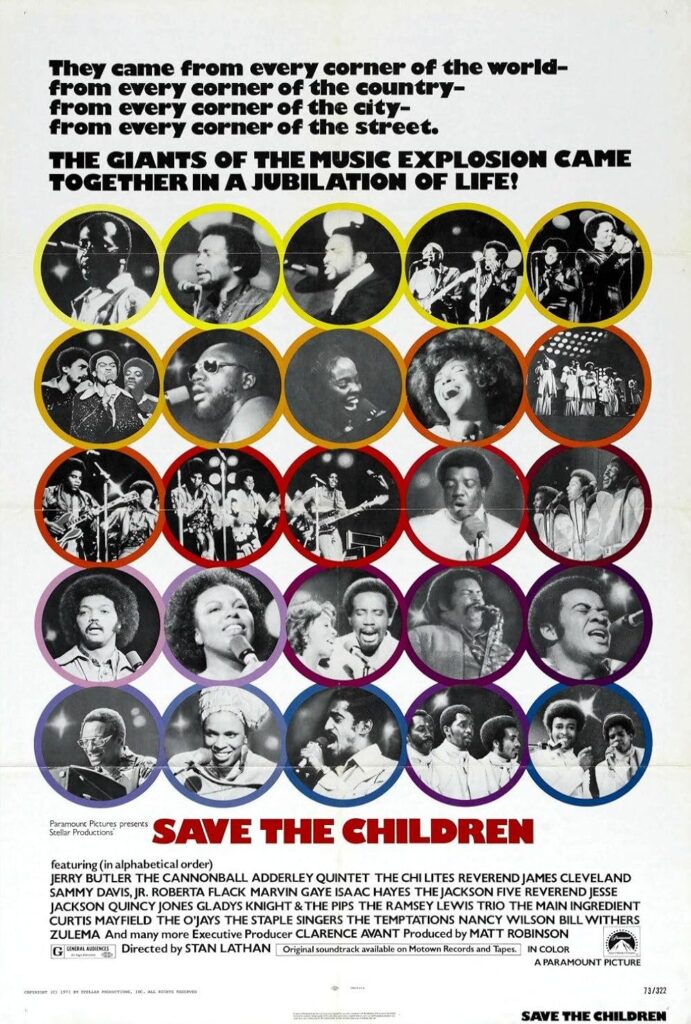
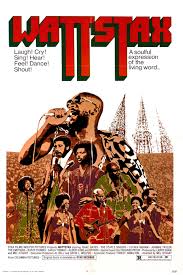
Posters for early-’70s soul documentaries Save the Children and Wattstax

The film wasn’t seen by too many viewers when it was first released in August 1971. Why do you think its run wasn’t more successful?

If you look at the time, it was still pretty splintered musically. Yes, obviously, the Staple Singers were played on white radio when they had hits and stuff. But musically, it was the black community that primarily went to see Soul to Soul or Wattstax or Save the Children. I also think probably studios and the powers that be didn’t see much of a reason to promote it. 

Also, and I’m actually thinking about this for the first time ever, Soul to Soul is really pre-Shaft and pre-Superfly. So Soul to Soul predates the blacksploitation genre. Obviously Shaft and Superfly brought that into the mainstream. So perhaps it would have done better had it come out later. I don’t know the answer to that. Shaft was late ’71, ’72, and Superfly was later in ’72.

Could Soul to Soul‘s commercial prospects have been limited by its featuring quite a few scenes of life in Ghana and music by Ghanians, instead of only the performances at the concert?

That’s quite possible. But I don’t think the intention was ever to do that. You heard the commentary where the producer, Tom Mosk, was talking about it. He’s sadly not with us anymore, he died a few years ago; I wish he was here to see the re-release. But he did talk about what their intentions were with this. It never was supposed to be a black Woodstock. It was to bring that music into Africa, because James Brown had turned him down when he’d approached him in Lagos, Nigeria to see about being filmed, because the cameras were there for another event.

I certainly think there’s a National Geographic aspect. But I imagine the filmmakers, certainly the late Denis Sanders, was very deliberate in this. Speaking of Denis Sanders, I think it’s pretty amazing that he directed the film just right after [the 1970 concert documentary] Elvis: That’s the Way It Is came out. Now the movie that’s in the theaters with Elvis [Epic: Elvis Presley in Concert] features outtakes from that film. Talk about Soul to Soul and Elvis in the same year. It is kind of cool.

In your work on Soul to Soul‘s re-release on DVD and Blu-ray, what were the biggest surprises to you?

The biggest surprise was the enthusiasm of the crowds in Africa. I say that because as someone who has for decades now been representing European television stations and all of these great acts that you and I love [who] went over there, a lot of times, audiences are more sitting appreciatively rather than engaged. I’m sure they love it, I don’t mean that they didn’t. It’s just they were more subdued in their reactions.

But these African people in Ghana were just blown away. Imagine if you were in a coma for most of your life, and you woke up right now, and someone played you a Beatles record or something. “Oh my god, what is this?” I imagine for the African community in Ghana at the time, seeing their counterparts—because they’re very well aware of slavery and how their brothers and sisters were hauled away hundreds of years earlier—it was probably an emotional moment for them as well.

So that was something, the intensity and enthusiasm of the African crowds. I guess the surprise was they were able to pull this off in such a short time frame. It’s pretty amazing to stage a concert like that.
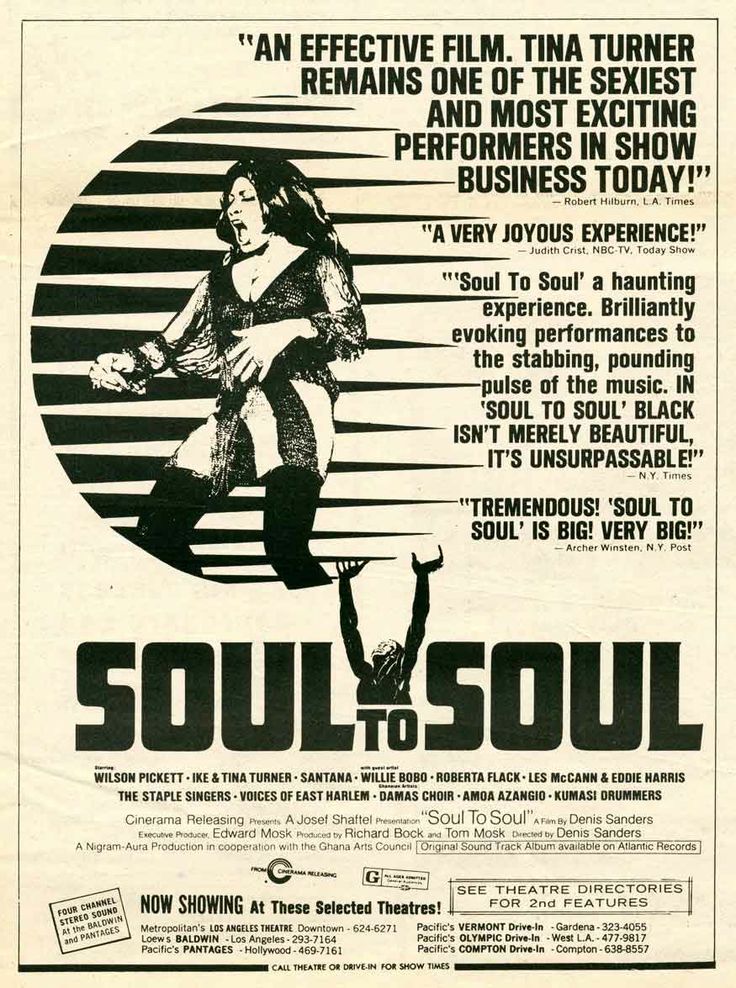
1971 poster for the original release of Soul to Soul.

There were only a few months between when the idea to film a James Brown concert in Lagos was turned down, which started work on a different soul documentary to be staged in West Africa, until the Accra concert in Soul to Soul took place in March 1971. Especially considering the conditions given for staging the concert and film kept changing during that entire time. The contract wasn’t signed until the day before the show.

The producers went through hell and back. It was kind of what you’d expect in a corrupt government—a lot of shady dealing and promises and grifting and so forth. There are many people whose hearts were in the right place, but unfortunately there were people there at the time that weren’t. The Mosk family were so focused on getting this done, because Tom Mosk’s father, Edward Mosk, was an entertainment lawyer. So he had been battle-tested, so to speak. Maybe not to this extent. But I think he knew how to deal with bullshit in the industry, even if it was the Ghanaian industry. So he was able to pull it off. 

I think it is kind of a modern miracle. Wattstax, or Save the Children, or Summer of Soul, those were all in America, in a city. You get permits and a venue. In Harlem it was outdoors; Wattstax was the [Los Angeles Memorial] Coliseum. In Chicago, it was in some auditorium. I don’t imagine that was the difficult part. Getting the artists on board and so forth, and management and whatnot, is the bigger task. 

But here, they had to get the artists on board at such a short notice. Fly ‘em to a foreign land, and at the time [Ghana] certainly was not part of the western culture. They were not a major power, shall we say. Getting that taken care of was no easy task.

Some of the especially interesting scenes are the crowd shots during Wilson Pickett’s performance. There are a lot of security officers keeping order, sometimes right in the middle of the audience. Some of them are very stern and poker-faced, but others are grinning widely and really enjoying the concert.

[The way the security officers acted at the Soul to Soul concert] did always stand out to me. I think you see some of that in the closing number, [Pickett’s] “Land of 1000 Dances,” too. They’re trying to sort of control the crowd, but they’re also like with the crowd, and they realize it. They’re looking at the stage at times. I think it’s a beautiful moment. Today a security guard would be fired if they did that, I imagine.

You know what I also noticed? Looking at a crowd of 100,000 Ghanaians, not a fucking cell phone in sight! (laughs) The music was hitting them, and they were one with the stage. The vibe, and the feeling between the audience and the performers.

As Rob Bowman’s extensive liner notes detail, there were a few artists who were approached or considered for the bill, but didn’t appear, like Aretha Franklin, Booker T. & the MG’s, Fela Kuti, and Louis Armstrong. Gospel star Marion Williams signed a contract, but pulled out a couple weeks before the concert. But it seems like the final bill—Wilson Pickett, Ike & Tina Turner, Santana, the Staple Singers, Les McCann & Eddie Harris, the Voices of East Harlem, and Roberta Flack [whose performance unfortunately could not be cleared for the re-release]—were about as good of a lineup as could have realistically been assembled for a project like this.

If I could go back in time—and we’ll exclude James Brown, ‘cause he turned it down—the only two artists that I would have added to the bill—or one of the two, because at that time they were very big—would have been Stevie Wonder or Marvin Gaye. ‘Cause there’s no Motown represented. I’m not saying they didn’t try. Marvin Gaye, could you imagine him doing “What’s Going On” [which was shooting up the charts on the very day of the concert]? Or “Inner City Blues”? Or Stevie Wonder.

Now Stevie Wonder probably wouldn’t have been that well known in Ghana at the time, because [his 1972 LP] Talking Book hadn’t come out. Yes, he had all these great ‘60s songs and whatnot. But I still think Stevie would have been incredible on that stage if he had done it. Although I don’t think he had his band together yet, that band with [guitarist] Ray Parker Jr. and so forth.

An unusual feature of the Blu-Ray/DVD is that it has four commentary tracks. And those have more than four people talking about the film and their roles in it: Mavis Staples on one, Les McCann and Kevin Griffin (of the Voices of East Harlem) on one, producer Tom Mosk on one, and Ike Turner, Santana drummer Michael Shrieve, Ghanaian drummer Obo Addy, and Kevin Griffin again on another.

One we didn’t get a chance to interview, we would have loved to know what Neal Schon [thought. Schon, who along with Carlos Santana handled the guitar parts in Santana’s set, had only recently joined the band, and had only turned seventeen the previous month]. I think this was his first gig with the band, his first major gig. Santana was, I think, the perfect choice. I think if they had gotten the Who, it would have been a terrible choice, as much as I love the Who. If you were gonna bring a group that was not primarily black, they were the group to do it. Because their sound was so steeped in Afro-Cuban sounds.

Santana, I remember Carlos telling me back in 2004, he felt that this is one of the best performances he ever gave. It meant the world to him, this performance. It’s funny, because obviously there’s Woodstock, Fillmore, all those places the original lineup played. But this is really special.

Roberta Flack did just one song onstage in the original film, and that’s not in the re-release as she declined to grant clearance. 

With regards to the other part [in which her music was heard], which was the most powerful in the original film, you hear her singing “Freedom Song” in the slave dungeon. It was recorded there. 

As you explain in the liner notes, in that scene, “In order to keep the integrity of what I felt was such an important and powerful scene, I came up with the idea of replacing Roberta Flack with Mavis Staples’ moving observations she had described in her commentary track as to what the slaves endured and how visiting the Elmina slave castle deeply affected her.”

Personally, I actually think the Mavis section works better because it gives context to the sequence. I think unless you know the original, people just accept this. [In the original film], you don’t see [Flack]. You just hear her. Those shots in the film that you’re looking at now, those are all in the original film. But if you’ll notice carefully, we had to repeat the shot. Because I needed to extend the sequence out to fit Mavis’s voice.

Wilson Pickett, who arguably is the star of the film in many ways – his performance is killer – he was on board. One day, I got a call from his manager. The manager was great. He goes, “I got bad news for you. Wilson doesn’t want to do it anymore.” I go, “Wait. Why?” “Well, he watched the film and he felt like he wasn’t the star of the film like he’s supposed to be. Ike & Tina Turner open the film, blah blah…if you want to try to convince him, come up with something. Get it to me by tomorrow.”

So I looked at the film. Here was my argument to Wilson: yes, Ike and Tina Turner open the film. But there’s credits all over the screen. But they make a big deal of you coming off that plane. You’re the star there. And guess what, Wilson? The last seven and a half minutes of the film is you. You’re the closer. You’re the headliner. I wrote it in a way where the next day the manager goes, okay, you changed his mind. Here’s a signed contract. So I had to really be a producer at that moment.

So while I don’t take any credit for that original film, I really moved mountains and worked miracles back in ’04 to help get these artists on board. Cathy Carapella [who worked on talent clearances] did most of the heavy lifting. But I had to step in and be creative. And that was one of those times.
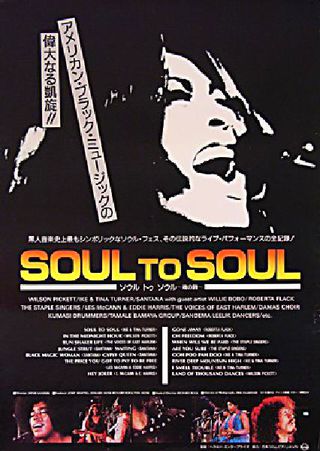
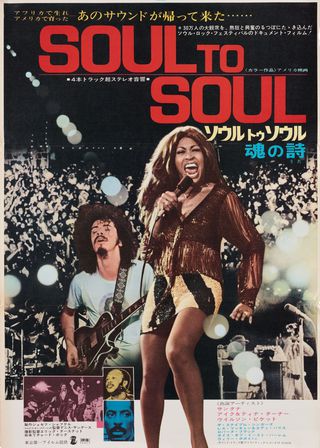
Japanese posters for Soul to Soul.

There aren’t many DVD/Blu-rays of any kind that have four commentary tracks.

That was all me. [For the previous 2004 re-release], the label fought me. I paid for all of them myself. I wanted to get as much information, history, meat on the bones, whatever you want to call it. It meant the world to me to do that. With Michael Shrieve, Obo Addy, and Ike Turner, I put them all in one track, but in sections where it was relevant. Even now, when Arny Schorr came to me, I said look, I want to keep the original commentary tracks. 

I remember when we did Ike, and we recorded this – he actually lived in San Diego. There was a point where it sounded like Ike was crying. He got so emotional talking about his mom; it was during the sequence in the Ghana Arts Council, where they’re all dancing and seeing the local Africans, and singing and dancing and so forth. 

That was really powerful. Look, I’ll never defend anything about Ike Turner, ever. But at that moment, in that moment, in the studio, he was human. I want to be very clear, I am not excusing him of anything else that he did. But it was very touching and moving to hear, ‘cause that was genuine.

The film didn’t do well by Rhino [in its 2004 DVD edition], ’cause they just dropped the ball. Wattstax and Soul to Soul[came] out on DVD right around the same time. I remember saying to the A&R department at Rhino, “Hey, I’ve got a really great idea. Why don’t you reach over to [the company who put out Wattstax]. Why don’t we market these together?” “Oh, that’s a stupid idea.” “No,” I said, “these films are bookends in many ways. Anyone who is going to see Wattstaxwould love Soul to Soul, anyone seeing Soul to Soul would love Wattstax.” I could picture the ad in my head, right? They told me I was high. So that was the end of that. It went nowhere. They put no budget into it, nothing.

Speaking of another soul concert film from a few years later that we’ve mentioned, although James Brown’s pretty good in Soul Power, it’s too bad the Mosks couldn’t have done two soul documentaries—Soul to Soul of course, but also the film of Brown in 1970 in Lagos that they wanted to do. That was when Bootsy Collins was in his band on bass, and his brother Catfish on guitar. They weren’t in the band too long, only about a year, and there’s not too much of them playing with Brown on film.

I think Brown was a little past his peak, on record anyway, by the time he did the Soul Power concert in Zaire.

Can you imagine James Brown in August of 1970 in Lagos, Nigeria, even just to hear it?

In one of the commentary tracks, Michael Shrieve says he re-recorded some of his drums for the film’s audio because the sound quality (not the performance quality) wasn’t good on them. Were any other parts redone because of technical issues?

Yes. Because there was something with the electrical current and cycles, there were some tracks that were damaged. For example, I have the multis for some of the Staples. I can see a couple different phrasings of Mavis. But it’s so spot-on, when they did it, they must have been looking at the footage. So someone like Mavis, who’s like almost in a church and just moaning and groaning and shouting and screaming, to re-create that…I don’t know how much was overdubbed. I know some stuff was fixed later, because they had a problem recording. I wish Tom Dowd [legendary Atlantic Records engineer/producer, who mixed the concert’s sound] was still alive to ask him.  

There’s just one outtake on the DVD/Blu-ray, which shows Ike & Tina Turner doing “I’ve Been Loving You Too Long.” They also memorably did that in the Gimme Shelter documentary on the Rolling Stones’ 1969 US tour, but this is a complete and yet more explictly sensual version. You write in the liner notes that if anyone has other outtakes, they should contact you. The new edition has only been out for a short time, but has anything like that come up?

Nothing. I still feel like under someone’s bed somewhere, whatever, are those outtakes. Because obviously, they didn’t just film one song. You don’t do that. It kills me to think – you look at Ike & Tina Turner, they filmed the opening [song] “Soul to Soul,” “River Deep Mountain High,” “Ooh Poo Pah Doo,” and “I Smell Trouble.” Well, I’m sure they did more. I wish there were more outtakes, other than that one song. That version is pretty risqué, “I’ve Been Loving You Too Long.” I don’t even have the recording of the whole set. I would be happy if I had that. But glass half full, because thank god we were able to restore the film also. It looked much better than the 2004 release.

Soul to Soul can be ordered through this link.
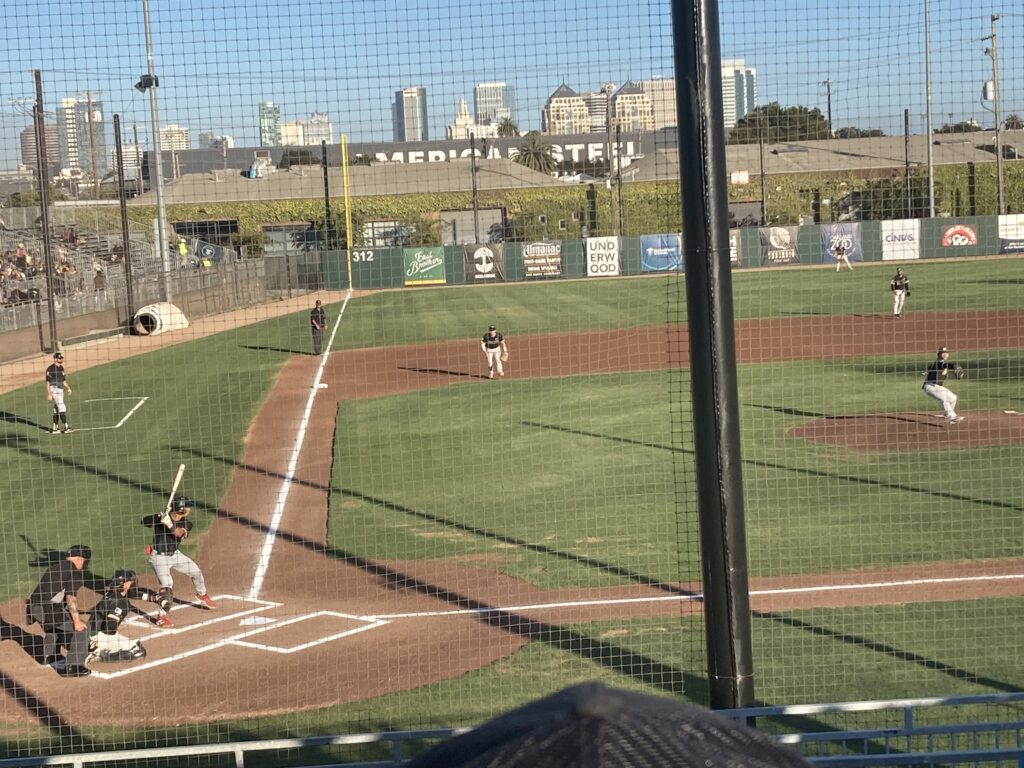
Oakland Ballers Game and Park

With the departure of the Oakland A’s to Sacramento after 2024, the San Francisco Bay Area has only one major league baseball team. Oakland itself, however, does still have a professional baseball team. Or, as many people like to term it, a semi-professional team. Those are the Ballers, who play in the independent Pioneer League.

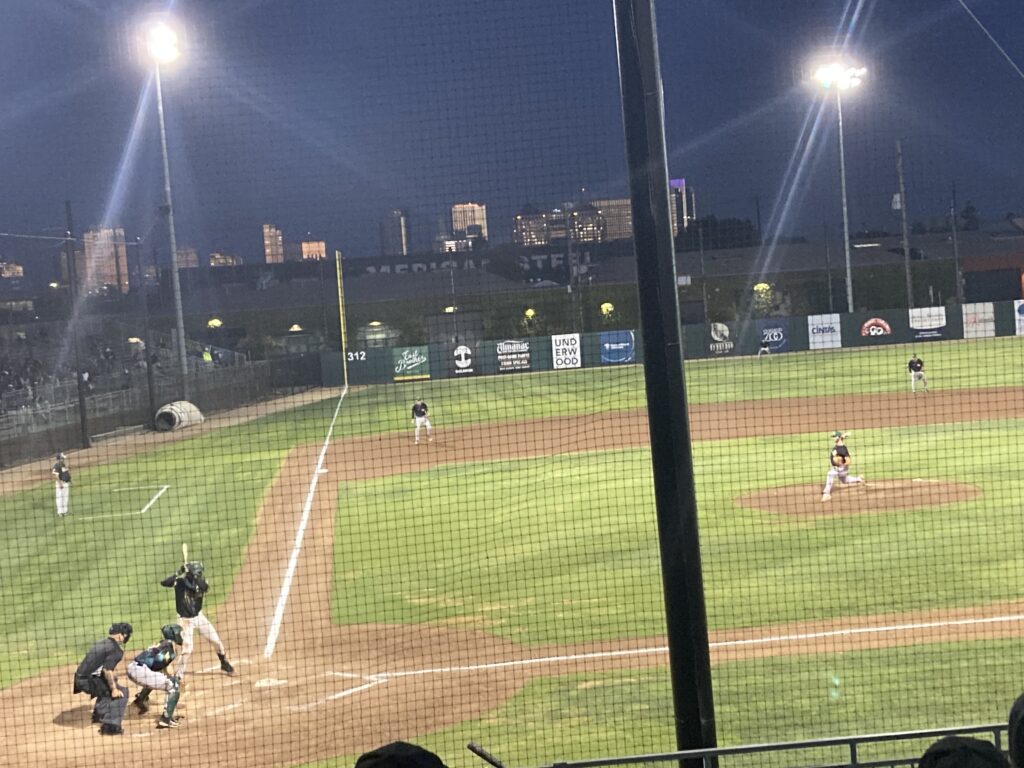
FIrst pitch of Ballers game at Raimondi Field, August 19, 2025, with downtown Oakland skyline in the background.

I went to my first Ballers game last August, I admit in part because I was given a free ticket for a good seat with friends. And I was curious to check out the scene. I’ve been to a few minor league games at the AAA level, but only a couple semipro games, and those almost thirty years ago in Arcata, California, far to the north of Oakland. That ballpark had the most eccentric dimensions I’d ever seen, with right field ballooning out to what seemed like 500 feet from the plate.

The Ballers ballpark has much more standard dimensions. It’s not a big league park, however, of the kind the Oakland Coliseum was, even as dilapidated as that facility was in its final years. Raimondi Ballpark has just 4100 seats, and was a little more than half full on the Tuesday night of my game. The differences between the Pioneer League and the majors, or even the minors, are present in other ways, like the Port-a-pottys instead of indoor bathrooms.

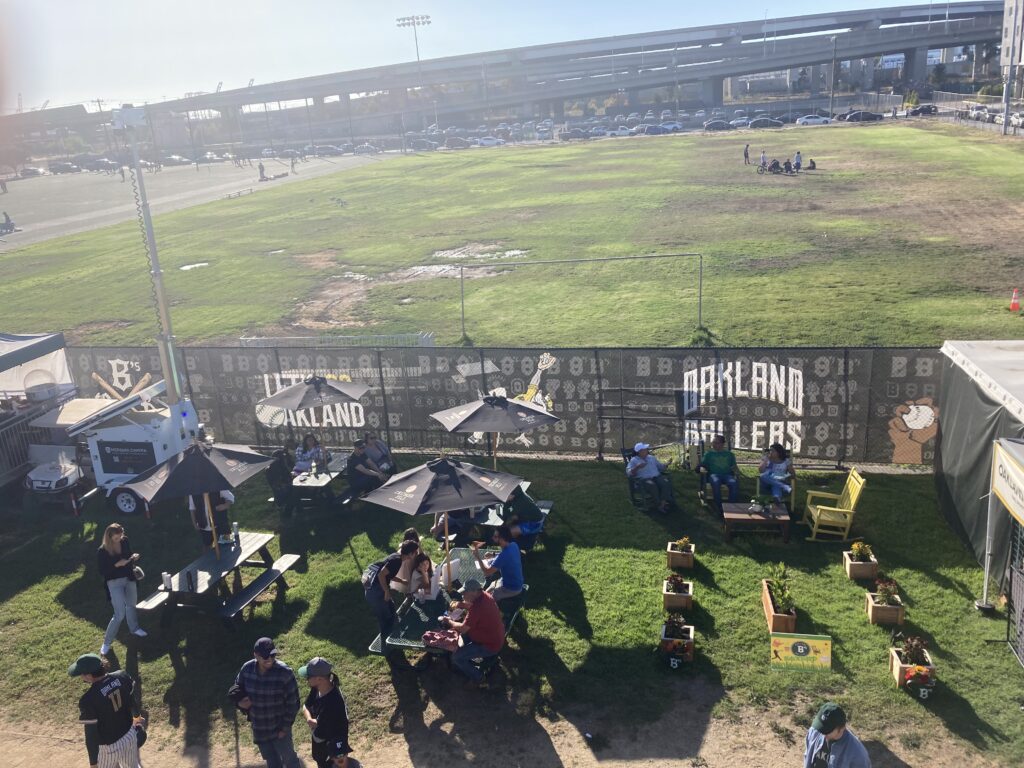
Picnic area of Raimondi Park, which is next to a huge empty field (background) not affiliated with the ballpark.

More interesting than the adequate facilities, however, are the differences between the baseball on the field. The most striking is the speed of the pitchers. The velocity of each pitch is shown on the scoreboard, as it is in the majors. Most of the pitches are five-to-ten miles per hour slower than they are in the majors, usually ranging from the mid-80s to the very low 90s. 

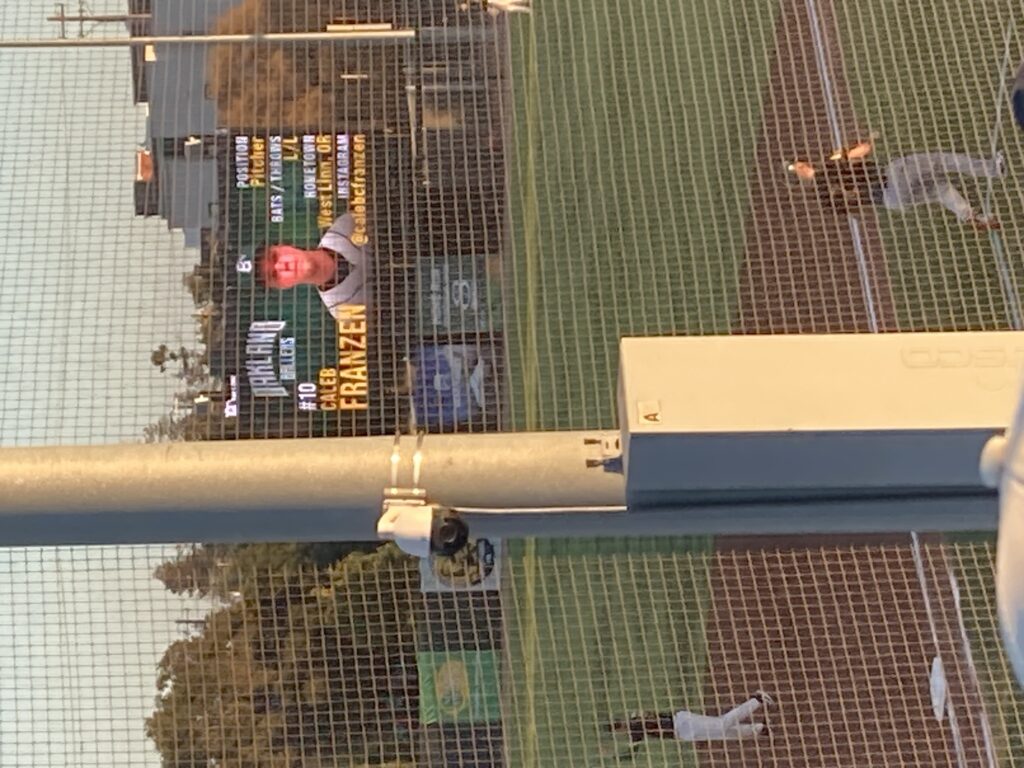
Raimondi Park scoreboard.

This might in part account for the high offensive numbers in the Pioneer League. Before the game, the Ballers were batting .305 as a team. At the time, there was no National League player with qualifying at-bats over .300, and 2024 came close to the first in history where a major league had no .300 hitter, Trea Turner being the sole the NL hitter to clear the .300 mark (with .304). The Ballers’ team batting average wasn’t even close to the top in the league; the Idaho Falls Chukars had a team batting average of .352. They’d scored 807 runs in 88 games, an average of a little more than nine a game. Their leading hitter was also leading the league, with an average of .459.

The Ballers were in first place – with a record of 68-21 and a winning percentage of .764, again outsize numbers unseen in the majors — largely because of their pitching, which led the league with a 5.05 ERA. The Colorado Springs Sky Sox had a team ERA of 12.31. That’s not a misprint. 12.31!

Doing some cursory online research, a few theories are advanced for the preponderance of offense in the league. One is that some of the parks, though not the Ballers’ in the pretty low elevation of their West Oakland neighborhood, are at high elevations, where the ball will carry more. Another is the previously cited lower speeds of the pitching. Maybe the defense isn’t up to the standards of major and minor leagues either. I saw a couple of low line drives between shortstop and third base go for doubles, which seems pretty rare at upper levels.

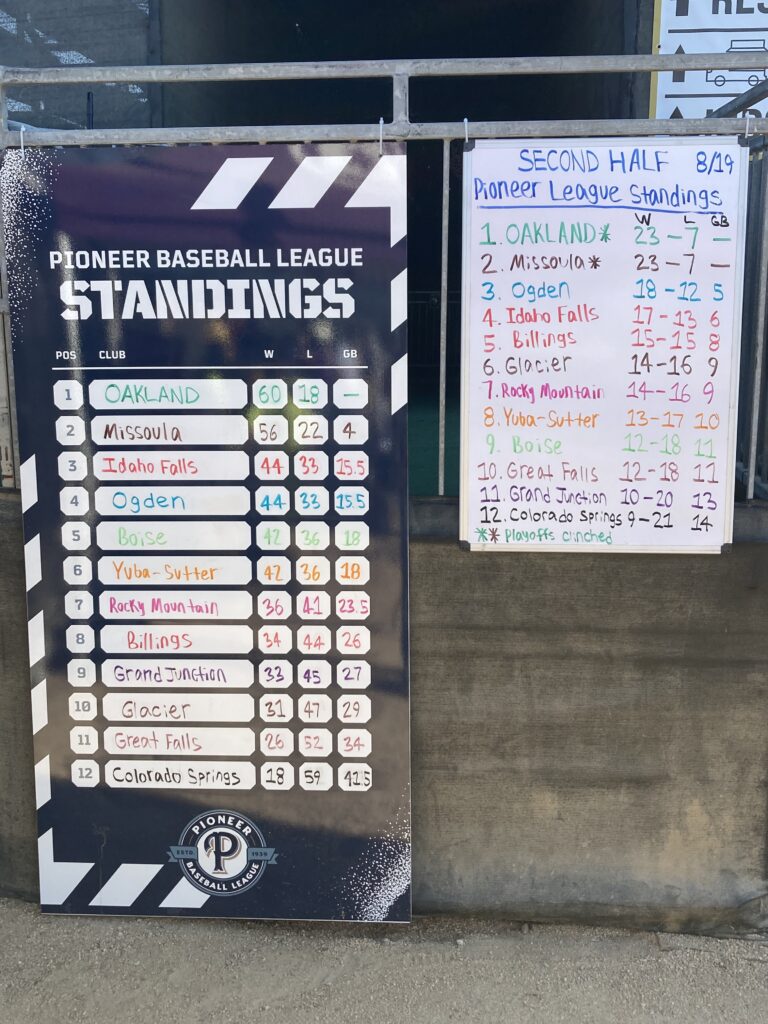
Hand-written standings board, near the concession stand.

Leaving aside that this isn’t the kind of play you see at higher levels – even with the major league Oakland A’s were losing 112 games in 2023 – what’s the experience like? There are positives, much like what you’ll get at minor league games. All of the seats are pretty close to the field, and while the prices aren’t as lower as you’d expect from major league admission fees, $33 gets you a seat on top of the not-very-big bleachers between home and first. Fully uniformed players actually walk through the crowds near the concession and picnic area on the way to the field.

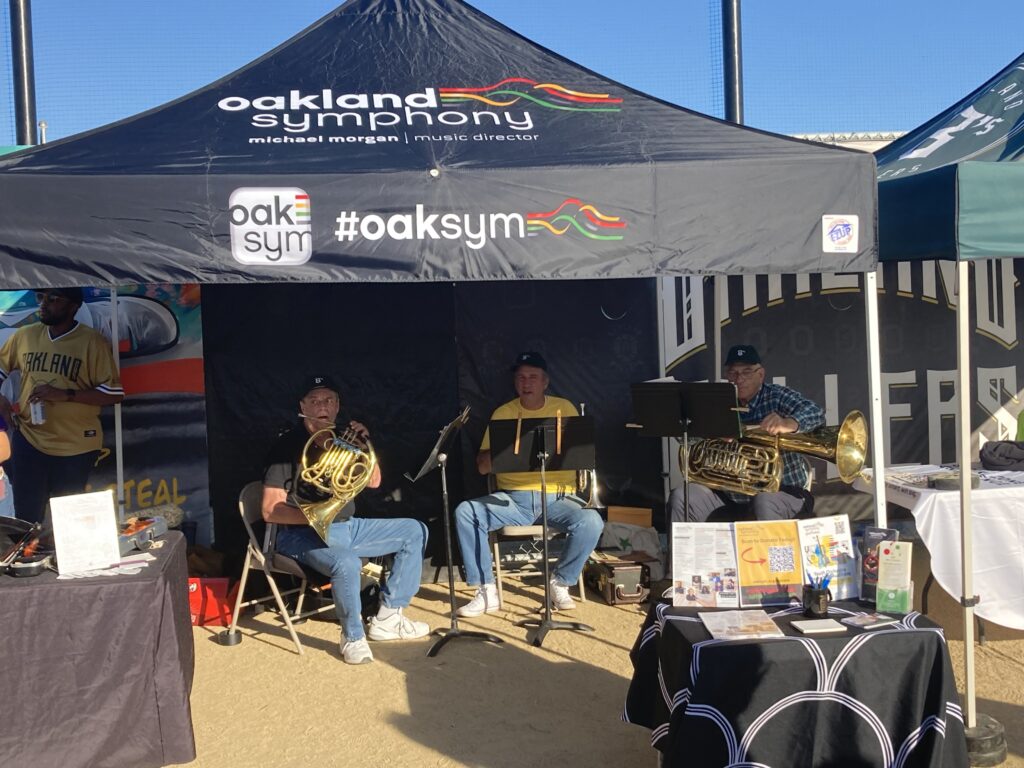
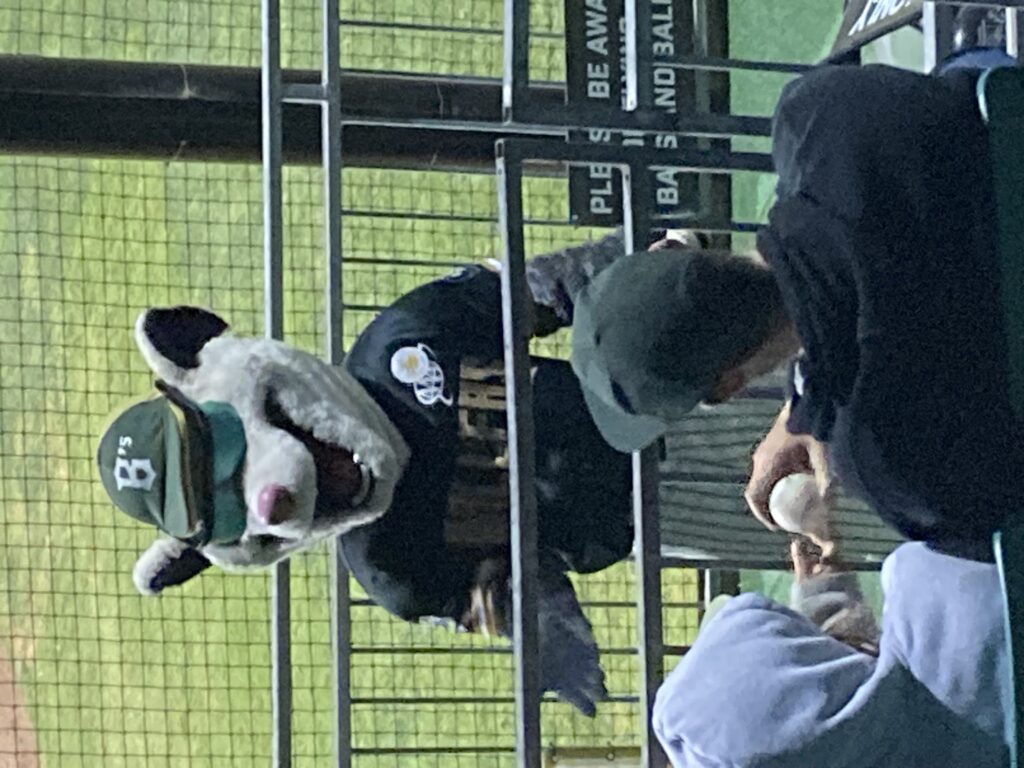
There’s a far more low-key feel to the ambience, with just one line for the fairly extensive concessions (again, not much lower in price than those in the majors); lineups and standings written on a board, not just the electronic scoreboard; picnic-like areas for eating and hanging out; and an actual good chance at getting a ball the mascot throws into the crowd. Three horn players from the Oakland Symphony performed in a small booth near concessions, although they might not rehearsed too extensive a repertoire, playing Otis Redding’s “I Can’t Turn You Loose” twice. The buildings of downtown Oakland’s skyline form the backdrop. 

Oakland Symphony musicians performing near the picnic/concession area before the game.

Raimondi Stadium itself is in a West Oakland neighborhood that’s among the city’s less affluent, but is up-and-coming with plenty of new housing surrounding the facility, and the field’s not that far from the nearest mass transit BART train station. It’s about a twenty-minute walk, and there’s a free shuttle from BART to the ballpark, which is more of a concern at night for those not driving.

Not everything is as informal as might be expected. You’re not allowed to bring backpacks into the park, or to bring food in, though you can bring in a small (very small) water bottle. Near game’s end, an overzealous security staffer warned the row where I was sitting not to smoke, although no one was smoking. Maybe he saw some smoke wafting over the bleachers originating from rows in front of us. “This is a family park,” he sternly admonished. No argument there.

Ballers mascot.

Overall, at a time when the major league ballpark experience is getting ever more expensive and, more importantly, more impersonal with the assault of between-innings commercials/contests and screaming “in-game hosts”, the Ballers remind us of the more fundamental strengths and pleasures of the game. There’s still plenty of action on the field, and if it’s not of the caliber of the really pro leagues, the players are a lot more highly skilled than almost anyone in the stands.

Joni Mitchell 1966 Chicago Demos

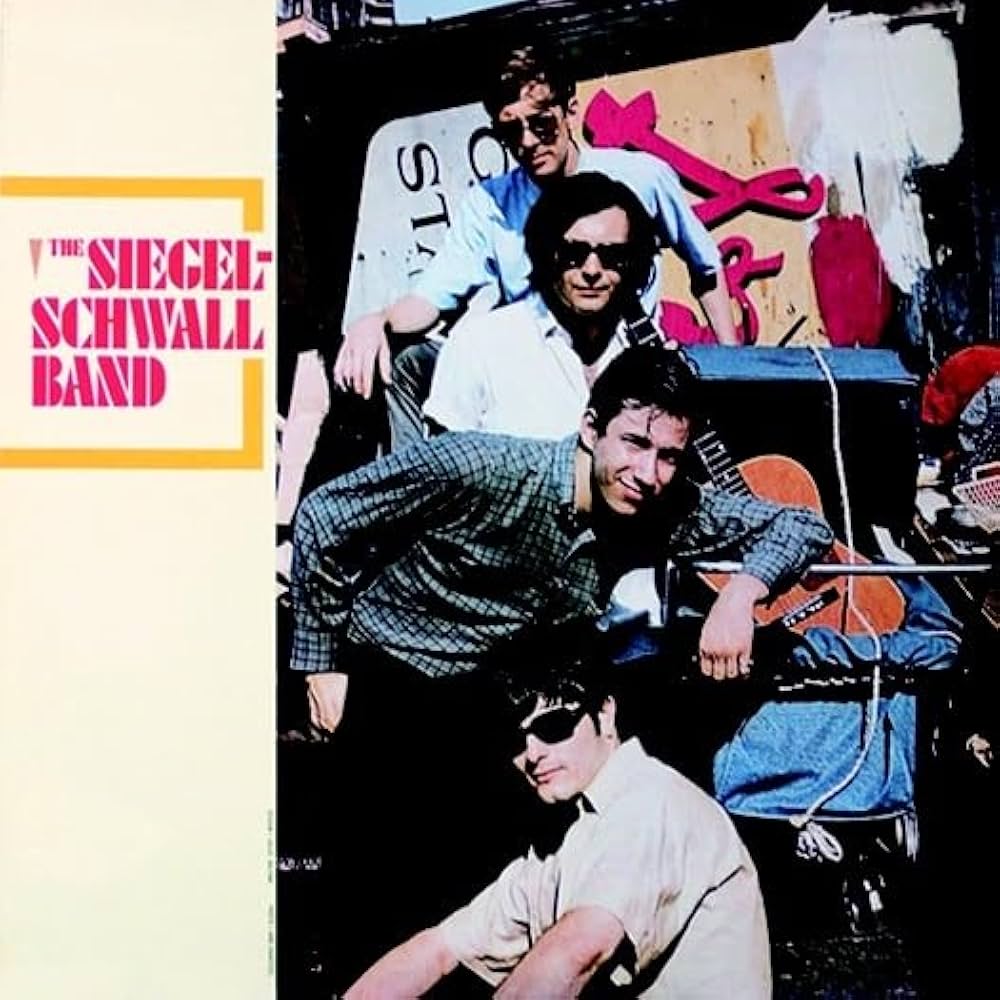
Joni Mitchell seldom recorded with other musicians in the 1960s, although virtually every other notable folk singer-songwriter was making the transition from folk to folk-rock in the last half of the decade. For many years, however, it’s been known that she did some recordings in Chicago with pretty full backup arrangements around late 1966. These were produced by Corky Siegel and Jim Schwall of the Siegel-Schwall Band, a white electric blues group with a style and repertoire similar to that of the early Paul Butterfield Blues Band.

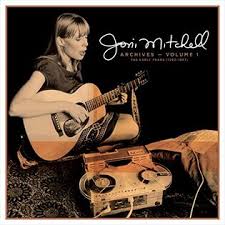
I was able to hear just a couple of these tracks about 25 years ago while researching my two-part history of 1960s folk-rock (now combined into one ebook, Jingle Jangle Morning). Recently, however, nine have gone into unofficial circulation. Some Mitchell fans wonder why none were included in her extensive and excellent Archives Vol. 1: The Early Years (1965-1967) box, which has five CDs of unreleased material predating her 1968 self-titled debut LP. Part of the answer, as well as part of the more important answer as to why she didn’t record with folk-rock arrangements in the 1960s, might lie in these tracks, which don’t match Joni with the most suitable backup that could have been devised.

On paper, this was a strange matchup for what was one of Mitchell’s first ventures into a professional recording studio, and possibly her first with what might have been called band backup. For all her eclectic talents, Mitchell didn’t do straight or loud electric blues, as the Siegel-Schwall Band did on much of their four 1966-70 albums for Vanguard. Their first, self-titled LP, issued around the time 1966 was turning into 1967, might have already come out when Siegel and Schwall produced these sessions.

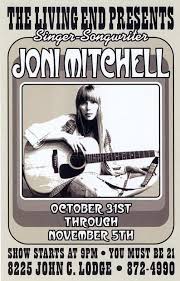
There isn’t any blues on the music they produced with Mitchell. Perhaps more surprisingly, some classical and non-rock/non-blues instrumentation was employed. That’s not such a surprise if you know that after the Siegel-Schwall band split, Siegel fronted Corky Siegel’s Chamber Blues, which performed an unlikely blend of blues and classical music. It made for an odd mixture, to say the least, when Mitchell taped these sides in Chicago. The sessions were arranged, according to an interview Siegel did for jonimitchell.com, after Mitchell and her first husband Chuck (then playing at least part of the time as a duo) opened for the Siegel-Schwall Band in Detroit at the Chessmate club.

According to Siegel, the sessions took place in Chicago at a place actually called Eight Track Studios. He believes Josh Davidson would have been on bass, and seemed uncertain in his jonitmitchell.com whether the drummer might have been Jack Cohen and/or Russ Chadwick.

“We felt, artistically, it would be interesting to approach with a little bit of a classical flavor,” Siegel told me in 2001 when I interviewed him for my folk-rock books. “Jim Schwall mostly provided this touch with his string and brass writing, which was really great stuff, way ahead of its time for bringing classical idiom into folk and pop. There was violin, trumpet, drums, bass, and cello. Two of the pieces were by Joni and the other two were performed and written by [her then-husband] Chuck Mitchell. With regard to other aspects of the arrangements, which were more my effort or fault, you could actually see the bell bottoms and the paisley and maybe even some white go-go boots.” Although Siegel only referred to two tracks having been taped with Mitchell, nine identified as originating from these sessions are in circulation, and seem likely to be from the same sessions given the similarities of sound and approach.

The problem was that the backup arrangements didn’t mesh well with Mitchell’s material, though Joni’s vocals were fine. Certainly the songs were okay-to-excellent, including one that would appear on her debut album, “Night in the City” (done in two different takes and a backing track in Chicago) and another, “The Circle Game” (in two different takes) that would appear on her third, 1970’s Ladies of the Canyon (and had been covered by several artists by the time that LP was released). Although Mitchell didn’t put “Eastern Rain” on one of her albums at the time, Fairport Convention did a fine version on their second album with Sandy Denny on lead vocals (and Mitchell’s own live and radio performances of the song are on Archives Vol. 1). 

Also done at the sessions were the enjoyable, lightly jazzy “Brandy Eyes,” a live November 1966 performance of which is on Archives Vol. 1; “Blue on Blue,” which recalls songs from her debut like “Michael from Mountains,” but is less distinctive (a March 1967 radio broadcast performance is on Archives Vol. 1); and “Daisy Summer Piper,” a lilting, lighthearted number with some hints of the irregular rhythms she’d use more often as time went on. The last song isn’t on an official Mitchell release.

It’s hard to say whether these demos put Mitchell off recording with a band, or even session musicians, for a while, but you could certainly imagine that being a factor. The backup players don’t seem to know the songs well, or play them with sympathetic complementary rhythm. Sometimes the blend of light folk-rock of sorts with horns and violins is exceptionally awkward. I’m not the fussiest audiofile, but the volume levels and mixing are sometimes notably clumsy and ill-judged. Going through these individually:

“The Circle Game” was lumbered with a squeaky trumpet fanfare and a plodding rhythm section, with no guitar presence to speak of. Someone, almost surely not Mitchell, was trying too hard to cram too much in, perhaps in a misguided attempt to sound like something that would catch the ear of AM radio programmers. Even by this point, “The Circle Game” was catching the attention of other recording artists, as versions would appear on 1967 albums by Ian & Sylvia and Buffy St. Marie, and on Tom Rush’s 1968 LP actually titled The Circle Game.

The different take of “The Circle Game” bundled with this batch, in contrast, is more suitably plain and folky. However, the voice that harmonizes with Mitchell on the choruses—it sounds male, and possibly it’s her first husband Chuck, who performed with her as part of a duo for a while in the mid-1960s—is unnecessary. If there are going to be harmonies this early on, let Joni double-track herself. Maybe that is Joni providing the wordless, ghostly background wails in the latter half of the recording. It seems like there are two guitars, but no other instruments. 

Joni Mitchell with her first husband, Chuck Mitchell.

The track identified as take 1 of “Night in the City” is downright strange compared to the locked-in easygoing swing of the re-recording on the first album (Joni Mitchell aka Song to a Seagull). It’s too fussily arranged, with a violin, cello, mandolin, and a chorus that breaks into a rhythm falling somewhere between polka and square dance call. Whether live or overdubbed, the rhythm’s erratic enough that she seems to have occasional trouble coming in at precisely the right time with her vocals.

The rhythm gets more waltz-like on take 2, though again it’s overorchestrated, and awkwardly shifts between the different rhythms of the verses and choruses. The drumming is rudimentarily clunky enough to make you wonder if the set is being handled by someone who’s not too experienced on the instrument. There’s not much to say about the instrumental backing track of “Night in the City,” though it perhaps inadvertently makes some of the mistimings stand out more, and you can clearly hear what sounds like faint accidental drops of objects at one point.

“Blue on Blue” is less excessively produced, though the orchestration is again unnecessary, if less blatantly obtrusive. Some of the guitar flourishes, whether played by Mitchell or someone else, recall those heard on early tentative folk-into-rock recordings by the likes of Tom Rush and Tim Buckley. There are more noises that sound like someone faintly fumbling with objects near the end, though Joni’s vocal is excellent, and a decisive cut above the standard of whoever’s been enlisted to help out.

“Eastern Rain” might be the best, or at the least the least ill-suited, of the productions for these demos. The guitar sounds yet more specifically like some of the rounded full high notes you hear on some early Tim Buckley records. The combination of that guitar, bass, and washes of what sounds like it could be a tabla fill out the arrangement. Like “Night in the City” and “The Circle Game,” this was certainly a song strong enough to have deserved a place on her first couple official albums, and again Mitchell’s vocal is first-rate.

Those tabla or tabla-like washes are similar enough to the ones heard on Fairport Convention’s version that one wonders if Fairport actually heard this exact Mitchell demo. They certainly did hear some Mitchell demos of songs she hadn’t released as they began their recording career, which they were able to access via their producer, Joe Boyd, as early Fairport member Iain Matthews told me in an interview.

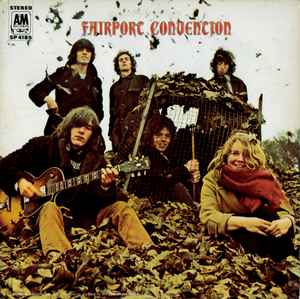
Fairport Convention’s second album, which included their version of Mitchell’s “Eastern Rain.”

“Daisy Summer Piper” likewise isn’t as overproduced as “Night in the City” and “The Circle Game,” though there’s light bass and drums, and high trills that sound like they might be coming from a mandolin. It’s a little odd that it was chosen to demo when at least one quite superior original composition, “Urge for Going,” is known to have been written by 1965, and somehow overlooked for this session. Maybe Mitchell herself doesn’t rate “Daisy Summer Piper” too highly, as it didn’t find a place in any guise on Archives Vol. 1. At least one other version, performed only with acoustic guitar accompaniment, survives as part of a group of demos she taped around this time the publishing company she had with Chuck Mitchell, Gandalf.

Mitchell would play more and more piano on her albums as her recording career progressed, but “Brandy Eyes” is the only one of these tracks on which the instrument is prominent. The bass and drums, however, are on the pickup band level, or worse. Maybe it’s Joni on piano, as you’d think she’d want to play something on each of the demos, though it’s not known for certain.

It’s hard to believe Mitchell was too pleased with these demos, or too confident it would help in getting a satisfactory record deal, although in his jonimitchell.com interview, Siegel says “she was really happy with it and really excited about it.” She was virtually certainly referring to these sessions in a March 1967 interview with Philadelphia radio DJ Ed Sciaky, where she remarked, “I made the mistake once of orchestrating [“The Circle Game”] and getting a blues band…who are also fine classical musicians to do an arrangement…And I tried to do a rock version of it and I lost everything. It’s strictly a ballad…If you put a rock beat to it, it would really, really be a hit, but it doesn’t work.”

That didn’t keep several other artists from trying to cut folk-rock versions of “The Circle Game.” But Mitchell told Sciaky that in her estimation, “It didn’t work out well because ‘Circle Game’ is not ever going to be a rock ’n’ roll song. Ian & Sylvia found that out with their version, and I tried to do the same thing. It has to be kept down. It has to be a ballad. It’s very tempting.”

Perhaps a folk-rock approach would have worked out better than Mitchell’s Chicago demo session with more accomplished and sympathetic musicians. Bruce Langhorne, for instance, met Mitchell around this time, and recorded with more folk-rock singer-songwriters than just about anyone back then, including Bob Dylan, Richard & Mimi Fariña, and Fred Neil. Yet he feels her music sounded better unaccompanied for a reason: “I was used to just tuning into people and playing their material. And Joni—I couldn’t really play with her. Because she was so creative and so wonderfully unpredictable, and her music was so sophisticated, that I couldn’t just tune in and start playing and have it work.” Although Mitchell’s most renowned for her songwriting and singing, her guitar tunings were so numerous, complex, and unusual that these alone would have presented more challenges for accompanists than the usual singer-songwriter.

Throughout her career, Mitchell was so determined to call the shots for her music that it’s difficult to imagine she’d be put off playing with other musicians from one disappointing group of sessions. It’s more likely that she simply determined her early songs sounded best as acoustic solo performances, maybe with some encouragement from David Crosby, producer of her first LP. In the Crosby documentary Remember My Name, he noted that despite some technical issues he and Mitchell were dissatisfied with, he feels the record did capture “her essence.” 

That can’t be argued with, given the quality of Joni Mitchell aka Song to a Seagull, whose hushed ambience I love. It’s still intriguing to consider what those songs, or any batch of her finer early songs, might have sounded like had a folk-rock approach been taken for her debut album. There’s a hint in a December 1967 televised performance for the Canadian Broadcast Corporation, where a song from her first LP, “The Dawntreader,” is given a backing track quite different from the studio version. Its lightly echoing electric guitar, basic drumming, and orchestration are much more tasteful than what was employed for the Chicago demos.

While such a thing probably wasn’t commercially possible back in 1968 (certainly for an artist making her debut on a major label), and is still rare today, it’s tempting to imagine her doing two albums of the same songs—one virtually entirely solo and acoustic, as she did, and the other with a light folk-rock approach. That’s something that can only exist in an alternate universe, if you believe in such Star Trek-like things.

Something that is evident, even from the Chicago sessions, is that Mitchell’s best material, and how it was sung, was so good at this early stage that it’s hard to believe she wouldn’t get a recording contract for another year or so. That’s also demonstrated, in better settings, by the wealth of recordings on the Archives Vol. 1 box set. Part of that delay was due to her insistence on a better deal than would likely have been offered to her earlier than when she signed with Warner Brothers. Fortunately much of what she did in the mid-‘60s before her debut album is now easily accessible on Archives Vol. 1, even if it doesn’t catch everything, and it’s unlikely the less impressive but revealing Chicago sessions will be granted official release.

Cally Callomon on The Making of the Nick Drake Box The Making of Five Leaves Left

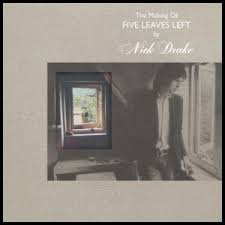
Nick Drake made just three albums, but now the archival releases of tracks unissued in his lifetime far exceeds those three LPs in quantity. The amount of archival material increased substantially in 2025 with the four-CD box set The Making of Five Leaves Left, three CDs of which (containing 32 tracks) were previously unissued. These three discs feature studio outtakes, most of them alternate versions of songs from Five Leaves Left, spanning late winter 1968 to early spring 1969, along with eight songs from an informal 1968 non-studio tape in arranger Robert Kirby’s Cambridge dorm room that’s of fairly low but listenable fidelity. The fourth CD is Five Leaves Left itself, Drake’s 1969 debut album.

Although the differences between the studio outtake versions and those heard on the final LP are usually not huge, it’s pleasant and interesting to hear the songs in somewhat different arrangements that are usually less elaborate than those on Five Leaves Left. Like many such historical boxes, these do illustrate how polish and production touches elevating the final versions to substantially higher quality. An early take of “‘Cello Song” (then called “Strange Face”) stands out with its absence of cello and inclusion of what sounds like steel drum patterns, perhaps played on piano. The early take of “River Man” doesn’t have the dramatic orchestration on the familiar Five Leaves Left arrangement, as another example.

As for songs that didn’t make the LP, “Mayfair,” which would be covered by Millie Small in 1970, is okay if perhaps atypical in its Donovan-ish upbeat observational flavor. Just three of the eight songs from the dorm room tape (“The Thoughts of Mary Jane,” “Day Is Done,” and “Time Has Told Me”) would make Five Leaves Left, though one (“Made to Love Magic”) would be recorded as a studio outtake in 1968. The other four are okay but not up to the same standard, again showing more of an early Donovan feel than his studio releases would exhibit. Drake’s skills on guitar—sometimes it’s hard to believe just one person was producing such a full sound—are in abundant evidence on most of the outtakes, even on the half-dozen tracks from his first studio session in late February/March 1968.

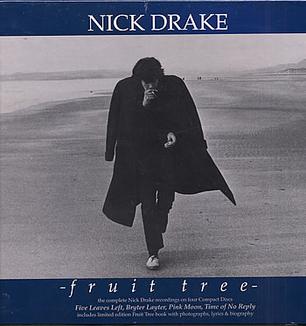
With an LP-sized 60-page booklet featuring extensive liner notes, production details, lyrics, photos, and tape box productions, the extras are elaborate. Note that a number of tracks recorded by Drake in the studio during this period, some of them detailed in the liner notes, are not included on this box. There’s no need to panic, as they’ve been available for decades on the Time of No Reply compilation and Fruit Tree box. Specifically, these are “I Was Made to Love Magic,” “Joey,” and “Clothes of Sand.”

The format design and art direction of The Making of Five Leaves Left was done by Cally Callomon, who runs the Nick Drake estate. I spoke to him about the box just after New Year’s 2026.

How did you get involved with the Nick Drake estate?

I met Gabrielle [Drake, Nick’s sister and well known actress] in ’95 when I was working at Island. I was at Island for ten years. I left Island in 2000 to go back to managing artists, which I’d done before, and designing for artists and musicians. I’ve always looked after Bill Drummond, so I wanted to concentrate on Bill’s career. 

I suggested to Gabrielle that Nick never had a manager, and he could do with a manager. I think being an actor, she understands that more than others would. Because everything was down to her. Both her parents had died, so she was the last remaining Drake, with a very busy, hectic acting career. So it appealed to her to have somebody renegotiate contracts, which is what we first had to do.

Did you have any sense of how much material was available for the Making of Five Leaves Left box when you started working on it?

When I first started working on it, I had no idea there was this much material. I had tried over the years to find out what was in the Universal tape storage, and I got different feedback and data each time, because it was a mess. [When] they were getting their London-based tape storage properly into a digital library, suddenly it became easier then to put just “Nick Drake” into a database, and to find out what was there. I say that was easy, but Neil Storey [editor of the Island Book of Records series of books documenting the history of the Island label] was the person who had to do it. It’s not enough just to have data. You have to have an idea who was in the studio at Island, and at what time.

And because Neil was working on his Island Records book, his massive tome, he knew that in Sound Techniques [studio in London, where Drake’s producer Joe Boyd often worked], Nick was being filtered into various different hours whenever it was possible. So there may be something down that’s a Sandy Denny session, or a Fairport [Convention] session there, which actually turned out to be a Nick Drake session. Because someone had canceled, or they finished early, and Nick could get in there and do three hours recording.

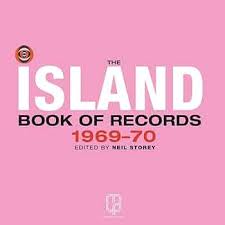
The second volume of The Island Book of Records includes coverage of Five Leaves Left.

So with all of these things, it takes a human being and previous knowledge to be able to filter it out. That was all done without me. That was something that Johnny Chandler [in charge of the box’s product management] wanted to do, because he wanted to find out, is there enough material for some kind of reissue program? He came to me nine years ago with “look, we’ve done all of this work, there’s absolutely no pressure on you to do anything about it.” He’d already paid Neil to do this work.

I didn’t think there was enough. I was astounded by how much there was, and I was really pleased to have the database. But there wasn’t anything in there that was saying this would justify a major release, or adding tracks, which we never want to do, onto stuff.

But I knew about the Beverley Martyn tape [with six songs, four of which would be re-recorded for the final album, from Drake’s first session at Sound Techniques in late February/March 1968; a copy came into the possession of Martyn, a singer-songwriter also produced by Joe Boyd]. I’d heard it some time before. So I said to Johnny, if we can get the Beverley Martyn tape, that would help.

Then in the process of doing that, I stumbled across – we investigated the Paul de Rivaz angle. [de Rivaz, like Drake a student at the University of Cambridge in the late 1960s, had the tape recorder on which the 1968 dorm room tape was made.] Because every couple of months, somebody would say, I’ve got a rare tape of Nick Drake, do you want to buy it? That happens quite often, and so much of the time it’s just a reel-to-reel recording of a bootleg that’s already been out on vinyl, and it’s very easy to work out what’s what. And there’s been some false generated…somebody making out that this is Nick Drake when it obviously isn’t. Not obviously, but you can tell that it’s not. 

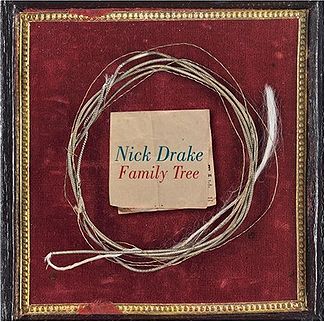
So it took some time for me to realize, we’ve got a lot of material, and we’ve also got some really special material. I thought then that the time was right to do what we did. It’s what we did with Family Tree [the 2007 compilation of pre-debut LP Drake tracks], to actually put it together in some kind of cohesive integrated formula. That suggested doing a separate standalone release, rather than adding any of the tracks onto existing releases. Or doing what Universal [who now own Drake’s catalog] often do with the deluxe packaging, just chucking in another CD of extra stuff [recorded] at the time. Johnny Chandler at Universal was the most honorable, patient and intuitive person to work with. So he removed any idea of pressure. Because they had certain [sales] targets they have to reach each quarter.

Did you have any idea of how much demand there would be for the box?

They knew that this would sell well. I always knew it would sell well. I had no doubt. No fear of that. Persuading other people – not Johnny, but other people – in different territories is very difficult, in America especially. Nick is held in very high regard as far as the media is concerned, and incredibly low regard as far as the industry is concerned. The two I think always play catch-up with each other on many, many artists, [singer-songwriter] Judee Sill and suchlike. You read more glowing reports about Dory Previn than you’d ever see comprehensive campaigns on her material. It’s a fan-media-based thing. I also mean film directors, television advertising, music supervisors and suchlike. They tend to lead the way.

There were a lot of multiple versions to choose from, as detailed in the table of sessions included in the box notes. How were the tracks that made the box selected?

I tried this on Family Tree. Really, the Everly Brothers’ [1968] Roots album [was] the guiding light for me. At that time of their career, they wanted to put a record out that showed the development from Tennessee right through to where they were then, which was a kind of slightly psychedelic country act. That album, which is a beautiful album, starts with them as children on a radio show with their parents. And it works its way through musically, tells a story. There have been a few albums like that. The Nitty Gritty Dirt Band and the Dillards have been really good at that. 

So I wasn’t inventing anything new with Family Tree. I wanted a radio program that starts with Nick in the [Mozart’s] Kegelstatt piece that he did with a classical trio, through the Molly Drake stuff [recorded by Nick’s mother], right through up until he was going to Cambridge. So I see this [box] as a follow on from that, when he put aside Bert Jansch and Jackson C. Frank and Bob Dylan, and had really the acceleration of him writing pieces of music that were the end of Family Tree. Things like “They’re Leaving Me Behind” [an early Nick Drake composition included on Family Tree] was just put aside, because he was writing so fast and so impressively that there was no need for him to have traditional material or covers on the first album.

[On the box], it isn’t all in chronological order. There’s some where you can hear a development between a very basic version to an experimental version to an orchestrated version, and the couple of dead ends that they went down. So it was trying to tell the story, with [producer] Joe Boyd very much and [engineer] John Wood at his side, trying to show the development. There was a deliberation of approach with John, Joe, and Nick that took them into completely new territory. You can hear Leonard Cohen in there, you can hear Tim Buckley for example. You can hear Beatles in there. But they were treading [a] very often less trodden path, I think most of the time. 

What were the biggest surprises in the material you found?

“Mickey’s Tune” [on the de Rivaz tape] was a big surprise. Because when we first heard it, I didn’t know what it was. Nick just said…this is a nameless one, he called it. But I recognized the words. So it didn’t take me long to go back to the lyrics of the songs that never made it, never actually got recorded, to realize that that’s “Mickey’s Tune.” We knew he had a song called “Mickey’s Tune”; we had his handwritten lyrics. So there was the first recording we’d ever found of that song. I realized that’s why it never made the album, because compared to the rest of the stuff, it isn’t of the same caliber. They also thought “Time of No Reply” was not of the same caliber, which is what an abundance of riches they had, where you don’t even put that track out. [Although “Time of No Reply” was not on Five Leaves Left, a version from the sessions is included on this box.]

My thing that’s really revealing is the fact that the final album is all from the last session. [Seven of the ten final tracks were from the last group of sessions in April 1969, according to the documentation in the box’s notes; the other three were from the previous sessions on February 14, 1969.]  So over a period of a year, they were going into the studio when they could, putting down more stuff. I think the fourth space in between sessions galvanized even more determination about what this album was going to be. That’s quite rare, particularly today, when people just think it’s alright to go in and everything’s done in one take, and put it all down and we’ll put the album out. I’ve got lots of favorite albums that took years to make.

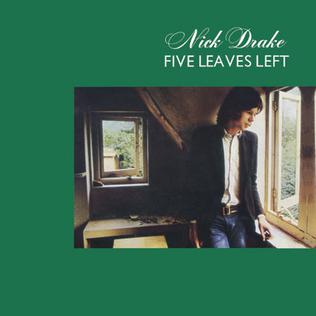
The original LP cover.

I think it’s a testament to Boyd’s extreme faith in Drake that he and Nick took so much time for a debut album, a little more than a year, at a time when that wasn’t done for many artists.

I entirely agree. Joe is a very far-sighted man. He seems unaffected by fashion. You can tell by his dress sense. 

Among the alternate versions, “Strange Face” is interesting since it evolved into “Cello Song,” a big part of the difference being different orchestration. On an early version, it’s hard to tell whether one of the instruments is a keyboard or a steel drum. Is it known what that was?

I don’t know, to be honest. There are a few recordings that Neil Storey has to suggest might be a particular conga player at the time. But not having proper track sheets of who was playing what, it’s all conjecture about what instruments were being played and who was playing them.

What do you think Nick gained most by taking so much time, when he sounded ready to record at the first sessions in early 1968? I think some other labels, artists, and producers would have been content to put out what he had at that point, since his songs, guitar work, and vocals were strong on less adorned arrangements.

I never met Nick. But from what I’ve learned from Gabrielle, he couldn’t be rushed into anything. But then he was also not in a position to rush into anything. Whereas Bryter Later [Drake’s second album, issued in 1971] was a more cohesive package, recorded as an album. And then it got delayed by nearly six months after its initial cited release date. It got delayed by quite a long time. I think Nick was impatient to get it out.

But that’s normal for someone who’s finished something that they’re immensely proud of following an album that really hasn’t set the world alight. It may have been thinking, with Bryter Later, well, this is gonna do it. This is far more direct. Nick didn’t know any better with Five Leaves Left, ‘cause he’d never released a record before. So he could easily just have been thinking, well, this is how long things take normally, isn’t it?

It seems like it took a while to settle on the orchestral arrangements he wanted. Was he trying to get something less fussy than some of the first attempts?

I don’t know the answer to that. I know he trusted Joe, because when Joe suggested John Cale [who contributed instrumentation to a couple Bryter Later tracks] later on, Nick wasn’t gonna say, well, no. It was, okay, let’s give John a go.

[For the first tracks attempted with orchestration], Joe suggested Richard Hewson [perhaps most known to rock fans for his work on some tracks on the Beatles’ Let It Be, as well as some for Apple Records releases by James Taylor and Mary Hopkin]. He wasn’t like a man of the moment, they could have gone with Reg Guest [who worked with Dusty Springfield and the Walker Brothers] or Wally Stott [most known for working on early Scott Walker albums] or any of the other key arrangers in London at the time.

But intrepid I think is the word I would always use. You take these steps and you see how they go. They both, Joe and Nick, knew these songs need augmentation. So how do we augment it? Which way do we go? Nick had already done this with Robert Kirby at Cambridge, and had been really happy with Robert’s work.

So hearing arrangements that both Joe and Nick didn’t feel were right, however competent and beautiful they are, gave Nick the permission to say, ‘I do have this other guy.’ Joe was about to spend a load of money on studio time with a string arranger he’d never heard of. I should say orchestrator; Robert never liked to be called an arranger. He said “Nick arranged the songs, I orchestrated them.” Which you hear on the Paul de Rivaz tapes; the arrangements are coming from Nick.

Nick seemed to be much more confident in his musicmaking than in other areas of his life. He was very determined to make records his own way.

I think it’s dangerous to mix confidence up with shyness. I know a few shy people who are very confident. It’s hard when I’m working with them to get over their shyness, and say look, what do you really think? Because you obviously really do think how you want this to be. The British in particular have a terrible habit of saying well Cally, I’m not sure about this. When in fact what they mean is, I don’t like this. Whereas Americans just say, I don’t like this. It’s so much easier. And the Irish. Working with the Cranberries, as I did for three albums, I knew exactly where I was at all times, with all four of them. Because the Irish are very direct speaking.

In England, we’ve got this dreadful habit of mealy mouth, working our way around – “I’m not sure,” or they use “kind of “or “sort of.” It’s a shyness, partly. It’s a need not to commit to anything. But Nick was a shy person. I think Joe and John got through that, and a few of the musicians that he worked with could tell when Nick was saying no, this isn’t working. That’s what [bassist] Danny Thompson would say. He was hearing the material for the first time; you can hear that he’s working out different bass arrangements. But he’d say he knew when it was right. He was getting enough feedback to say, well, these five different takes all work, but this is the one. But that’s just a personality thing. Because Gabrielle says [Nick] was a very stubborn boy.

The box doesn’t include any versions of “I Was Made to Love Magic,” “Joey,” and “Clothes of Sand,” which were all recorded at some point during the sessions the box spans. Was that because it was felt the quality wasn’t consistent with the other songs recorded in the studio, and/or because studio versions of all of these have long been available on the Fruit Tree box and the Time of No Reply outtakes/demos compilation? 

I think it’s both. I’m really aware of giving people what they’ve already got.

I insisted that the final [Five Leaves Left] album is in there, out of respect to Nick. There are going to be a lot of people who are only just discovering Nick Drake. They’ve listened to maybe four or five songs by streaming the songs. This might be their introduction to Nick as a Christmas present, The Making of Five Leaves Left. I felt we had a duty to show people what the finished album ended up sounding like. That was my only compromise, really, of putting in something that had clearly already been sold. Some people found that bit hard – why did we bother with that? But it’s a bit like releasing something that’s just Rembrandt’s sketches, and not showing what the sketches turned out to be.

Five Leaves Left only sold about 2000-3000 copies when it first came out in 1969, although now, like all of Drake’s catalog, it’s sold many more. Do you know how many it’s sold at this point?

I have no idea. I’ve tried to find out worldwide sales figures. You move from one platform to another. [There’s] a different accounting procedure at Polygram to Island, [and then] into Universal. And very, very few people there are at all interested in historical sales. If it came to awards, all three albums would be silver and gold. They’ve reached those kind of figures worldwide. But I wouldn’t want to ever hazard a guess how many copies have we ever sold of Five Leaves Left.

[In the UK, all three of the studio albums Drake issued in his lifetime, also including 1972’s Pink Moon, have been certified as “gold,” signifying sales of 100,000 copies. The Drake compilations Way to Blue and A Treasury have also been certified as gold, and another compilation, Made to Love Magic, has been certified as silver, signifying sales of 60,000 copies. These figures only account for sales within the UK; the worldwide figures are surely much higher.]

There’s an interesting comment from Joe Boyd in the box notes that “Pink Floyd and the Incredible String Band had sold themselves, Sandy [Denny] with Fairport.” [Boyd also produced the Incredible String Band and Fairport Convention, as well as Pink Floyd’s first single.] Do you have any thoughts as to why it took Nick Drake so long to find his full audience?

Pink Floyd were a blues band. They fitted into the music of the time. They mixed with the cognoscenti, and they mixed with quite high-falutin’ people in London. They were middle class students in London. They had [the underground psychedelic club] UFO as a vehicle, and Joe Boyd as a vehicle. So they had a lot of the pieces all in place. They had Syd Barrett, very flamboyant, attractive, enigmatic soul. They played live a lot, and did interviews. And their music sounded like 1967.

People just loved Nick, ]but] I don’t think anybody wanted to go round championing him, even though Elton John was, who was unknown at the time. [In July 1970, Elton John even recorded four songs from Five Leaves Left as part of a demonstration album intended to generate other versions of songs by artists with whom Boyd was working.] He just didn’t have the network sorted out. 

[Also] there was a snobbery at the time that you didn’t release singles. Or if you did release singles, they weren’t on your album because that was seen as commercial. He was with Island Records, who were one of the chief perpetrators of that. Jethro Tull singles would not be on an album.

It’s a lethal combination, but mainly I think it’s because Nick’s music, there wasn’t a template that it fit into. Lots of people loved the music at the time through the [Island] sampler albums, mainly. And that’s me. That’s where I first heard Nick. I couldn’t work out where this fitted in the Spooky Tooth/Traffic/Claire Hamill sort of territory within Island, but it just sounded great. It sounded like he was his own person, which he most definitely was.

There are a few artists that I think really are underappreciated. Even though Judee Sill has fans, and Dory Previn has fans, and David Ackles has fans, I still think they’re not as appreciated in the way that I think could be.

I would also put Sandy Denny in that category, at least in the US, where I’m from and based. She’s not nearly as well known here as she should be, and though some reissues have put out a great deal of her released and unreleased material, they haven’t always been that accessible.

I’ve used Sandy Denny, whose music I absolutely adore, as an example of how not to do it. Jeff Buckley is probably another example, where there are 29 different versions of Jeff’s only album. Because somebody else will say, oh, we can do it like this. And somebody says, yes fine, do it like that. So the more you do it, the weaker it becomes.

I feel Sandy has been betrayed commercially. If you’re gonna release a big box set for 120 pounds and say this is everything, which I love having, and then six months later reissue all of her albums with some instrumental tracks that aren’t on that box set, that to me is a classic case of a record company losing track of what it is to buy records. They now have to sell to the trade. They can go to the trade and say, six new tracks on this, and this has never been heard before.

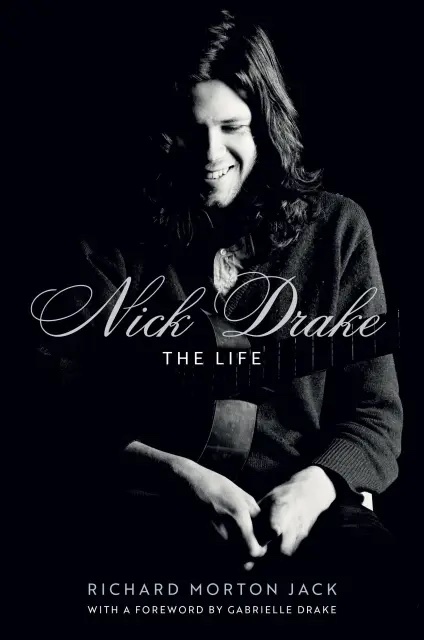
This is why Richard’s book on Nick Drake [Richard Morton Jack’s Nick Drake: The Life, issued in 2023] is so good. He writes with the reader in mind. And I wish some of the record companies would release records with the purchaser in mind.

I love the Beach Boys. I love Holland, that’s my favorite album. When this set came out, it was 80 pounds, Carl and the Passions and Holland together. The music is fantastic; I knew the music was fantastic. The book that comes with it is almost like a child’s pin-up book of photos of them playing live. Come on, it’s got to be better than that. With a story like Holland, why it happened.

My Scott Walker box set that I did [In 5 Easy Pieces, from 2003], I’m just ashamed of. Because I was pressured into putting out something that I thought was really, really substandard. It didn’t start out that way. But there was just a desire to get the thing out. That should be released—not when it’s finished, because it never is—it should be ready. Until you’re ready, just don’t put the thing out. But you just need one TV ad, and someone says quick, let’s get this out, because there’s an opportunity. That is losing sight of what it’s like to buy records, for me.

Fruit Tree [the Nick Drake box from 1979, with his three original LPs, at which time his cult following was just starting to build; this was expanded with a fourth disc of outtakes, Time of No Reply, in the mid-1980s] and the Sandy Denny box set [Who Knows Where the Time Goes, a four-LP set from 1985] had me in mind. I tried very hard to work out who had a box set like Fruit Tree before Fruit Tree. I thought this is tremendous, this is fantastic. For years, I couldn’t think of another artist that have had the same treatment. Soft Machine had Triple Echo [a three-LP set from 1977], but that was almost all unreleased Soft Machine material. I did find an artist who’d had this treatment. This was Roy Harper. Because there was a Harper box [the limited edition Harper 1970-1975] that came out that just put albums in, with Flashes from the Archives of Oblivion as an extra album inside. He’s the only person I can think of that had a box set done like Fruit Tree before.

When I worked with Julian Cope, he would say to be a Doors completist, you don’t have their last two albums, Other Voices and Full Circle [recorded and released after the death of Jim Morrison]. That’s what a completist is. I always took that on board is that having everything doesn’t mean it’s complete. It’s knowing what not to have (laughs). We all know several artists where you think, well, there’s Tim Buckley albums that you really don’t want in. The Rolling Stones, I’m very grateful for the fantastic records that they made, but to be a completist, my Rolling Stones and Bob Dylan collection ends at this particular time. And there’s enough there to keep me going for years.

Would it be a surprise to find enough similarly unreleased material to make a box or expanded edition of Drake’s second album, Bryter Later? That’s my favorite and Joe Boyd’s favorite, as well as many other people’s.

It would be a big surprise, but never say never. We would have to send Neil Storey back in. John Wood thinks it was done much faster in single takes. I’m not sure. It was eight-track, it was recorded as, so there’s a lot more scope in there. But it would take six months of Neil digging, and working out how many takes of “Northern Sky,” and how many takes of…It’s something we definitely will do, but whether it justifies a release or not [isn’t yet known].

There’s a BBC session we couldn’t include [on] Five Leaves Left. We wanted to, but the BBC just wanted too much money for it. We may go back in on that. And maybe someone will come forward and say I have got a recording of Nick on Manchester TV or whatever. Never say never.

But the way the [Making of Five Leaves Left] set is designed and put together I think justified four pieces of vinyl. Now if somebody said there is enough for a single piece of vinyl extra for Bryter Later, and we thought this is amazing stuff, it doesn’t have to be commensurate with The Making of Five Leaves Left.

I’m publishing my own books of traditional material, folk tales and such like. I work with Bill Drummond all of the time, and we have a number of projects for 2027 that we’re investigating on Nick, and talking to people about what we could do.