Top 25 (Or So) Reissues of 2025

With more than a quarter of the 21st century gone, reissues of rock from the mid-to-late twentieth century continue to emerge in just as much quantity, and maybe more. In common with recent years, 2025 saw a wealth of archival releases mixing compilations of unreleased material and re-releases of officially available music garnished by rare and unissued tracks. Also in common with recent times, the balance has shifted toward bigger and more expensive packages built around recordings that many fans of the artist will already have, with rarities added to incite purchase. It’s not the greatest value for those fans who don’t have a ton of disposable income, but labels and artists will keep doing it as long as the market supports it.

Some of the titles on this list of my favorite reissues of the year fall into that category of “wish I could just pay for the stuff I don’t have,” sometimes irritatingly so. But there are still a good number of compilations offering wholly or mostly unreleased stuff, as well as some of acts never before compiled into album form, such as Jeannie Piersol. The number of actual albums from the past worth hearing that were previously unknown to me before getting reissued continues to dwindle. But the growing shortage of previously unheard music does seem to spark record companies, artists, scholars, and just plain fans into working ever harder to uncover worthwhile vault finds.

I had substantial involvement with three of the records on this list, in one case especially heavy involvement. I hope that I’ve given them rankings that accurately reflect the regard in which I hold them, irrespective of my professional work on them. If it’s felt that such work renders my rankings of these biased, I’ve marked them with two preceding asterisks as red flags.

** — denotes releases in which I was professionally involved as a writer of liner notes and/or compiler.

**1. Lamb, An Extension of Now: Unreleased Recordings 1968-1969 (Real Gone). I not only wrote the extensive liner notes for this compilation, but also was involved with the track selection and sequencing. As I was heavily involved in this project over a period of five years, from the time I was made aware of these tapes (preserved by Lamb guitarist-songwriter Bob Swanson) until these found official release, I might not be the most objective evaluator of its merit on a best-of list. Still, I wouldn’t have been as heavily involved had I not thought the music both historically important and highly worthwhile on its own terms.
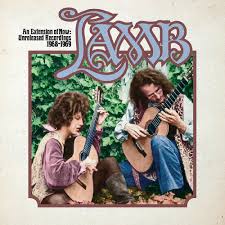
As some background, on their early-‘70s albums A Sign of Change and Cross Between, Lamb offered some of the most intriguing and eclectic music of any San Francisco rock band on the psychedelic scene. Arguably their blend of rock, folk, classical, country, blues, and gospel was as hard to classify as any of the era. With guitarist and songwriting partner Bob Swanson, Barbara Mauritz’s versatile vocals paced material imbued with a haunting, mystical aura. Yet they could also be earthy and rootsy, occasionally drifting into spacey psychedelia with hints of raga-rock.

This record captures the group at an earlier, sometimes folkier, yet fully realized stage. A few of these songs were redone for their LPs, albeit in substantially different, usually more fully produced versions and arrangements. Most of these, however, were not included on these or any other Lamb releases, and those songs are largely on par with the material that did get on their albums. That haunting, mystical acid-folk feel is yet more pronounced than it is on their first pair of LPs. Yet there’s also some down-to-earth blues with “Barbara’s Soul,” and out-and-out hypnotic raga rock on the standout lengthy closer, “La Plaza De La Paz.” Raga rock also factors into a couple tracks here by a group from which Lamb evolved, the Learning Process, recalling some of the work done along those lines by the Great Society.

2. Patti Smith, Horses 50th Anniversary Edition (Arista). The first disc of this double-CD release isn’t strictly necessary if you don’t thrill to the emergence of remastered editions of familiar albums. In this case, Horses, Smith’s debut album, is very familiar, and likely to already be owned in one or more formats by most fans purchasing this disc. However, the bonus tracks comprising all of disc two are genuinely and simultaneously interesting and actually enjoyable to hear as an album of sorts of its own. Just one of the nine tracks (an alternate of “Redondo Beach” that came out somewhere—the liner notes don’t explain where) was previously released. All of the others are previously unissued studio tracks spanning February 6, 1975 to September 1975.
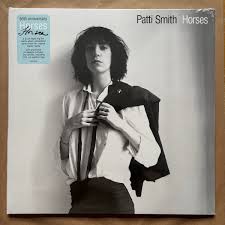
Four of those (“Gloria,” “Birdland,” “Kimberly,” and “Break It Up”) are alternate versions of songs that did make the LP; the other four (“Snowball,” “Distant Fingers,” “We Three,” and a cover of the Marvelettes’ “The Hunter Gets Captured By the Game”) didn’t. To my knowledge (any corrections gladly accepted), “Snowball” and “The Hunter Gets Captured By the Game” haven’t appeared on any other official releases, though live versions from a May 28, 1975 radio broadcast have long circulated on bootleg. “Distant Fingers” was redone for her 1976 Radio Ethiopia album, and “We Three,” heard here in a February 1975 recording, for 1978’s Easter.

Scorecard keeping aside, what’s most important is that these are fine performances, and in some ways significantly different from what you hear on Horses, though essentially similar. Of most importance, the three tracks from February 6, 1975 at RCA Studios and the two from May 27, 1975 at A-1 Sound Studios don’t have drums, giving them a more unplugged feel with more emphasis on Smith’s poetic qualities. That doesn’t mean they’re better or equal to the familiar Horses versions, but they’re worth appreciating in their own right. “Snowball” shouldn’t have been disqualified from Horses for lack of merit, though maybe it was simply felt there wasn’t enough room; it’s a nice haunting, moodily dramatic piece, perhaps with more roots in her roots as a spoken word poet than most of the material that made Horses. “The Hunter Gets Captured By the Game” isn’t as essential, but it’s okay, and comes off better than you might expect from a Smith Motown cover.

The four alternates of songs from the LP, recorded in September 1975 at Electric Lady Studios, all seem to be from sessions for the album itself, and are respectable if perhaps more subdued and less full than the final versions. While there’s a brief and expectedly stream-of-consciousness liner note by Smith, some more details about the bonus tracks other than their dates and locations would have been welcome.

3. Françoise Hardy, Blues: Intégrale Vogue 1962-1967 (Vogue/Sony/Legacy). In what will have to be a complicated and lengthy assessment of this box set, let’s start with the title. Hardy, for all her great attributes, wasn’t a blues singer, and nothing here fits that description, unless that refers to a blue or melancholy mood. The translation of the title is “Complete Vogue 1962-1967,” insinuating that this has everything she recorded for the French Vogue label during those years. It has most of it (which is a lot), but not every last thing. Also, there was a four-CD Hardy box titled L’Integrale Disques Vogue 1962/1967 with 83 tracks back in 1995. This has eleven CDs with 217 tracks, along with a DVD with 59 performances. How could there be so much more material, and how could it miss anything?
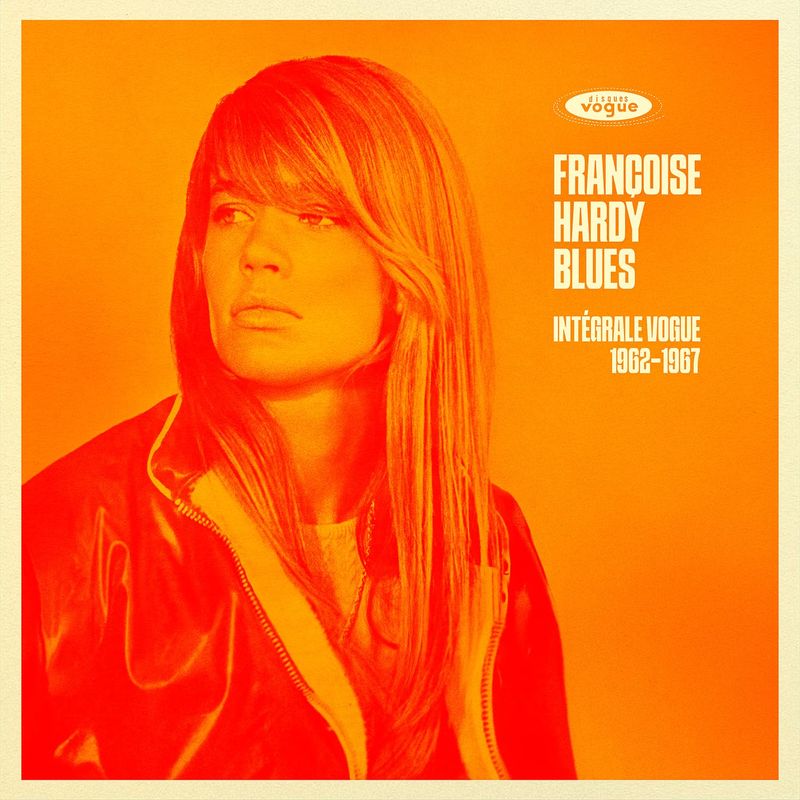
Hardy recorded in several different languages (though principally in French), so there’s a disc apiece for her work in English, Italian, and German. Often, especially when recording in English, these simply use the same backing track as the French versions, with a different-language vocal. However, occasionally these include songs with no French counterpart, though these tend not to be as good as those with French prototypes, a la “Catch a Falling Star” in English, or some of the German songs, which recall the middle-of-the-road schlager genre. Yet some of the songs originally done in French have noticeably different backing tracks, like the Italian version of “Le Temps de L’Amour.” And some of the songs without French counterparts have their merits, like Italian “La Tua Mano,” with its inviting European pop orchestration.

There’s also a disc of rare recordings, starting with two songs from a 1961 audition for Vogue in which the promise that would soon flower is rather bare, especially as the guitar accompaniment is ukulele-thin on those and some early TV performances. The outtakes on this disc are pretty good overall, including a much different, more heavily orchestrated version of one of her more famous songs, “Mon Amie La Rose,” and the 1964 Hardy original “Tu Es Partie,” a typically fetching brooding orchestrated recording that certainly deserved release at the time. The atypically breezy but good “La Mer” only appeared on a 1965 German LP (though it’s sung in French), though this isn’t noted in this box’s annotation. “Ce Petit Coeur” has a different, somewhat more rock-oriented arrangement, and a 1967 duet with romantic partner Jacques Dutronc rocks much harder than virtually anything else she did at the time. Hardy might sing somewhat better in Italian than English, and better in both languages than she does in German, but she was competent no matter what the language. And her English recordings do include her one significant hit in English-speaking markets, “All Over the World,” which made the UK Top Twenty in 1965.

There’s a disc apiece dedicated to her five French LPs during this period, each of them augmented by bonus tracks taken from non-LP Vogue releases and some alternate takes and live recordings. (Again the notation could have been more specific as to the exact sources of the non-LP cuts, and what was previously unreleased.) The live material is more nice than essential, as it lacks the full production of the studio versions, but it’s enjoyable to have. There are also some alternate versions you might have missed—the EP version of “Si C’est Ça,” the single version of “Et Meme” (which is quite different from the more familiar, stomping girl group-like one), and an alternate and worthy version of “Le Temps De L’Amour,” one of her greatest recordings, with different guitar flourishes.

That brings us up to nine CDs. What of the other two? They’re in the double CD labeled Remixes. What makes the remixes of these fifty songs, spanning her entire time at Vogue, different from the original or more familiar ones? It’s not revealed, though the annotation for this box is fairly extensive. These do sound good (and not very noticeably different from the mixes I’m used to), but in common with many a reissue, these tracks smack of adds-on to bolster the list price.

A big bonus, however, is the DVD of 59 TV performances from 1962-1967. These are in fine fidelity and image quality, and while the settings are sometimes silly (especially in a few where a guy futilely wrestling with Hardy posters seems to be a running gag), she always looks sensational and poised. The letdown is that except for the very first clip (“La Fille Avec Toi,” from February 1962), all of them are mimed to the records. 

The 56-page booklet has extensive, if not quite definitive, liner notes in both French and English, with plenty of photos, vintage record cover reproductions, session sheets, and tape boxes. Each of the CDs is housed in gatefold sleeves that reproduce the covers and liner notes for the discs representing the original LPs. The track listings include chart positions for all the songs that made the charts, not just in France, but in many countries, including Japan, Brazil, South Africa, Belgium, and Canada, though not including the US, where she had no chart entries, though much of her material had American release.

The main attraction, however, is the music, which stands as the best French pop not only of the era, but of all time. The melodies, in songs often written by Hardy herself, are grand and often though not always bittersweet and haunting; the production often lush and imaginative, whether orchestral or not; the vocals unremittingly sensuous; and the range of stylistic elements wide, taking from Continental pop, early-‘60s teen idol music, mod rock (particularly on her Charles Blackwell-produced mid-‘60s sessions in London), girl groups, folk, and even some dabs of country music here and there. The quality isn’t always super high, but it often is, and there’s little filler, encompassing an extraordinary amount of fine and diverse music that is almost always at the least pleasant, and frequently magnificent. Even the kind of corny pseudo-rock backing on some of her early-‘60s sides has its charm. The rarities (as they are in many big boxes) might not generally be up to what was in common circulation in the 1960s, but they’re worth hearing. So what’s not to like?

Any big box that represents itself as the “complete” of anything should be complete, not incomplete. And this is missing two tracks that were officially released on Vogue in 1967, “Voilà” and “Qui Peut Dire.” Any omissions from a box like this are serious, but their absence isn’t trivial. “Voilà” was one of her most spectacular recordings, with wall-of-pop-rock orchestration and intensely emotional vocals rivaling the best of Dusty Springfield’s releases of that sort. “Que Peut Dire” is also very good, verging on moody folk-rock. This box does have the Italian version of “Voilà,” and the studio recordings are used for the soundtrack of the film clips of “Voilà” and “Que Peut Dire” on the DVD. But that doesn’t excuse the absence of the original studio recordings from the CDs, which a reviewer on Amazon France correctly pegged as “impardonnable.” Roughly speaking, it’s kind of like omitting “Let It Be” and “Don’t Let Me Down” from a complete Beatles box.

How serious is the absence of “Voilà” and “Que Peut Dire,” even though both titles have been issued on other CDs? It’s serious enough to knock this box out of consideration for the #1 spot on this list.

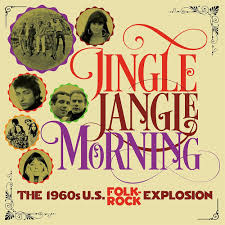
**4. Jingle Jangle Morning: The 1960s U.S.Folk-Rock Explosion (Grapefruit). As the author of a two-volume book history of 1960s folk-rock, I’m well aware prime 1960s folk-rock could fill a box of a dozen CDs, even being selective. I know, from having assembled and written the 10,000-word liner notes for this three-CD, 74-track compilation, how difficult it is to license some prime material. Still, in my biased opinion, this is a good mix of hits and rarities, and big names with cult names and unknowns, spanning folk-rock’s 1965-70 prime (with a couple slightly earlier cuts). There are a bunch of big names/hits here, from originators the Byrds and Bob Dylan through Simon & Garfunkel, Jefferson Airplane, Buffalo Springfield, and Judy Collins. There are also a bunch of artists you won’t find on other compilations built around this theme, from the Blue Things and Jesse Lee Kincaid to the Lemon Drops and Stourbridge Lion. And there are important non-superstars like Love, Phil Ochs, and Fred Neil; underrated groups like the Great Society and Fapardokly; and detours into folk-rock by well knowns that are known for different styles, like Johnny Winter, Nico, and Big Brother & the Holding Company. The list could go on for a long time, and you can see the entire one athttps://www.cherryred.co.uk/catalogsearch/result/?q=Jingle+Jangle+Morning. To end this commercial, you can also still read about 1960s folk-rock in depth in my ebook Jingle Jangle Morning, which combines my Turn! Turn! Turn! and Eight Miles High books into one volume, with updated/extra material.
5. Evie Sands, I Can’t Let Go (Ace). Sands was a fine pop-soul singer, but had some bad luck with record labels and other artists doing more popular versions of some songs she did first. In particular, those songs were “Angel of the Morning,” a big hit for Merrilee Rush (and a substantial one in the UK for P.P. Arnold); “I Can’t Let Go,” a big 1966 UK hit for the Hollies (almost making the US Top 40); “Take Me for a Little While,” covered quickly by soul singer Jackie Ross and done by a few big names, most notably Dusty Springfield and Patti LaBelle & the Bluebelles; and perhaps “Picture Me Gone,” done by Madeline Bell on the B-side of her hit “I’m Gonna Make You Love Me.” The versions that appeared on 1965-67 singles by Sands (as well as her remake of “Take Me for a Little While” from a 1970 single) are all on this 26-track collection, which has all of the sides she released on 1963-70 singles, some of which have been quite hard to find.
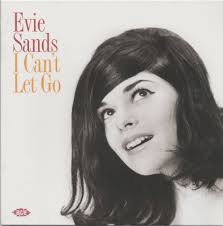
While Sands’s versions of the aforementioned songs aren’t necessarily the best, they’re good and notably different from the more familiar ones. There is, however, a notable gap in the quality of the compositions (though not her vocals) between the best of these songs and most of the others. The four cited above are clearly the best of the tracks, most of which were produced by the team of Al Gorgoni and Chip Taylor, who also wrote many of the songs (usually together, though Taylor wrote some alone, including “Angel of the Morning” and “Any Way That You Want Me,” which had been a big UK hit for the Troggs before Sands recorded it). The material’s usually decent, however. If the arrangements sometimes verge on the overly lush, the tracks occasionally approach the better known tunes in worthiness, especially the intense 1966 B-side ballad “It Makes Me Laugh.” The sole number written by Sands, the 1970 B-side “It’s This I Am, I Find,” is a woozy mystical-tinged orchestrated ballad that makes one wish there was more self-composed work from this era. The liner notes include extensive comments on the songs from Sands (and a few from Taylor), and even give specific details about the few film clips of Sands from this period that can be found.

**6. Jackie DeShannon, Love Forever: Demo Recordings 1966-68 (Real Gone). And here’s another project where I wrote extensive liner notes, these based on a lengthy recent interview with DeShannon yourself. Again, I hope its inclusion on this list reflects my honest enthusiasm for the music, and not promotion of a project in which I participated. The terrifically talented singer-songwriter made a lot of demo recordings in the 1960s that only or primarily was made available on rare LPs only circulated within the industry, for publishing purposes. Only one of these sixteen tracks was actually officially released in the 1960s, and although five others eventually surfaced on archival compilations, they’re not exactly well known. The other ten make their first official appearance here, though a more orchestrated version of one highlight, “Nicole,” appeared on her 1968 LP Me About You.
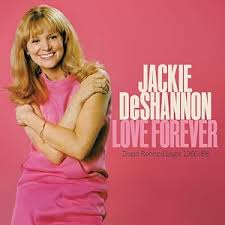
More important than their rarity (and certainly more important than my participation) is their quality. Recorded in 1966 and 1967, these sixteen cuts illustrate her transition from the pop-rock and folk-rock of her early-to-mid-‘60s work to the singer-songwriter school she’d help pioneer near the end of the decade, putting quite a bit of soul in the mix as well. Much can in retrospect be seen as a bridge between that a mid-‘60s demo LP (still unreleased) of her folkiest side and her emergence as an early pillar of the Los Angeles singer-songwriter movement on her 1968 Laurel Canyon album. Although the sixteen demos featured on this album cover a relatively short period in DeShannon’s lengthy career, they encompass several styles—soul and pop perhaps more than any others, but also strands of both traditional and contemporary folk, and echoes of country and blues.

7. Various Artists, Viva Doc Pomus: Songs for Elvis (The Demos) (Omnivore). This double-LP vinyl Record Store Day collection has demos of thirty songs Doc Pomus co-wrote, mostly though not always with Mort Shuman, that were recorded by, pitched to, or likely pitched to Elvis Presley. The title’s slightly misleading, and not only because most of the compositions are credited to both Pomus and Shuman, who together wrote many rock’n’roll hits in the late 1950s and early 1960s, including records by Elvis, the Drifters, Dion & the Belmonts, and others. Although Pomus had an interesting and fairly extensive career as a singer and recording artist before he became primarily known as a songwriter, he didn’t actually sing any of the demos here. Most were sung by Shuman, sometimes with a pretty-Presley-like delivery; one (“I Walk the Muddy Road to Love”) was sung by Peter Anders; and five were sung by unknown vocalists.
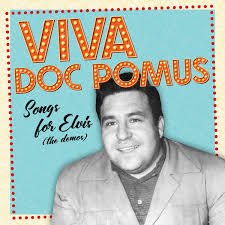
While this is arguably about as much a Shuman album as a Pomus one, that’s not really worth arguing about, since the record’s pretty interesting. It’s also more enjoyable than you might expect, since such demo collections are often more of historical than entertainment value. The songs Elvis did record include some big US and/or UK hits, among them “(Marie’s the Name) His Latest Flame,” “She’s Not You,” “Viva Las Vegas,” “Kiss Me Quick,” “A Mess of Blues,” and his standout non-hit “Suspicion” (which was a hit for Terry Stafford). While these generally and unsurprisingly don’t match Elvis’s versions, they’re surprisingly good and spirited, and while the production’s basic, it’s usually not merely threadbare. A particular standout is the compelling minor-key “Gonna Get Back Home Somehow,” which Elvis did put on the Pot Luck soundtrack in 1962, though this Shuman-sung demo is more menacing and actually better.

While the other songs don’t include tunes to match these highlights, they’re generally above-average early-‘60s-style rock’n’roll, often if not always with a bluesy feel. Intriguingly, a number of these were intended to be soundtrack themes to the Elvis films Pot LuckClambakeEasy Come Easy Go, and Kissin’ Cousins, but not used, as other songs with the same titles were chosen—though all of these would have probably been better picks. A few were used as Elvis movie themes—“Viva Las Vegas,” of course, and also Double Trouble and Girl Happy. Also of interest are a couple songs written with Elvis in mind, but which ended up being hits for Fabian, those being “Turn Me Loose” and a very short, rudimentary “I’m a Man.” 

A few months after its release, the tracks on this vinyl edition were made available as one of six CDs in the Doc Pomus box set You Can’t Hip a Square: The Doc Pomus Songwriting Demos. To my knowledge, the future availability of this material in this format was not made public at the time of this Record Store Day release. That’s a considerable frustration, as it is in other cases like David Bowie’s 1969 rarities, for those of us who are okay with waiting for the CD version to save considerable money and repetition in our collections. As this review was written before I knew about the box, and this double LP does contain the best material on that box, I’m leaving the review in this listing, reviewing the box as a whole in a later entry in this list.

8. Jeannie Piersol, The Nest (High Moon). Although her discography only totaled two rare late-‘60s singles, Jeannie Piersol was a figure of note in the psychedelic San Francisco scene. She was briefly in the Great Society alongside Grace Slick, though that only lasted for a few early rehearsals before she became lead singer of the Yellow Brick Road. She reconnected with the Slick clan in the short-lived Hair, who also featured ex-Great Society guitarist Darby Slick. Darby was also on some tracks (which he also produced) she cut for Chess’s rock-oriented Cadet Concept division, resulting in her pair of 45s.
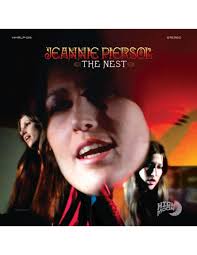
Besides both sides of those singles, this compilation adds a couple outtakes from the Chess sessions; a couple 1967 Hair demos; a couple Yellow Brick Road tracks, taped live at San Francisco’s Matrix club in March 1967; and a couple unreleased Slick-produced cuts from 1968 with another Great Society veteran, Peter Van Gelder, on flute and bass. Darby’s brother Jerry, who’d been the Great Society’s drummer and filled in for a couple weeks with the Yellow Brick Road, even filmed a promotional video for “Gladys” that can be found online.

Piersol wasn’t just a vehicle for Great Society alumni, however. She wrote the majority of the songs here, Darby Slick writing the other four. She also sang with a strident power that might invite some comparisons to Grace Slick, though the similarity is casual rather than derivative.

Certainly the standout is the Piersol-penned single “Gladys” (an earlier Hair demo is also included), which happens to have the strongest resemblance to Grace Slick performances like those heard on Jefferson Airiplane’s “Two Heads” and “Lather.” Given the Great Society connections, it’s no surprise there’s often an Indian flavor to the melodies and arrangements, Darby Slick playing some sarod, and Piersol getting into some raga-esque vocal twists on “Joined in Space.”

Piersol and her bands, however, are set apart from the Great Society with a blend of raga rock and pure soul. Chess stalwarts like drummer Maurice White, guitarist-bassist Phil Upchurch, arranger Charles Stepney, and singer Minnie Riperton helped out on her Cadet Concept sessions. These sometimes resulted in what compiler Alec Palao terms an “Indo-rock-soul hybrid” in his liner notes. While that might sound like throwing too much in the stew, it works pretty well, also setting her apart not just from other acts in the crowded San Francisco scene, but even from most others working in psychedelic rock anywhere.

Palao did his usual heroic job in filling in a missing chapter in 1960s San Francisco rock by finding and assembling an entire Piersol album. His lengthy liner notes also feature recent memories from Jeannie herself, as well as extensive comments from some members of the Yellow Brick Road and Hair, whose horn player, Terry Clements, went on to play with Janis Joplin’s Kozmic Blues Band, the Electric Flag, and the Buddy Miles Express. (This review previously appeared in Ugly Things.)

9. The Final Solution, Just Like Gold! Live at the Matrix (High Moon). One of the earlier San Francisco psychedelic-era groups, the Final Solution never put out a record during their brief lifetime, spanning approximately late 1965 to mid-1967. While much (and maybe all) of this material has circulated unofficially for a long time, this marks its first truly above-board release, in better sound than previous incarnations. Ten of the sixteen tracks were recorded at San Francisco’s Matrix club in July 1966; the other six come from a November 1966 rehearsal. By that time they had a connection with a much bigger San Francisco act, as Grace Slick’s then-husband, Jerry Slick, was on drums, though he doesn’t appear on the Matrix recordings. Jerry had been in the Great Society, the fine pioneering San Francisco psychedelic group also featuring Grace and his guitarist brother Darby. 
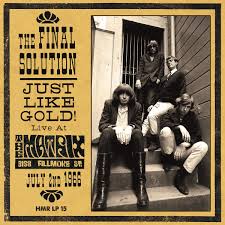
Even before Jerry joined, the Final Solution bore some similarity to the Great Society with their use of minor-key, sometimes raga-shaded melodies. They even lifted parts of the Great Society songs “Arbitration” and “Father” for passages in their own, largely original repertoire. The similarities didn’t go too far, however, and not only because they had less of an Indian influence. The songs were almost unremittingly dark, even dour. They were also often too similar to each other to put the band in the same league as the Great Society or the best early San Francisco rock acts. The musicians themselves didn’t seem to expect much in the way of recognition, judging from somewhat self-deprecating comments by members in Alec Palao’s liner notes that also express a lack of ambition compared to the scene’s heavyweights.

Still, for aficionados of the early San Francisco Sound, this is a notable supplement to that scene’s pre-1967 recordings, even if they also  weren’t in the same league as their top peers instrumentally or vocally. There’s an appealingly raw, near garage rock vitality to their downbeat early psychedelia, best heard on “Bleeding Roses,” “If You Want,” “Misty Mind,” “Just Like Gold,” and their odd mutation of “America the Beautiful.” The recordings with Slick aren’t too markedly different from the live Matrix cuts in nature or quality, including different versions all the aforementioned songs except “America the Beautiful,” and a couple originals not captured on the Matrix tape.

10. Nick Drake, The Making of Five Leaves Left (Island). Drake made just three albums, but now the archival releases of tracks unissued in his lifetime far exceeds those three LPs in quantity. The amount of archival material increased substantially with this four-CD box set, three CDs of which (containing 32 tracks) were previously unissued. The fourth CD is Five Leaves Left itself, Drake’s 1969 debut album. The three other discs have studio outtakes, most of them alternate versions of songs from Five Leaves Left, spanning later winter 1968 to early spring 1969, along with eight songs from an informal 1968 non-studio tape in arranger Robert Kirby’s Cambridge dorm room that’s of fairly low but listenable fidelity.
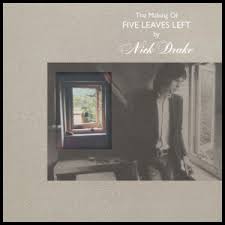
While acknowledging that the purpose of this box is to illustrate the evolution of and path to an album rather than present recordings that are consistently on the level of the final product, the previously unheard cuts do largely fall into the category of “as much historically interesting as exciting listening.” The differences between the studio outtake versions and those heard on the final LP are usually not huge, though it’s pleasant to hear the songs in somewhat different arrangements that are usually less elaborate than those on Five Leaves Left. Like many such historical boxes, it does illustrate how polish and production touches elevating the final versions to substantially higher quality. There aren’t many truly striking variations, an early take of “‘Cello Song” (then called “Strange Face”) standing out with its absence of cello and inclusion of what sounds like steel drum patterns, perhaps played on piano. The early take of “River Man” doesn’t have the dramatic orchestration on the familiar Five Leaves Left arrangement, as another example.

As for songs that didn’t make the LP, “Mayfair” is okay if perhaps atypical in its Donovan-ish upbeat observational flavor. Just three of the eight songs from the dorm room tape (“The Thoughts of Mary Jane,” “Day Is Done,” and “Time Has Told Me”) would make Five Leaves Left, though one (“Made to Love Magic”) would be recorded as a studio outtake in 1968. The other four are okay but not up to the same standard, again showing more of an early Donovan feel than his studio releases would exhibit. Drake’s skills on guitar—sometimes it’s hard to believe just one person was producing such a full sound—are in abundant evidence on most of the outtakes, even on the half-dozen tracks from his first studio session in late February/March 1968.

With an LP-sized 60-page booklet featuring detailed liner notes, production details, lyrics, photos, and tape box productions, the extras are elaborate, but not without their flaws. The liner notes mention a take 2 of “The Day Is Done” from April 22, 1968 being included on the set, but the detailed graph showing tracks and production details does not list it, or indeed anything from the April 22 session written about in the notes. (The April 22 reference was a typo; the correct date is April 11.) Some photos are dated differently in the liner notes and the captions. The music on the three CDs of unreleased music, adding up to about two hours, could have easily fit onto two discs. The CDs are encased in four different LP-sized cardboard sheets that are in turn placed in LP-sized sleeves, all bearing the same cover (the final one used on Five Leaves Left), and aren’t all that convenient to access and pull in and out of their slots. If that contributed to the high list price, the fussiness was certainly unnecessary.

Note too that a number of tracks from this period, some of them detailed in the liner notes, are not included on this box. There’s no need to panic, as they’ve been available for decades on the Time of No Reply compilation, though it would have been useful for the box annotation to note this.

11. Judy Collins, The ‘60s Singles (Elektra/Real Gone Music/Second Disc). Usually and justifiably thought of as primarily an album-oriented artist, Judy Collins had more singles, and more success with 45s, in the 1960s than many realize. “Both Sides Now” was a Top Ten hit in 1968, of course, but she had four other entries in the Top 100. All fourteen of the tracks that appeared on her singles in the decade are collected here in their original edits and mixes (most notably “Both Sides Now” in the dedicated mono mix on its original pressing), almost amounting to a 1960s best-of.
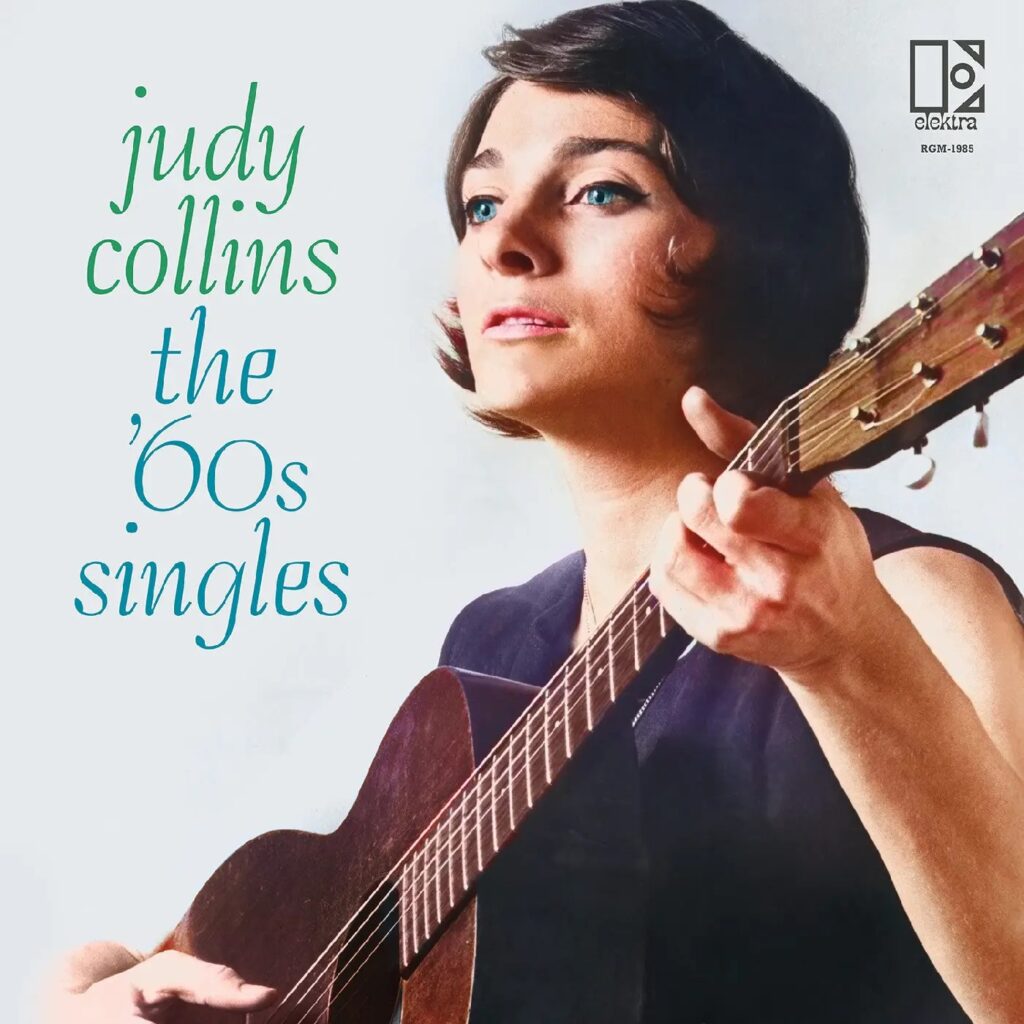
For Collins completists, the most noteworthy tracks are those that didn’t appear on LP or are different than the album versions. There’s the 1965 non-LP B-side cover of Bob Dylan’s “I’ll Keep It With Mine,” a song Dylan didn’t release himself in the 1960s, though mid-‘60s outtakes he cut appear on archival compilations (and Nico and Fairport Convention would do it later in the decade). Collins was first, and its appearance marked her first venture into folk-rock, helped by Dylan sidemen Al Kooper on organ and Mike Bloomfield on guitar. It did make it onto the 2005 various-artists CD compilation Great Lost Elektra Singles Vol. 1 and 2006 box Forever Changing: The Golden Age of Elektra Records 1963-1973, but it regains easy access here.

A little surprisingly, her ornately baroque-folk-rock version of Joni Mitchell’s “Chelsea Morning”—issued about a year after Judy’s take on Joni’s “Both Sides Now” was a hit—didn’t make it onto LP (or too high in the charts), though a live version would be on Collins’s 1971 album Living. The Sandy Denny-penned “Who Knows Where the Time Goes” was the title track of Judy’s 1968 album, but even Collins collectors might not know the version on the B-side of “Both Sides Now” (also appearing on 1972’s Colors of the Day: The Best of Judy Collins) was an entirely different recording. Much more sparsely produced than the LP version—almost to the point that it sounds like a demo for the album rendition, instrumentally dominated by guitar strums—it’s here and well worth hearing.

Collins’s first single, her graceful take on Pete Seeger’s “Turn! Turn! Turn!,” appeared on her third album in 1963 before getting issued on 45 the following year. It’s mostly forgotten that Elektra put it out again as a single in 1969 and got a small hit when it rose to #69 on the charts. Even more forgotten is that the 1964 single was about 45 seconds shorter, removing the second verse. Both the 1964 and 1969 single versions are here.

Those are the four tracks that will most attract collectors, but the high quality of the rest of the set also marks Collins as one of the top folk and folk-rock singers of the 1960s (though the “rock” in her folk-rock was of the mild variety). The uncommonly forceful interpretation of Richard Fariña’s “Hard Lovin’ Loser,” with its urgent harpsichord riffs and barrelhouse piano, should have been a much bigger hit, though it did mark her first chart entry when it peeked into the Top 100 at #97. Other highlights include her standout original composition “My Father”; her country-rock version of Ian & Sylvia’s “Someday Soon,” which almost made the Top 50; and her take on Randy Newman’s “I Think It’s Going to Rain Today,” at a point (1966) when Newman was still pretty unknown. While Collins is more renowned for dignified stateliness than radical reinvention, her arrangement (with Michael Sahl) of the traditional tune “Pretty Polly” is a quite creative and haunting reworking of an overdone standard.

Collins’s early discography is so extensive that no single-disc compilation can qualify as a definitive best-of. Such an anthology would have to include, for instance, covers of Leonard Cohen songs, as she was the first artist to release interpretations of his material; her live performance of John Phillips’s “Me and My Uncle,” from before the Mamas and the Papas were formed; and another standout early Mitchell cover, “Michael from Mountains.” Not to mention highlights from her 1970s recordings, including her 1970 Top 20 rendition of “Amazing Grace.” Yet this dedicated collection of singles from her best decade certainly serves as a fine survey of many of her best recordings, as well as offering some rarities for the dedicated collector. (This review will appear in a future issue of Ugly Things.)

12. The Move, Message from the Country (Esoteric)The Move were in a strange place when this, their final album, was issued in 1971. Having moved through several different lineups, they were down to the trio of Roy Wood, Jeff Lynne, and drummer Bev Bevan. They were also in the process of transitioning from the Move to the Electric Light Orchestra, though Wood would only be in ELO for a short time. But while the LP was uneven and at times bizarrely eclectic, its overall strength meant the group went out on a high note, though a couple post-Message from the Country singles (included as bonus tracks) were issued shortly afterward.
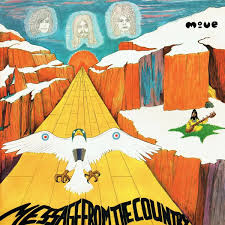
Wood and Lynne were roughly splitting the songwriting and vocals at this point, though Bevan has the credit for “Don’t Mess Me Up” and the lead vocal on “Ben Crawley Street Company.” While Wood had handled almost all of the composing in the Move’s early years, he and Lynne were a good combo. They excel best on Message from the Country on the songs that blend hard progressive rock and almost whimsical pastoral folk in ways that only the late-period Move could. Wood’s “It Wasn’t My Idea to Dance” is an almost hit single-worthy entry in that vein, and the Lynne-penned title track isn’t far behind. Lynne’s melancholy, folky “No Time” is another highlight, and another cut on which the band’s idiosyncratic mix of non-blues slide guitar and recorder couldn’t be mistaken for the work of any other band.

Wood never lost his affection for straight-out rock and roll, albeit with a harder rock edge than vintage ‘50s oldies, as “Ella James” proves. Elsewhere the Move’s restless shifts are less memorable, and sometimes apparently less than serious, as on Bevan’s ‘50s rock’n’roll pastiche “Don’t Mess Me Up,” and most particularly on the apparent Johnny Cash satire “Ben Crawley Steel Company,” sung with a straight country drawl (and pseudo-American accent) by Bevan. The LP-closing “My Marge” is more vaudeville than rock and roll, and not a highlight; was any fine rock act’s ventures into vaudeville among their highlights, bar maybe some of the Kinks’ music hall-like outings?

Message from the Country has usually not been extremely hard to find, and indeed the track list on this 2025 reissue is identical to the one on the 2005 Harvest CD reissue of Message from the Country. It’s also nearly identical content-wise to the deceptively titled 1994 CD comp Great Move! The Best of the Move. Far from being a career retrospective, that 1994 disc merely repackaged Message from the Country with the 1971 single “Tonight,” both sides of the 1971 single “Chinatown”/ “Down on the Bay,” and the 1972 farewell single “California Man”/ “Do Ya” (which also included Message from the Country’s “Ella James,” to be technical).

This 2025 edition has all of those non-LP cuts as bonus tracks, plus alternate versions of “Don’t Mess Me Up,” “The Words of Aaron,” “Do Ya,” and “My Marge,” so it’s puffed up just a bit. The bonus tracks from non-LP singles aren’t mere afterthoughts; in fact, a couple are among the best recordings from the Move’s career. Wood’s acoustic-driven, ultra-catchy “Tonight” was a UK hit and should have been a US one, though the Move never did manage one Stateside. Their closest shot, Lynne’s “Do Ya,” is fine riff-driven harmonized hard rock, though it was inexplicably a B-side (to Wood’s less melodic hard rocker “California Man”) in the UK, and is far more known via ELO’s 1976 hit remake. 

The liner notes in the twenty-page booklet are different from the ones in the 2005 edition, and include a few pictures/labels/advertising from the period. Yet otherwise this is no different from the 2005 reissue, which also added all of these non-LP tracks and unremarkably different alternate versions. But hey, it’s been twenty years, and if you missed out before, easy availability has now been restored. (This review previously appeared in Ugly Things.)

13. The Jimi Hendrix Experience, Bold As Love: The Axis: Bold As Love Sessions (Experience Hendrix/Legacy). Of the three Jimi Hendrix Experience albums, the middle one, Axis: Bold As Love, is the least impressive, mostly lacking the killer original songs of the Are You Experienced debut and about half the 1968 double LP Electric Ladyland. That’s quite relative, of course; Axis: Bold As Love was good and substantially different from the albums that bookended it, being perhaps more low-key and soul-oriented. This deluxe edition presents the original stereo mix, the original mono mix, and two CDs of outtakes/demos/alternatives/live/radio recordings from the Axis era, as well as a Blu-ray with the stereo/mono/Atmos mixes.
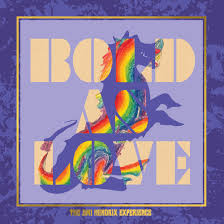
The two discs of extras, more than half previously unreleased, are what’s of most interest, though in common with many recent superdeluxe editions, it’s more of historical interest than something to compete with the familiar versions. There are just a few songs that didn’t make the LP, including an earlier version of “Mr. Bad Luck”—a solid enough blues-rocker—than the October 1968 one issued on 1971’s Rainbow Bridge. A few untitled instrumentals are more notable for his guitar work than the melody or ideas for fully realized songs, Hendrix making use of the Echoplex on the October 4, 1967 solo recording simply titled “Untitled Guitar Experiment.” “Untitled Instrumental #2” actually puts the emphasis on hastily strummed rhythmic chords, its tense riffs occasionally punctuated by particularly emphatic chord-riffs.

There are also mono mixes of both songs from his 1967 UK post-debut LP single “Burning of the Midnight Lamp”/“The Stars That Play with Laughing Sam’s Dice,” as well as outtake versions of both tunes. “Burning of the Midnight Lamp” would find a place on Electric Ladyland with a different mix, but for many years the rather slapdash and informal “The Stars That Play with Laughing Sam’s Dice” was difficult to find, especially in the US. Whether heard in the mono 45 version or the others, there are few other songs by major artists of the time that were such B-side filler throwaways. Even the Beatles’ “You Know My Name” had a lot more effort and craft put into the track.

The different versions of songs from the LP are not so much strikingly different as notable for their more basic nature, before more refined performances were laid down and additional touches, sometimes including overdubs, added. Sometimes the change is more audible than others. “Up from the Skies” actually benefits from the absence of the gimmicky varispeed vocals on the “EXP” track that preceded it on the LP, and take 2, like some other outtakes here, lacks a vocal, allowing you to focus on the instrumentation. The demos of “Ain’t No Telling” and “Little Miss Lover,” recorded at Regent Sound prior to the sessions at Olympic Studios for the proper album, might be as close as we get to live versions, considering they weren’t incorporated into his usual concert repertoire.

More than half of disc four is devoted to live and radio broadcasts from August-November 1967 in Britain, Sweden, and Holland, all of which have appeared on previous archival sets except for the Dutch TV performances of “Purple Haze” and “Foxy Lady” from November 10, 1967. Like many artists Hendrix didn’t mix up his set too much with surprises, but you do get a “Sgt. Pepper” cover from his September 5, 1967 Stockholm show, as well as a live version of “Burning of the Midnight Lamp” from the same concert. Generally the other selections, including versions of familiar songs like “Fire” and “Hey Joe,” aren’t the best live recordings of those tunes available from either performance or fidelity standpoints, though they’re okay. The Dutch TV “Purple Haze” and “Foxey Lady” are pretty fiery, though, with plenty of wild distortion opening “Purple Haze.”

Like many a deluxe expansion of a classic album, this is more for the intense fan than the general listener, but the abundant extras do at the least make for good and sometimes attention-grabbing listening. The booklet features extensive liner notes, vintage photos, and track-by-track annotation for the two CDs of extras by Hendrix authority John McDermott. 

14. Ruperts People, Dream in My Mind Anthology 1967-1999 (Strawberry)It’s tempting to call the story of Ruperts People more interesting than their music, so strange was it in a time with no shortage of bizarre band tales. But they did record some cool and worthwhile material in their short career, all of it on this compilation of rare singles and unreleased tracks. Although, as it transpires, they weren’t even on the most famous record credited to them – just one of the peculiar indignities they suffered.
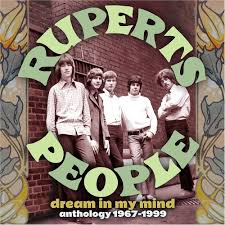
Certainly the song for which they’re most remembered is “Reflections of Charles Brown,” a stately slice of classical-influenced British psychedelia that’s been oft-reissued after its failure to sell in 1967. (That is, incidentally, the correct title, though the character’s clearly referred to as “Charlie Brown” in the lyrics.) This was, alas, one of the songs on which the actual band Ruperts People didn’t appear, as it was actually recorded by fine mod-psych outfit Fleur De Lys (sometimes billed as Les Fleur De Lys), who have an even more twisted history of their own.

The weird journey of Ruperts People is extensively detailed in the liner notes. But basically they started as the Sweet Feeling, whose rare 1967 single (included here), “All So Long Ago” (which sounds much like the “Dead End Street”-era Kinks), was backed by the interesting melancholy early psychedelic effort “Charles Brown,” suffused with backward effects and phasing. But “Charles Brown” is not the same song as “Reflections of Charles Brown,” as Sweet Feeling singer and songwriter Rod Lynton was induced to rearrange the song into “Reflections of Charles Brown” – on which he didn’t sing when Fleur De Lys recorded it, though he got a co-writing credit. Got all that?

Fleur De Lys also bagged “Reflections of Charles Brown”’s B-side, the fine soul-rocker “Hold On,” and both sides of that 45 are on this CD. They’re here because this single – “hold on,” the story’s getting even more complicated – was credited not to Fleur De Lys, but to Ruperts People. When Fleur De Lys declined to promote the 45, Sweet Feeling changed their name to Ruperts People, getting Dai Jenkins of the Iveys into the lineup on guitar. Two Ruperts People singles with ex-Sweet Feeling members followed in 1967 and 1968, both included here, and they’re nice British pop-psych-mod cuts, all written or co-written by Lynton.

These didn’t establish a strong identity for the outfit, however, who sometimes sounded not far from the psych-era Small Faces. Ruperts People didn’t last much beyond a troubled residency in Beirut, where they met student Miles Copeland. Copeland (later to manage the Police and head IRS Records) managed them until he tried to install his brother (and future Police drummer) Stewart in the band, upon which Ruperts People split. The full, yet more involved story’s told in the liner notes.

The disc is filled out with the generic blues-rocker (“Love/Opus 193”) used on the German B-side of “Reflections of Charles Brown” and some lower-fi (but not too lo-fi) unreleased tracks from acetates and live recordings. The highlights of these are the instrumental “Flying High,” which sounds like a promising backing track for what could have been a neat classical keyboard-inflected psych tune, and “Reflecting,” which at times sounds not unlike first-album Soft Machine. A few less interesting live numbers from a 1999 reunion gig fill out this odd curio, worth your time if you’re heavily into early British psychedelia, despite its uneven quality and the inclusion of the “actually Fleur De Lys under a different name” single. (This review previously appeared in Ugly Things.)

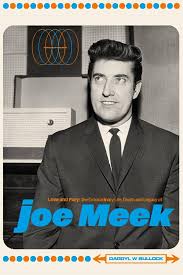
15. Various Artists, Too Far Out: Beat, Mod & R&B (1963-1966) (Cherry Red)This isn’t an overall survey of British music in those styles from this period, which would take up at least a half dozen CDs even if you were being pretty selective. As some other lettering on the cover makes clear, it’s one of the ongoing installments in Cherry Red’s series of compilations devoted to “Joe Meek’s Tea Chest Tapes.” So everything here was produced by Meek, the 88 tracks divided roughly equally between songs that were released on singles and “originally unreleased maters and sessions,” all dating from 1963-66.
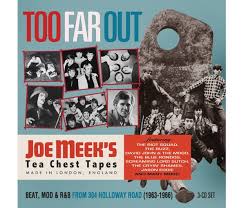
Some party lines have it that Meek, indisputably the most imaginative British rock producer of the early 1960s, couldn’t progress with the times once the Beat Boom started to overrun the British rock scene. While he didn’t have many big hits during the years spanned by this anthology, actually he did record quite a few acts in the last few years of his life who fit very much in the “beat, mod & R&B” genres. What’s more, he produced some of the best “freakbeat” sides of all time, though that term wasn’t in use in the mid-1960s.

Take the best dozen or so tracks from the 45s collected here, and you’d have a killer LP, everything bearing Meek’s trademark ultra-compressed sonics and knack for odd, oft-captivating studio effects. The cuts by Screaming Lord Sutch, Heinz, the Honeycombs, and the Outlaws all qualify on that score, but so do highlights by no-hitters like the Syndicats, the Buzz, David John & the Mood, the Riot Squad, Tony Dangerfield, and Jason Eddie. Indeed, the Syndicats’ demented “Crawdaddy Simone” isn’t just one of the best freakbeat records of all time—it’s one of the best non-hit singles of the mid-‘60s bar none. The Buzz’s feral “You’re Holding Me Down” is almost as good and almost as demented, with one of the nastiest lead vocals of the entire British Invasion.

If you’re curious enough to consider buying a three-CD box with several dozen unissued tracks, however, you probably already have most or all of these. What of the rest, three of which are so unknown they’re actually billed to “Unknown Group #1,” “Unknown Group #2,” and “Unknown Group #3”? It’s a frustrating proposition. On the one hand, Meek fans and scholars will very much appreciate hearing what else he was up to besides those killer tracks that have shown up on other (sometimes quite a few other) compilations. On the other, there’s no denying that the lesser known singles, and certainly the unreleased stuff, on the whole certainly aren’t nearly as good as the cream of this crop.

This shouldn’t be too much of a surprise. Every producer or label tends to release the best of their product, and often leave average items in the vault, or not even release anything by some acts they tape or audition. Some of the obscure or previously unheard material is pretty generic, and some of the covers opt for overdone tunes—after you’ve heard Bo Diddley, the Pretty Things, and even David John’s versions, is it so gripping to hear the Classics’ take on “Pretty Thing,” which is about as ordinary as their name? There’s also the sense Meek didn’t put as much of his idiosyncratic studio stamp, and certainly not as much as his nearly-on-the-edge mania, into the productions that didn’t see the light of day back then.

This doesn’t mean that most of the non-killer singles, and many of the vault finds, don’t make for pleasing listening if you’re such a fiend for these styles that you enjoy decent generic British Invasion music, as I do. Nothing really sticks out as compelling lost gems, but among the unreleased efforts that come off better than others are Flip & the Dateliners’ “Bye Bye Baby Bunting,” with its Millie Small-type vocal, though it’s not ska. Unknown Group #3 actually do a fair Georgie Fame & the Blue Fames imitation on their rendition of Charlie Rich’s “That’s My Way.”

It’s also interesting to hear a couple songs that were done by Meek’s better known clients attempted by others. Tony Dangerfield (heard on disc one with his long-since-reissued “She’s Too Way Out,” albeit via an alternate vocal take) tries “Big Fat Spider,” one of Heinz’s better records; the Buzz have a go at “Should a Man Cry,” though Meek opted to put out the Honeycombs’ haunting treatment. There’s also a previously unissued 1964 track by the Sorrows, one of the best British Invasion groups that didn’t make it real big, but don’t get too excited. Their cover of Sonny Boy Williamson’s “Don’t Start Me Talking,” predating everything they’d record slightly later without Meek, is pretty routine. Since the liners refer to (plural) recordings they made with Meek in ’64, it makes you wonder what other Sorrows tapes might be in Meek’s tea chest.

On the train-spotting side of things, there’s a bit of difference in some of the more oft-heard tracks. For what it’s worth, some songs are heard at their original speed, not the altered versions that appeared on the original singles. That’s not a big deal, I’d think, to most listeners, and the Outlaws’ “Shake with Me” (with its astonishing Ritchie Blackmore guitar solo) sounds better in the familiar sped-up 45 incarnation used on other reissues. A few others have alternate vocals, and the Riot Squad’s “I Take It That We’re Through” is an alternate early version that isn’t as good as the one that came out on a single.

The set as a whole would be a better listen had more prime items by the likes of Heinz, the Honeycombs, and Sutch been included, but those acts have been represented by comps of their own. The twenty-page liner notes provide quite a bit of detail on all of the acts and tracks, with lots of photos and sleeve/label/ad/tape box reproductions. (This review previously appeared in Ugly Things.)

16. The Beatles, Anthology 4 (Apple). Considering how good the Beatles are, and that they’re my favorite musical act, its low ranking here is an indication of how far down the barrel Anthology 4 scrapes for some previously unreleased material. “Some” is an important qualifier, since just 13 of the 37 tracks on this double CD were previously unreleased (the rest have come out on various other archival compilations over the last thirty years). More crucially, those thirteen items are all alternate takes of songs released in the 1960s, none drastically different, and some only mildly different, or essentially backing tracks.
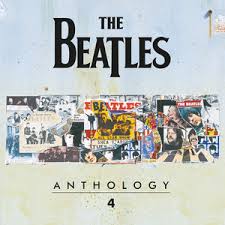
Such takes have been issued all along since Anthology 1, of course. But the main value of the Anthology 4 variations was to illustrate how much was added by the Beatles to the initial studio passes to significantly improve the final result. That’s of considerable interest to historically minded listeners, but not among the most enjoyable Beatles rarities, when the main things that come to mind are, for example, the missing tone pedal guitar in “I Need You”; the missing guitar solo and piano notes in “Every Little Thing”; or the absent George Martin keyboard part in the instrumental break of “In My Life.” Because these are the Beatles, even hearing subpar works-in-progress can be enjoyable, like their loose run through “Tell Me Why” or a largely vocal-less version of “Nowhere Man” that lets you hear the Byrds-like guitar lines better. The limited joy diminishes with cuts like a “Hey Bulldog” backing track missing the hurly-burly guitar solo.

I’m enough of a Beatles obsessive to still welcome these variations, even though they could have fit on a single CD for considerable less expense. Although it’s not great value for someone like me who already has two-thirds of this on other archival releases, the addition of those previously available tracks does make this more listenable when you’re playing both discs all the way through. However, Anthology 4 indicates there really might not be much exciting left in the vault, and perhaps not enough to fill out superdeluxe editions of pre-Revolver albums. It also overlooks some more interesting unissued material that could have been considered, like the (if rather lo-fi) six BBC radio tracks from sessions with Pete Best in the first half of 1962, or the “What You’re Doing” with a key change and different guitar solo in the instrumental break.

17. Patsy Cline, Imagine That: The Lost Recordings (1954-1963) (Elemental Music). This double CD assembles previously unreleased material from a wide variety of sources: live concerts, radio shows, TV shows, and studio outtakes. A wealth of posthumously issued live and radio Cline recordings have appeared over the last few decades, and while this is a valuable supplement to those, on the whole it’s not as consistent or good as the best such collections, like Live at the Opry and Live Vol. 2. But the fidelity’s excellent to acceptable, and there are fifteen songs that haven’t appeared in other versions, though none of those are on the level of her best material. There are also two versions apiece of her big hits “Walkin’ After Midnight” and “I Fall to Pieces.”
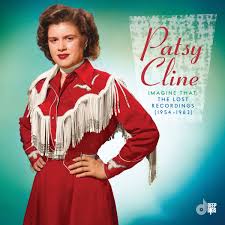
This is sequenced roughly chronologically for the most part, with earlier tapes on the first CD and later ones on the second. All artists evolve over their first (and in Cline’s case, only) decade, but there’s a bigger difference than usual between the earlier and later material. On disc one, mostly dating from the 1950s, she’s an above-average honky-tonk singer, but not nearly as distinctive as she is on the more recent material from the early 1960s on disc two. Her range widens, especially at the deep end, and she arrives at her knack for country-pop ballads that set her apart from most country stars of the period and helped her cross over to a pop audience. That’s evident on these renditions of the hits “I Fall to Pieces,” “Crazy,” and especially the set’s highlight, “She’s Got You.” But it’s also on lesser known tunes like “I Love You So Much It Hurts,” and she could still handle uptempo numbers like “When I Get Thru With You.” The spiritual and Christmas cuts aren’t so good, and unfortunately there aren’t versions of some of the stronger songs she had success with near the end of her life, particularly “Strange.”

18. Pete Ham, Acoustic (Y&T Music). Considering Badfinger’s success wasn’t enormous, there are more compilations of archival recordings by Pete Ham, their most prominent singer-songwriter, than you’d expect. There are at least five that I know of, including this most recent one, which collects acoustic recordings spanning at least 1968-74 (some of the thirty tracks are undated). It’s true that the appeal of this release must be limited to serious Badfinger fans. The sound is okay, but basic, with the lyrics sometimes being hard to make out; the performances, while good and heartfelt, were obviously not intended for release, likely serving more as reference tapes to develop potential commercially available songs; those performances are sometimes fragments of songs, or informal sketches, some instrumental. The annotation is minimal, though not through any apparent fault of the compilers, as it seems likely they present whatever information is available for each track. It’s a little like coming across a bootleg that happens to get professional packaging and release.
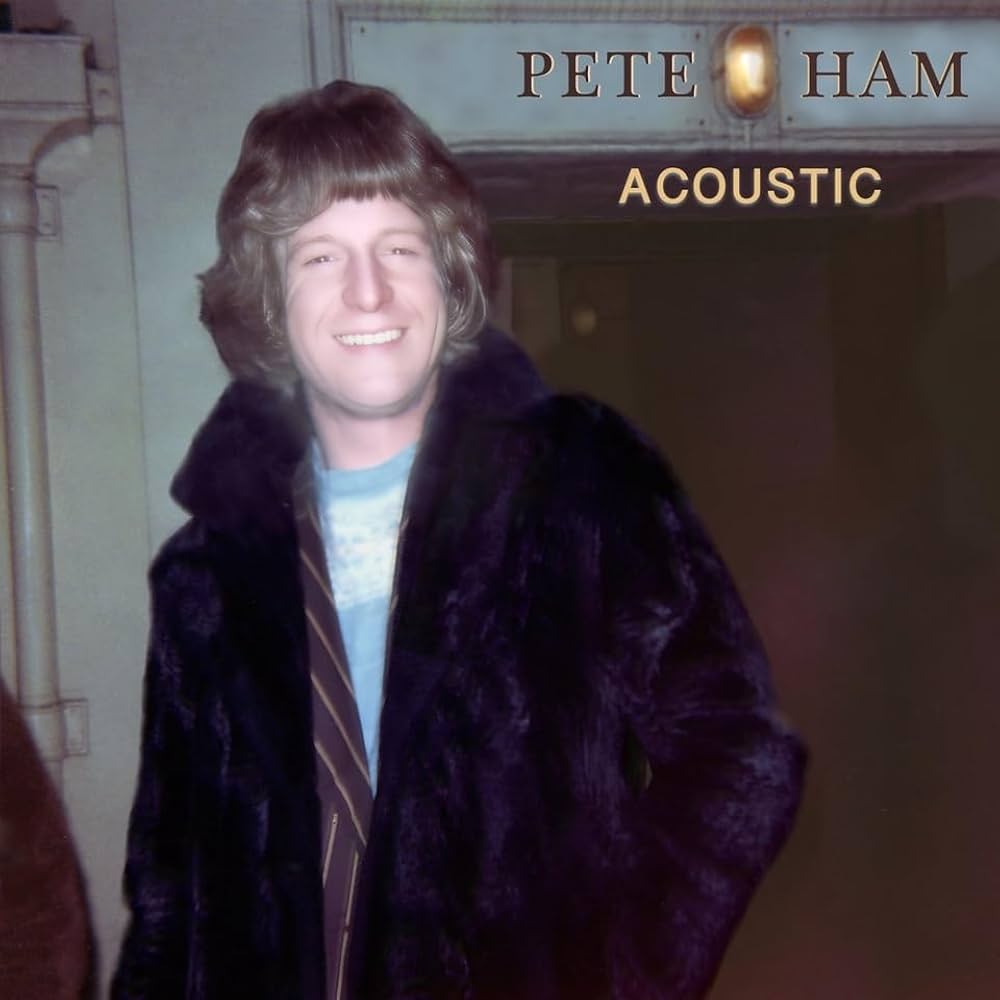
My search for what interests me as a collector, and what I include on this list, isn’t unduly bothered by such things. Keeping your expectations at the appropriate level, these relics have a lot of charm, with Ham’s characteristic gift for uplifting pop-rock melody. Yes, few of the songs are on the level of the best Badfinger songs, a notable exception being the demo for “We’re for the Dark,” which was one of that group’s best (if not one of their most well known) songs, concluding their second album. “Hand in Hand,” a different version of which appears on the most widely circulated commercial compilation of Ham recordings (7 Park Avenue), is also in that league. “Can You See,” as aptly observed in the notes, is quite similar to some Pete Townshend songs in its acoustic drive. The melancholic instrumental “Pete’s Postcard” fluidly blends several overdubbed guitar parts.

But with the exception of some obvious throwaways, most of this is like listening to a talented songwriter, decent guitar, and okay guitarist work out some very pleasant tunes, though none of them stick with you as much as the aforementioned ones. It’s hard to imagine much more Ham or Badfinger-related material has yet to be unearthed, though the Y&T label is certainly on the case, having issued five volumes of recordings by the band from which Badfinger evolved, the Iveys (volume five is reviewed further down this list). In the meantime, it’s likely most committed Badfinger fans will enjoy this release without reservations.

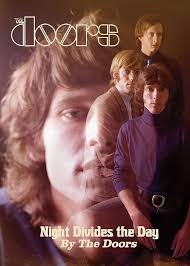
19. The Doors, Live in Copenhagen (Elektra/Rhino/Doors/Bright Midnight). This would have ranked higher if there wasn’t much or any other live Doors in their catalog. Of course there’s a great deal of live Doors (and studio Doors, as seen in another Doors release on this list) the band didn’t release during their lifetime in their discography. This September 17, 1968 concert isn’t among the best of them, both because the sound is imperfect, though not too flawed, and because other releases have other live performances from this era (such as the ones featured on Live at Konserthuset, Stockholm, from just three days later) that contain a bigger repertoire in better sound. Still, though Jim Morrison’s condition during this period was legendarily erratic, he and the group are in good form on this document, though it offers little in the way of surprises. 
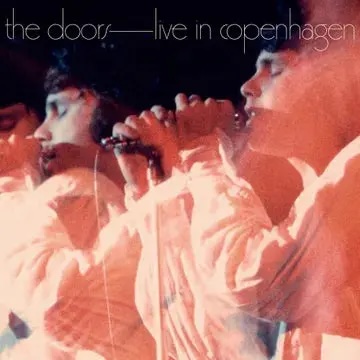
There aren’t many such surprises on a set that’s largely devoted to oft-performed numbers (“When the Music’s Over,” “Back Door Man,” “Five to One,” “Light My Fire”) and somewhat less overdone ones that are nonetheless represented by other versions in circulation (“Hello, I Love You,” “Break on Through,” “The Unknown Soldier”). Note, however, that this “Break on Through,” unlike the Absolutely Live track, mostly sticks to the more concise arrangement from their debut LP and doesn’t interject the “high” in “she gets high” that the Doors had to take out of the track on that album. Also this has a full version of “Alabama Song,” which was usually part of a medley with “Back Door Man,” and (as previously heard on other recordings from their 1968 European tour) an abbreviated “The Wasp (Texas Radio & the Big Beat”), predating the fuller treatment featured on L.A. Woman. In fact, although this contains a track titled “The Wasp (Texas Radio & the Big Beat,” it’s actually just a spoken brief poem with minimal musical backing, which is a problem when Morrison’s vocal is rather faint throughout this recording, and especially faint on this bit. It’s not a problem, but Robby Krieger can’t quite emulate the glissando near the end of the studio hit recording of “Hello, I Love You,” though he does his best with a distorted guitar swoop/slide.

As with many, and maybe the substantial majority, of acts then and now, one wishes the Doors had varied their set more, though they weren’t thinking of the repetition of songs on archival releases back in 1968. Could someone have suggested to them to throw in something like “Take It As It Comes” or “Yes, The River Knows” once in a while, to name two songs not represented by any live recordings in circulation?

20. The Alan Price Set, BBC Sessions 1966-68 (Rhythm and Blues). This two-CD, 52-song compilation (dotted with about a dozen brief interviews) — actually covering 1966 to 1970, despite the title — is a valuable supplement to Price’s 1960s studio recordings. It features radio renditions of many tracks from his studio releases of the period, including the UK hits “I Put a Spell on You,” “Simon Smith & the Amazing Dancing Bear,” “Hi-Lili, Hi-Lo,” “The House That Jack Built,” and “Don’t Stop the Carnival” (he never had hits in the US, unless you want to count “I Put a Spell on You” getting to #80). The sound is good and clear, and of most note, there are a number of songs he didn’t put on his albums and singles of the period. Those are all covers, largely though not always of the R&B/soul kind, including “Baby Work Out,” “Shake,” “Barefootin’, “I Take What I Want,” “The Walk,” “Rip It Up” (two versions),” and “I Was Made to Love Her.” Most surprisingly, he also takes on “Don’t Let Me Be Misunderstood,” which had been a big hit for the band he’s primarily famous for being a part of for a while (before he led his own on record), the Animals.
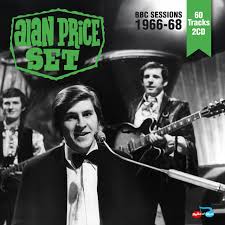
However, he was more acceptably competent at this kind of thing than the two acts with which he was most prominently associated, the Animals and (later) Georgie Fame. “I Put a Spell on You,” done well in an arrangement close to the hit single, is by far the best thing here. Price did also get into more music hall-influenced material, and was among the first notable artists to cover Randy Newman compositions with “Simon Smith & the Amazing Dancing Bear,” “Living Without You,” “Love Story,” and “My Old Kentucky Home.” His keyboard playing is excellent, and he (and Fame) were among the few British Invasion artists to utilize a horn section, but his vocals and occasional own compositions (which did include “The House That Jack Built”) were more okay than innovative or exciting. 

This is almost as good a summary of his early post-Animals years as his studio recordings, which were issued in full on the two-CD anthology The House That Jack Built: The Complete 60s Sessions (which includes ten BBC cuts that are also on this compilation). But for all its merits, the packing on this collection has some notable flaws. It does list dates for each track and personnel, but as noted this spans 1966 to 1970, not the 1966-68 years given in the title. The liner notes are perfunctory, and more seriously, the writing credits aren’t wholly accurate, attributing “1941” to Price instead of Harry Nilsson. Dates are only given for 27 of the 29 tracks on the second CD, and it’s obvious some of them are misattributed. Too, the volume level dips notably for “Barefootin,’” despite the generally fine audio quality.

21. The Iveys, Anthology 5: Miniskirts and Rainbows (Y&T Music). The Iveys were the band from which Badfinger evolved, and even managed to put out an LP (albeit not issued in the UK or US) and a few other tracks at the end of the 1960s before they were renamed. These are demos from between 1966 and 1969, and only a couple of the songs (“Angelique” and “Yesterday Ain’t Coming Back”) would appear on the Iveys’ album, with another, “Blodwyn,” getting redone for Badfinger’s No Dice LP in 1970. All of these were recorded before Joey Molland joined; Ron Griffiths, who wouldn’t make it into Badfinger’s hitmaking phase, is on these, and “Spider Woman” has another semi-original Badfinger member, guitarist-singer Dave “Dai” Jenkins.
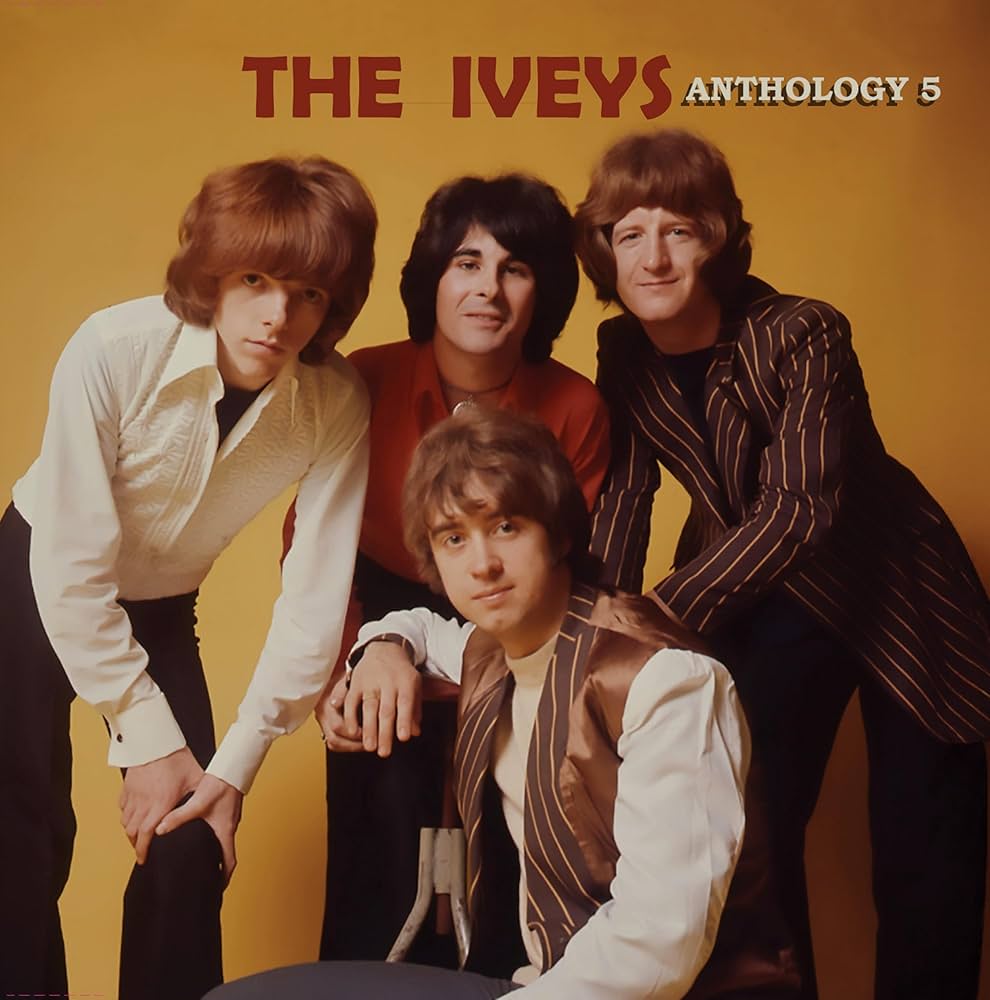
Like Badfinger, these songs and compositions have a strong Beatles influence, albeit from the Beatles’ poppiest side, with some general aura from the late-‘60s British psych-pop scene. Overall it’s the kind of material that labels would consider cultivating as part of a “development deal,” if that term was in use those days. There’s promise, but the songs aren’t too strong, if, as the cliché goes, nice enough for this sort of thing. “Angelique” and “Yesterday Ain’t Coming Back” are the best of them, and a little marred by the group singing what are intended to be horn parts. Should you be a big Badfinger fan, however, they’re certainly interesting to hear as roots of what became a better and more muscular group, the recruitment of Molland probably being a big part of that transition.

As an aside, few groups other than Badfinger come to mind as having so much archival material in a relatively short space of time. Badfinger were pretty productive during their lifetime, with half a dozen albums if you count the one billed to the Iveys. Yet there are five collections of Pete Ham demos available; one of their most prominent other songwriter, Tom Evans, which I haven’t heard, as it’s not easy to find now; and five volumes for the Iveys. Plenty of Badfinger/Iveys BBC/live material is also in official and unofficial circulation. They certainly had a surplus of original material, more by Ham than anyone else, though others in the group wrote (including Griffiths, who has a few compositions here). Not a whole lot of that surplus stood out as striking, however, and was more a testament to their prolific activity as they searched for a style and the best songs to work on, rather than undiscovered treasure on par with Badfinger’s best tracks. 

22. Doc Pomus, You Can’t Hip a Square: The Doc Pomus Songwriting Demos (Omnivore). Pomus was one of the greatest songwriters of the era when the Brill Building was at its peak from the late 1950s through the mid-1960s, most often (though not always) composing with Mort Shuman. Many demos, or at least informal recordings, were taped of songs he wrote or co-wrote, some (but by no means all) of which he sang on. Many of them, most of them previously unreleased, are on this six-CD box. There are demo or demo-ish versions of some of the big hits with which he was associated, like “A Teenager in Love” (also heard in its earlier, inferior, more innocuous incarnation, “It’s Great to Be Young and in Love”), “This Magic Moment,” “Hushabye,” and a few Elvis Presley hits. The great bulk of these, however, aren’t too well known, and sometimes weren’t covered by anyone on official releases.
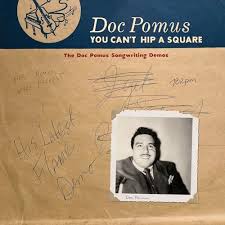
This has undeniably great historical value. But it’s fairly low on this list because if you’re not up for rather scholarly listening (though I am), the entertainment value isn’t nearly as high as hearing the released versions of the best songs on which Pomus was involved as a writer. (The Ace compilation The Pomus & Shuman Story: Double Trouble 1956-1967 collects many, though not all, of those.) This is true of many, perhaps most, demos from major songwriters: the best stuff was recorded in much better, more elaborate versions for official discs, and much of the rest wasn’t nearly as good. That could be a consequence of the pressure to grind out so much material as part of the Brill Building, but many of the songs have a formulaic early-‘60s rock’n’roll feel, and a good number of them don’t have such great fidelity. Mort Shuman (who wasn’t a bad singer), not Doc, sings the majority of these, with quite a few other singers acting as demo vocalists on others, some well known or somewhat known (Ellie Greenwich, Toni Wine, Peter Anders, Kenny Rankin); some very obscure; and some literally unknown, as they can’t be identified.

The best tracks, by a considerable margin, are the ones on the disc of demos done for Elvis Presley. Those were issued a few months before this box for a double-LP vinyl Record Store Day release, and discussed in more detail in the separate review in these listings for that compilation. Generally, however, it seems like more effort and energy was put into these than the many other songs on this box, both in the songwriting—perhaps in realization of how higher the stakes and potential rewards were for a Presley disc—and the actual recordings, most of them sung with fairly committed Shuman vocals. These include demos for the hits “A Mess of Blues,” “She’s Not You,” “Viva Las Vegas,” “Suspicion” (made into an Elvis-like hit by Terry Stafford), and some of Presley’s better soundtrack tunes and album filler. One such tune, “Gonna Get Back Home Somehow,” is actually the best such thing on this disc, and some other numbers on the Elvis CD weren’t even recorded by Presley.

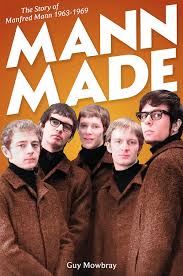
On the other CDs, many of the songs are unfortunately forgettable, few standing out as either potential hits or tunes that stick with you now, when their purpose is to educate and possibly entertain, not to get someone to record it and possibly sell copies sixty to sixty-five years ago. A sedate girl group version (vocalists unknown) of “What Am I To Do?” is interesting as Manfred Mann did a far more dynamic cover in the mid-1960s; the same goes for “Leave It To Me,” done better by the fairly obscure Liverpool group Ian & the Zodiacs. A few items venture outside of the R&B/pop-base more typical of Pomus’s efforts, like the intriguingly winding bittersweet melody of “Half a Love Is Better Than None At All,” an acoustic piece sung and co-written by Bobby Andriani. But most of this isn’t nearly on the same level as release-quality demos that have found official release by Carole King and Jackie DeShannon, to name the most prominent examples among top songwriters from a similar era.

Doc Pomus had a recording career in the early 1950s as one of the first—if not the very first—white R&B/blues singers before concentrating on songwriting. Disc six of this box features his lead vocals on a batch of tunes he wrote or co-wrote, just one of which is well known (“Lonely Avenue,” first done by Ray Charles), and is bluesier than the rest of the set. Disc six also has a few tracks featuring Pomus as the artist, dating from the late 1940s through the mid-1950s, that were previously issued. The box also has extensive 48-page liner notes.

23. Sly & the Family Stone, The First Family: Live at Winchester Cathedral 1967 (High Moon). As significant as Sly & the Family Stone were, this recording of a live March 26, 1967 show in Redwood City (not far south of San Francisco) gets more into historically valuable territory than musical brilliance. That’s for a couple reasons. There isn’t much original material here, and even the one original composition, “I Ain’t Got Nobody,” borrows from Willie Bobo’s “Spanish Grease” (as later adapted into Santana’s “No One to Depend On”). The sound isn’t sparkling, and the vocals in particular sometimes not too clear, though this is fully noted and explained in the liner notes. There are many seeds of the band’s innovative interplay and balance of improvisation and tightness. But at this early point in their evolution, they sound more like a creative and eccentric cover band than the one that would blaze a soul-rock-psychedelic trail with their famous hit records, sometimes mutating and twisting the arrangements so they sound more like Sly songs than covers. 
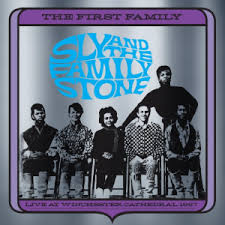
Of course that doesn’t mean this isn’t worth hearing, certainly for historical reasons, and for the most part for entertaining listening, certainly for serious Sly fans. While the songs include some big soul hits—Otis Redding’s “I Can’t Turn You Loose” and “Try a Little Tenderness,” Joe Tex’s “Show Me,” the Four Tops’ “Baby I Need Your Loving,” and Dyke & the Blazers’ “Funky Broadway”—there are also less familiar songs, like Lou Courtney’s “Skate Now” and Junior Walker’s “Pucker Up Buttercup.” Rose Stone had yet to join when this was taped, but otherwise this has much of the template for the group’s sound getting set. Alec Palao’s liners are exceptionally detailed, to the point that they might be more interesting than the music, including quotes from all of the members heard on this recording.

24. The Doors, Strange Days 1967: A Work in Progress (Rhino). The Doors are one of my favorite groups. I’m enough of a completist that I have most of their many archival releases, and have reviewed numerous of their annual ones, which appear as regularly as if Jim Morrison were still alive. Those releases don’t get much mainstream attention, yet they’ve usually ranked fairly high on my best-of lists. Why, then, is this Record Store Day vinyl LP collection of “rough mixes from the album’s early 1967 sessions discovered after 58 years” so low? Especially since Strange Days, though not my favorite Doors album (their debut is mine), is very good, mostly devoted to classic songs?
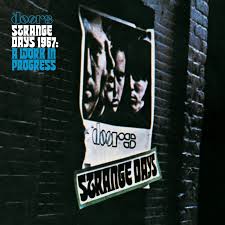
Although, as the cover sticker says, these tracks are “without the final overdubs heard on the original release,” really the differences are not that great, and are on the audiofile level rather than one with sit-up-and-take-notice variations to strike or even get detected by many listeners. To use a disagreeable cliché that’s gaining traction in the reviewing world, you have to squint your ears to figure what’s missing and different. Sure, sometimes instruments like the organ are louder than what you’re used to, and the sound quality’s very good. But not only do these sound close to the final versions—a few songs aren’t here at all, and those aren’t trivial omissions. There’s no “People Are Strange” or “Moonlight Drive,” and while “My Eyes Have Seen You” and “Unhappy Girl” aren’t as major MIAs, their absence hurts too.

There are a couple mini-mysteries this collection sparks. One of the songs, “We Could Be So Good Together,” did not appear on Strange Days, instead surfacing on their next album, 1968’s Waiting for the Sun. I do not recall ever reading that work on this song, which here sounds very similar to the Waiting for the Sun version, began during the Strange Days sessions. Although this isn’t discussed in engineer Bruce Botnick’s brief liner notes, this LP’s credits imply this was indeed a leftover/outtake from Strange Days, as they note that “all tracks were recorded from February to May 1967 and are early versions of album tracks.” Or were they?

Also not discussed in the notes: the last part of this rough mix of “When the Music’s Over” drops noticeably in key from the previous part of the track. Why is that? Is this a combination of two different versions/mixes, or is there some other reason?

** — denotes releases in which I was professionally involved as a writer of liner notes and/or compiler.

I wasn’t able to hear the following 2024 releases in 2024 itself. But as usual, I wanted to make room for albums of note from the previous year that didn’t make my 2024 list for that reason, but are worthy of attention:

1.Davy Graham, He Moved Through the Fair: The Complete 1960s Recordings (Cherry Tree)Davy Graham never quite went into straight rock music. But the British guitarist’s eclecticism, use of backup musicians, and combination of folk, blues, jazz, and world music meant both that his influence was felt in the rock world, and that his distinctive hybrid is likely to be enjoyed by many adventurous ‘60s rock fans. Virtually all of his ‘60s output is on this box, built around the seven LPs he released between 1963 and 1970, along with quite a bit of extra material.
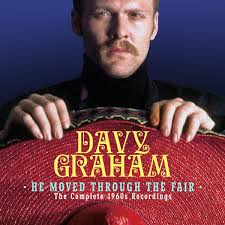
Thrilling at his best, and often crafting an exciting, unnervingly haunting ambience, Graham’s extraordinary instrumental skill didn’t prevent his discography from being quite uneven, both from album to album and within his albums. His 1963 debut The Guitar Player was more accomplished folk-jazz-blues than risky blends of several styles, though even then he separated himself from most of the British pack by using drums (the great session player Bobby Graham) and, on one track, additional guitar by Alexis Korner. Of most interest from this period are his recordings of the instrumental “Anji,” famously popularized by Simon & Garfunkel, and heard here among the three tracks from his EP ¾ AD, as well as in a live 1961 performance.

Graham really established himself as a major force on 1965’s Folk, Blues & Beyond, with fuller backup and rhythmic thrust from drums and double bass. These push the tracks toward rock at times, much like Duffy Power’s rather folk-blues-jazzy mid-‘60s outings did. Graham wasn’t nearly the singer Power was, however, though he was, as the cliché goes, serviceable. “Leavin’ Blues” in particular verges on blues-rock, and on “Maajun,” he was among the first musicians of the era to effectively combine middle eastern/African sounds with Western forms. Although most of the material was drawn from traditional folk and blues, he also ventured into some jazz (“Moanin’,” Charles Mingus’s “Better Git It in Your Soul”) and, with Dylan’s “Don’t Think Twice, It’s Alright,” efforts by contemporary writers.

1966’s lesser known Midnight Man broadened his reach with his hypnotic cover of Lalo Schifrin’s “The Fakir” and his best original composition, the captivating jazz-bluesy “Hummingbird.” He also offered his first Beatles cover with “I’m Looking Through You,” and although he’d usually stick to decent covers of Lennon-McCartney and Paul Simon when he interpreted rock tunes, he also offered respectable versions of “Walkin’ the Dog,” “Money Honey,” and “Neighbour, Neighbour.” “No Preaching Blues” is another of his best originals, while he continued to use spare but energetic backup with more effectiveness than other acoustic guitarists.

Graham moved about as close to blues-rock, or accessibility to the rock audience, as he ever did with 1968’s Large As Life and Twice As Natural. Bassist Danny Thompson (Pentangle), flute player Harold McNair (who worked with Donovan), and Bluesbreakers/Graham Bond  veterans Jon Hiseman (drums) and Dick Heckstall-Smith (sax) all brought some rock credentials. At times this sounds a bit like a spin-off of the Bluesbreakers during their jazziest late-‘60s period. But Graham was best when he brought a lot of raga into his sound, as on a surprisingly fine, bold raga-like reworking of Joni Mitchell’s “Both Sides Now” and the eerie closing instrumental “Blue Raga.”

Hat (1969), maybe the least celebrated and hardest-to-get of the LPs from Graham’s prime, dialed back his deepest dives into world music. Although the repertoire again emphasized blues, folk, and jazz covers, there were covers of “I’m a Rock” and, less expectedly, the Beatles’ “Getting Better,” as well as a “Bulgarian Dance.” The final disc combines The Holly Kaleidoscope (1969) and Godington Boundary (1970) into one CD, and are viewed with somewhat divided opinions by Graham aficionados, in part owing to the frequent presence of Holly Gwynne as a singer. Actually she’s okay, though not great, and these records continued to offer his trademark identifiably imaginative takes on an extremely wide repertoire, even if a few of the pieces seemed more tossed-off than usual.

An entire CD is devoted to his 1965 album with Shirley Collins, Folk Roots, New Routes, although it’s much more of a Collins album, if a perfectly respectable fairly straight folk one, than a Graham one, Davy primarily serving as accompanist. It’s also more traditional than his other ‘60s records, though he does get the chance to offer three instrumentals, highlighted by his own (and very good) “Rif Mountain,” whose middle eastern-flavored melody makes it seem as though it belongs on a Graham solo LP, not one co-credited to Collins. Another CD is taken up by the live After Hours at Hull University 4th February 1967, which came out in the late 1990s, and on which Graham plays solo. That’s also true of the numerous other live tracks added as bonuses on some of the CDs, some of which were on another archive release, Live at St Andrews Folk Club 8th May 1966. The five songs from a live Edinburgh 1961 performance are the earliest Graham recordings to have found release. 

While the live material’s nice to have, it simply doesn’t measure up to his studio work. In large part that’s because he’s playing alone, but also because they’re a bit on the lo-fi side, though the quality’s acceptable enough for comfortable listening. Graham didn’t comment extensively or eloquently on playing with other musicians in the few interviews that survive (one is reprinted in the liner notes), but his backups really enhanced and added drive to his talents on his vinyl releases. The live performances are more casual, almost as if he’s playing for small gatherings in a home—and judging from the audience noise (though not the enthusiasm of the response), the crowds weren’t much bigger than those he might have entertained at house parties.

Some other extras fill out the disc featuring The Guitar Player, most valuably two tracks from the scarce 1963 EP From a London Hootenanny, including a version of “She Moved Through the Fair.” Also on hand are five songs from a 1963 acetate (previously released on the From Monkhouse to Medway CD compilation) and the three from his 1963 ¾ AD EP. Yet this box isn’t Graham’s absolute complete 1960s recordings, as it doesn’t include two tracks that surfaced on the 1972 compilation Rock Generation Vol. 8 that were almost certainly recorded in the mid-to-late ‘60s, like the other material in that extensive archive series. Their omission isn’t trivial; one, a ten-minute version of “Blue Raga” that’s different and four minutes longer than the one on Large As Life and Twice As Natural, is one of the better and more interesting tracks he cut. The other, “When Did You Leave Heaven?,” was not on any of his ‘60s releases in any version.

If the box’s extras aren’t in the same league as the seven principal LPs, it’s still good to have all of this in one place. All of those albums (and the one with Shirley Collins) have been on CD, but some haven’t been easy to pick up even in specialty shops. The booklet includes both historical liner notes and the text of the liners from the original LPs, as well as a transcript of one of his infrequent interviews, given many years after the 1960s to Pat Thomas. (This review previously appeared in Ugly Things.)

2. Doug Sahm & the Sir Douglas Quintet, The Complete Mercury Recordings (Floating World)After establishing himself as a major and idiosyncratic force in mid-‘60s rock with a couple albums and a few singles on Tribe as leader of the Texas-based Sir Douglas Quintet, Doug Sahm moved to Northern California to escape his home state’s punitive drug laws and soak in some hippie vibes. The group went through some personnel changes over the next few years, Sahm remaining the constant on records that were sometimes billed to him alone, although more often to the Sir Douglas Quintet. He was certainly prolific, helming half a dozen albums and assorted non-LP cuts for Mercury in the late 1960s and early 1970s.
All of them and more are on this five-CD box, first issued as a limited edition of 5000 copies about twenty years ago, and now with new comprehensive liner notes by Alan Robinson. Besides all the albums and a few tracks from non-LP singles, there are a handful of outtakes; a rare 1970 Mexican EP with Spanish-language versions of four songs from his Mercury releases; a 1968 Roy Head single Sahm co-produced; and four 1968 sides by bluesman Junior Parker that Doug also co-produced. The fifth CD has the mono single versions of almost a dozen 45s, which came out as a standalone disc on Sundazed in 2011.

While the quality’s uneven in such a large gulp, what’s consistent is Sahm’s blend—unique among top-rank rockers of the era, and just as unusually, most often unforced and organic—of rock, blues, country, and Tex-Mex. The last ingredient is what set him most apart from many other genre-blenders, and he also threw in occasional jazzy detours and traces of psychedelia. There was only one hit (“Mendocino”) in the big batch, but quite a few other goodies, and more often than not, he was interesting even when the material was on the ordinary side.

To me at any rate, his output during this period wasn’t as cosmic as some reports have it, kind of like how what Gram Parsons did with country-rock really wasn’t as cosmic as the legend often paints it. The San Francisco hippie influence was more in his bold eclecticism than out-and-out freakiness. That had been a trademark of his work since the “She’s About a Mover” days, but he stretched out somewhat more for Mercury, especially given so much space on full-length LPs.

He extended himself not only musically, but maybe more especially lyrically. Some of the titles alone testify to the somewhat off-kilter way with words he could have: “Are Inlaws Really Outlaws,” “I Wanna Be Your Mama Again,” “I’m Glad for Your Sake (But I’m Sorry for Mine),” and the possibly autobiographical and slightly sardonic “Sell a Song”—which is both about selling a song and a “done me wrong” relationship. He also often favored tunes portraying him as a guy apt to utter, to quote another song title, “Lawd, I’m Just a Country Boy in This Great Big Great City.” Others have echoes of lamenting not being home/able to go home—possibly reflecting his exile, if apparently a very pleasant one, in Northern California—or marital/relationship troubles, relayed in his habitual relaxed manner, without much resignation or self-pity.

While there are occasional hard-rocking guitar solos and a strange extended instrumental jazz break in “Sell a Song,” really Doug/Sir Douglas excelled most on straightahead rockers—“Mendocino” being the instance per excellence, of course—and heartfelt, more introspective numbers with fine melodic hooks and plenty of Tex-Mex spice. “At the Crossroads” might be the most famous of those, but the far more obscure “It Didn’t Even Bring Me Down” and “Be Real” are in the same class. So is “If You Really Want Me to I’ll Go,” originally a good Beatlesque rocker on a 1965 single by the Ron-Dels that featured the song’s author, Delbert McClinton, on guitar and vocals. The Sir Douglas Quintet version, perhaps as expected, is much more heavily Tex-Mex-accented, especially by virtue of Augie Meyers’s organ.

Not everything here is on the same level of these kind of highlights. A good number of the tracks have a similar kind of Tex-Mex/etc. hybrid, which means it’s better to take the set one or two discs at a time than all at once. “Dynamite Woman” in particular is a transparent redo of the “Mendocino” template with fiddle. Sahm’s ease at spinning out tunes, however, means that the outtakes (and the Rough Edges album, a 1973 LP actually comprised of 1969 leftovers) aren’t too much different than what was green-lighted for release at the time.

The four tracks from the Spanish-language Mexican EP (including “Mendocino” and “Nuevo Laredo,” for which they didn’t even have to change the titles) aren’t mere curiosities; the musicians’ near-the-border roots made for natural comfort with these alterations. The same goes for the cover of “Wasted Days, Wasted Nights,” which many will find betters Freddy Fender’s more well known hit version (though the remake of “She’s About a Mover” isn’t nearly as good as the original 1965 hit single). While the Head/Parker sessions are more peripheral, they’re respectable and let you in on some of Sahm’s extra-Quintet activities.

For some listeners, the standalone Mono Singles ’68-’72 might serve as a reasonable survey/introduction to Sir Doug’s Mercury period. It does include most, but not all, of the songs cited in this review. Yet anyone whose curiosity is whetted if they’ve liked what they’ve caught of what he and the Quintet laid down for the label will find this full set rewarding despite a few bumps on the road, and few if any will be disappointed. (This review previously appeared in Ugly Things.)
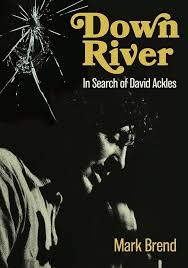
Top 25 (Or So) Music History Books of 2025

Rock books are booming, even as the primary sources for first-hand memories pass away or dim in their accuracy and detail. The range continues to be enormous, from the Beatles to David Ackles, from the Rolling Stones to Neil Innes, from Melanie to the Swinging Blue Jeans. I just hope surviving artists and their associates are more conscientious about preserving and making available archival recordings and documents in the time they have left, considering how valuable those will be to future biographers.

There are still plenty of noteworthy books to fill up a list of 25 or so of my favorites. So many have been released, in fact, that some will have to wait until next year’s supplemental list of 2025 volumes, as I haven’t had time to check out everything I might consider, especially if the book came out near the end of the year.

1.Down River: In Search of David Ackles, by Mark Brend (Jawbone Press). Hard-to-classify singer-songwriter David Ackles put out four albums in the late 1960s and early 1970s, none of which sold well, and which have garnered a passionate but fairly small cult following in the ensuing decades. It’s thus welcome to have a full book on this idiosyncratic figure that draws on much research, even if not all the info could be filled in, owing to the death or inaccessibility of Ackles and many of his associates. However, Brend did interview quite a few of them including Ackles himself shortly before the musician’s death in 1999 and, specifically for the book, Elton John’s lyricist Bernie Taupin, who produced Ackles’s third album. He also gained access to some previously unearthed session sheets and unreleased live and studio recordings. This is contextualized by the author’s detailed description of his tracks and compositions, as well as his perspective on how Ackles fit or, maybe more accurately, didn’t fit into the thrust of his era’s popular music.

Ackles almost backed into a recording career by chance, a meeting with an old friend leading to a writing and, soon, recording deal with Elektra Records. Although there were elements of rock in his records (primarily the early ones), he was really more of a theatrical singer-songwriter, with dabs of folk, jazz, music hall, and satire. Writers of the time, even big fans of his, struggled to come up with reference points in their reviews, comparing him to Randy Newman, Judy Collins, Nilsson, and others, though ultimately he wasn’t too similar to anyone. This both made him more interesting than many cult figures, but also less successful in his time and even after his time, as his music was less accessible than many of his peers working in roughly the same areas was, and certainly less related to rock, even if he was primarily marketed to a rock audience. Elton John and Bernie Taupin were big fans, Elton topping a bill over Ackles at his breakthrough 1970 live Los Angeles performances. Taupin producing Ackles’s third album didn’t help David sell many records, however, though he got some extraordinarily effusive reviews.

Brend is an intense fan, but doesn’t get carried away, acknowledging there are reasons Ackles hasn’t had a huge rediscovery and resurgence in recent years along the lines of Nick Drake, or even Judee Sill. Besides describing many of the rare and unreleased recordings in the main text, he also wrote a specific lengthy appendix going into all the unreleased live and studio recordings he was able to research (and often hear) in great detail. (My interview with the author about this book is at http://www.richieunterberger.com/wordpress/interview-with-richard-morton-jack-editor-compiler-of-world-countdown-august-1966-july-1967/).

2. The Doors: Night Divides the Day, by the Doors (Genesis). This coffee table book is the Doors’ equivalent to The Beatles Anthology and other volumes of bountifully illustrated oral histories of major acts. All of the text is devoted to quotes, from brief to very extensive, from the four Doors and a few of their associates. Of course Jim Morrison and Ray Manzarek couldn’t be interviewed specifically for this project, but Robby Krieger and John Densmore were, and Morrison and Manzarek are represented (as John Lennon was in The Beatles Anthology) by many archive quotes. Archive quotes from Krieger and Densmore were plucked from various sources too, and other voices represented include producer Paul Rothchild, engineer Bruce Botnick, Elektra Records boss Jac Holzman, and some photographers, filmmakers, a road manager, and some others who worked with the group. So are some other musicians, including Van Morrison, as the then-unsigned Doors supported Them at the Whisky A Go Go in June 1966. (Van Morrison’s most favorite Doors songs, incidentally, are “Break on Through,” “End of the Night,” and “When the Music’s Over.”)

It’s true that many of these quotes can be found in various books and other sources by and about the band, and the sources are noted in an appendix, though it would have been good to have footnotes delineating the precise origination of specific quotes. It’s also true that some voices are missing, like manager Bill Siddons and Morrison’s primary partner Pamela Courson, though much more information can be found about Morrison’s personal life in various books if you want it. The focus here is mostly on the music, and it does a good job of hitting many of the interesting points about their songs, albums, and career arc from beginning to end, even including a bit about the post-Morrison Doors. And even if you’ve read as many books about the Doors as I have, you’re not going to automatically recognize the quotes and stories you might have previously come across. 

There are also many photos from throughout their career, quite a few of them rare, and a good number previously unseen to my knowledge. These are augmented by a fair share of memorabilia like tape boxes, show posters, handwritten lyrics, and tickets. Of particular interest for me, in the section on The Soft Parade, there are some observations from both Krieger and Morrison explaining why songs on that album were credited to individual writers, instead of bearing the group credit found elsewhere. In particular, Krieger says had hadn’t written much before then besides “Light My Fire” and “Love Me Two Times,” Morrison noting that “in the beginning, I wrote most of the songs. On each successive album Robby contributed more songs until finally on this album it’s almost split between us.”

3. The Island Book of Records 1969-70, edited by Neil Storey (Manchester University Press). This is the second volume of this coffee table book series, the first having covered the history of the Island Records label from 1959-68. Why suddenly just two years instead of a decade, for a book that’s about as big, with 432 very large-format pages? These were the years when Island became a much bigger force in the marketplace, and particularly the album-oriented rock one. In just these two years, it issued hit albums (and occasional hit singles) by Jethro Tull, Blind Faith, Traffic, King Crimson, Free, Cat Stevens, Fairport Convention, and Emerson, Lake & Palmer. There were also influential folk-rock albums with a smaller audience, particularly the debut by Nick Drake, but also on LPs by Fotheringay and John and Beverley Martyn.

All of Island’s releases in these two years are covered in this hefty volume, with extensive oral history-formatted text and a heap of graphics. The text has quotes from the period, from archival sources, and from many interviews done for this book with many of the artists; people who worked at Island, most notably the company’s head, Chris Blackwell, whose contributions aren’t token, but quite extensive; and others of note, from journalists and LP designers to producers and record store clerks. The illustrations include plenty of those LP covers, of course, but also many advertisements from the era, along with photos, tape boxes, telegrams, press releases, press clippings, charts, inner label variations, and more.

The previous volume in this series had more typos and miscellaneous inaccuracies than it should have, and while a few creep in here, generally there’s a big improvement in those areas. The quotes are almost all interesting, with in-depth insights into the artists, their records, how they were produced, and how Island marketed and distributed them. “All of Island’s releases” really does mean all of them, including some by acts that didn’t really take off, like If, and the occasional weird rarity, like the avant-garde record by White Noise. And even the occasional unreleased one, like a live Traffic LP that was canceled in late 1970. There’s a section for the label’s singles, some of which had non-LP tracks or alternate mixes/versions.

Some of the text dives really deep, to the pleasure of intense collectors, like a graphic detailing exactly who is who on the cover of their popular 1969 sampler LP  You Can All Join In, or the intricate explanation of why a planned album by blues/folk singer Ian A. Anderson came out on a different label. (There are different explanations, but his coincidental bearing the same name as the most prominent member of Jethro Tull seems likely to have had something to do with it.) The most renowned records get the biggest spreads, and these aren’t necessarily the biggest-selling ones of the time, with Nick Drake’s Five Leaves Left getting plenty of ink. So do some acts that might not interest nearly as many readers, like Bronco, though generally the apportionment is as you would expect. It can be a little confusing when non-famous people, like Island staffers, are quoted and it’s hard to follow what exactly their position was, but one of the appendices has bios of everyone quoted.
4. Boom Boom Boom Boom American Rhythm & Blues In England 1962-1966. The Photographs of Brian Smith, by Simon Robinson (Easy on the Eye). Music enthusiast Brian Smith was for the most part an amateur photographer in Manchester in the 1960s, though some have of his photos have previously been published. As it’s one of the biggest cities in England, many touring musicians made Manchester a stop when US blues, soul, and rock’n’roll singers started playing in the country more often by the mid-1960s. In fact, judging from the collection of pictures featured in this 180-page book, very few other towns—including those in the US—would have hosted so many legends in such a short period of time. Listing all of them would take up more than one paragraph, but for a start, there are close-up shots of Chuck Berry, Bo Diddley, Muddy Waters, Buddy Guy, Little Walter, Big Mama Thornton, Howlin’ Wolf, Carl Perkins, Bill Haley, Sonny Boy Williamson, and many others. And these aren’t mere snapshots taken by an unskilled fan. Smith didn’t pursue a career as a professional photographer, but his pictures (almost all in black and white) are generally on par with the best taken of such musicians during this era, capturing them both onstage and in informal backstage and offstage locales. Although there are some slightly apologetic notes about the condition or imperfections of some pictures, all of them are interesting to see, and many are excellent from both historical and artistic viewpoints.
The photos alone would make this a worthwhile book, but there’s also quite a bit of interesting text that’s not, like many such volumes have, limited to brief captions. There are detailed memories from Smith himself and others about the shows and the performers, and they’re not just bland testimonies to how great the musicians were. There are some pretty deep digs of interest to serious fans, like Sugar Pie DeSantos citing Connie Francis as an artist who had soul, and Stevie Winwood discovering the Malibus’ soul obscurity “Strong Love,” which he’d sing when the Spencer Davis Group covered it for a small British hit, at Manchester’s Twisted Wheel club. Smith also photographed plenty of British acts, and although they take a small percentage of the book’s pages in a final section, many good ones are represented by rare pictures, including the Rolling Stones in their very early years, the Spencer Davis Group, Eric Burdon, a pre-stardom Rod Stewart (from a time when his name was misspelled “Stuart” on the billing), Alex Harvey, and even far less celebrated names like the Honeycombs, the Outlaws, and Jimmy Powell.

5. Buzz Me In: Inside the Record Plant Studios, by Martin Porter & David Goggin (Thames & Hudson). There were three Record Plant studios – the first in New York, then a branch in Los Angeles, and then one in Sausalito, near San Francisco. This book focuses on their operations in the period between when the New York branch started in the late 1960s and 1980, when some work was done on John Lennon’s final recordings. Many top artists worked in one or more of the studios during this time, including Jimi Hendrix (their initial primary client), Stevie Wonder, John Lennon, Sly & the Family Stone, Patti Smith, the Velvet Underground, the Who, Fleetwood Mac, and Bruce Springsteen. The full list is much longer, and should also include work done on the soundtracks to Woodstock and The Concert for Bangladesh.

There’s not room for this nearly 400-page book to discuss everything on the list in detail, but quite a bit is. This includes stories that haven’t made the rounds much or at all, like how considerable overdubbing and fixes were done for the Woodstock and The Concert for Bangladesh albums; the massive overindulgence of the sessions for Keith Moon’s solo albums, which were excessive even by mid-1970s rock decadence standards; the limitations of Phil Spector’s roles in some albums for which he has production credit; and the mountains of material, much of which has to be unreleased if the reported quantity is accurate, cut by Stevie Wonder. Hendrix was considered the most important source of cash flow before construction of his Electric Lady studio was finished (and he died shortly afterward). There were hopes that Sly Stone could fulfill this role in the early 1970s, which couldn’t happen as his musical output diminished and his personal eccentricities mushroomed, as covered in depth here.

The technical side of the studios’ construction and recording, as well as the business machinations between owners Gary Kellgren, Chris Stone, and Roy Cicala, might not be as interesting to the general music fan. But they’re pretty interesting, and also reflect the excesses of the era’s music business with their over-ambitious schemes and heavy drug use and partying. Much of the air went out of those balloons when Kellgren died, along with a girlfriend, in his own swimming pool in a still-mysterious tragedy in the late 1970s.

6. Mann Made: The Story of Manfred Mann 1963-1969, by Guy Mowbray (Red Planet). Structured primarily as an oral history with some linking text by the author, this covers Manfred Mann through the years the majority of Mann fans find their most interesting. While their evolution wasn’t as radical as some of the other top British rock bands of the period, it saw them move from jazz-tinged R&B/rock to out-and-out poppy rock, and through several lineups, fronted by original lead singer Paul Jones and then his replacement, Mike d’Abo. All along, however, they put some quite jazzy and occasionally rather strange and experimental stuff on LPs and B-sides. Even in their earliest and bluesiest phase, they excelled at pop-rock singles, and they were among the first rock acts to intelligently interpret Bob Dylan songs.

Add it up and they were a very interesting and eclectic group, even if they weren’t extremely colorful as individuals (apart perhaps from their lead singers), and hampered by production/management advice not to concentrate on songwriting as much they probably should have. Remarkably, all of the surviving members were interviewed at articulate length — which, also remarkably, includes most of their members, though a few (notably Jack Bruce, their bassist for a fairly brief time in the mid-’60s) were no longer around to participate. Even some guys who were only in the band for a few months or so were tracked down, as well as some early members who didn’t record with them.

It’s odd that although their touring (including in Australia) is covered, their one trip to the US (with the Paul Jones lineup) is barely mentioned, let alone detailed. In the linking text between quotes, the author does sometimes digress at unnecessary length on side topics like the kinds of electric keyboards that came into vogue in rock (not just with the Manfreds) in the ’60s. For the most part, however, the musicians are left to speak for themselves, with insight and humor.

7. Love and Fury: The Extraordinary Life, Death and Legacy of Joe Meek, by Darryl W. Bullock (Omnibus Press). This biography of the legendary, and legendarily eccentric, 1960s British rock producer was preceded by an in-depth biography back in 1989 (and published in 2000 in an updated edition), John Repsch’s The Legendary Joe Meek. Meek’s work and life was fascinating enough that it can merit more than one study, however, and this nearly equally detailed volume is a worthwhile complementary work, even if it inevitably covers much of the same ground. Bullock pays some more attention to Meek’s complex and oft-troubled personal life, though without neglecting his music, thoroughly describing many of the records he produced and sessions for those. While not many surviving Meek associates are left, there are also first-hand memories from many of them, all the way up to one of the future superstars with whom he briefly worked, Steve Howe (when Howe was a teenage guitarist in the Syndicates).

While Meek is most known for the Tornados’ “Telstar,” the Honeycombs’ “Have I the Right,” John Leyton’s “Johnny Remember Me,” and Heinz’s “Just Like Eddie,” many of his other productions are discussed, including plenty that never came close to the hit parade. Some of those were by fairly well known names, like Screaming Lord Sutch and (before his hits) Tom Jones; some featured contributions by future stars like Howe and Ritchie Blackmore; and many are known only to collectors. Actually it’s pretty astounding how many records he produced, and when you consider many tracks were unreleased at the time, it’s an overload that surely contributed to the early death (in a suicide-murder) of a man who wasn’t too temperamentally stable to begin with.

Much of what Meek devised to create his trademark sound – compression, weird effects, sped-up vocals, and influences from the occult – is discussed. But some of the specific best of his non-hits could have been covered in more depth, particularly his attempts to get into more updated “beat group” sounds after Beatlemania had changed the industry. Tracks like the Buzz’s “You’re Holding Me Down” and the Syndicates’ “Crawdaddy Simone” deserve more space than getting simply (if accurately) noted as “freakbeat” classics. So do surprisingly cool efforts from Heinz (with help from ace session musicians like Blackmore) such as “Big Fat Spider,” for all the derision the singer suffered as a no-talent who only had a career due to Meek’s infatuation with him. Much of that slack is taken up by the annotation in the ongoing bulge of reissues of Meek’s work.

8. Dip My Brain in Joy: A Life with Neil Innes: The Official Biography, by Yvonne Innes (Nine Eight). Neil Innes’s widow wrote this book about her late husband, the British singer-songwriter-actor who had one of the greatest gifts for combining music with comedy. It’s not so much a straight biography as a combination of a biography and a memoir of their life together, though it doesn’t suffer for that. Yvonne was with Neil from the early 1960s onward, which means she was there, or there for much of at any rate, his stints with the Bonzo Dog Band, the Rutles, and as a seventh member of sorts of Monty Python, for whom he took on some minor acting roles and often performed music with in their live shows. Also covered are his numerous other activities, which will be lesser known to fans outside of the UK, as many of them were not accessible outside of his homeland. These include his work with future members of Monty Python when the Bonzos were frequent guest stars on the late-‘60s children’s program Do Not Adjust Your Set; Monty Python’s Eric Idle on Idle’s mid-‘70s British TV program Rutland Weekend Times, which inadvertently gave birth to the Rutles; the short-lived supergroup of sorts GRIMMS; and various TV and radio series, as well as many live performances Innes gave as the featured/central artist.

Innes’s wife wasn’t around for all of this, as Neil was often away for extended periods working and touring as their family grew. But she was around for a lot of it, and there are plenty of interesting and amusing inside stories of how his projects worked, dating from the chaotic formation of the Bonzo Dog Band from his art school background. She has a good sense of humor herself, as well as insights into her husband’s take-life-as-it-comes demeanor, which gave them lots of easygoing fun, but also might have made him easier than some to take advantage of in music business dealings. It’s disheartening to hear how he lost copyrights to much of the material he wrote for the Rutles, how he fell out with Idle in a business dispute in the 1990s, and how he didn’t get the money he expected from Spamalot, though this didn’t prevent him from simply getting on with as much fun as he could as he constantly juggled creative projects and touring.

Like so many memoirs, this does lose some momentum after his peak projects are discussed, and by the twenty-first century there are some stories of moderately amusing domestic incidents that aren’t of nearly as much significance as tales of the Bonzos/Rutles/Pythons. But Yvonne Innes is an engaging narrator, and while there might not be as much in the way of hard facts and research as a totally straight biography would boast, her tone is in keeping with the good-natured satirical approach to life Innes projected in his music and other forms of entertainment.

9. Blood Harmony: The Everly Brothers Story, by Barry Mazor (Hachette). With both Everlys gone and many of their close associates similarly unavailable, it’s a challenge to do a biography as comprehensive as it could have been with more first-hand interviews, though the author did some. While there haven’t been many books about the duo, this does the best job of blending coverage of their music, recordings, career trajectory, and personal lives. Although press attention paid to them in their late 1950s and early 1960s peak was superficial, Mazor diligently dug up much such clips, and accessed and depicts many of their filmed performances. As their music got more erratic after 1962, and their story as a whole less interesting after the 1960s, the volume inevitably gets less interesting in its final chapters, though their bitter 1973 breakup and 1980s comeback are detailed, along with how they played out the string as a legacy and retired act in the 21st century. Perhaps their more or less constant feuding and personal differences are played up more than they need to be, but the music is central to the story, including the distinctions between what each brother sang and wrote. To its credit, much more of their catalog is discussed than their big hits, though there could have been more in-depth material on some of their LPs, particularly 1960’s It’s Everly Time and A Date with the Everly Brothers, both of which are among the best pre-Beatles rock albums.

10. Times and Seasons: The Rise and Fall and Rise of the Zombies, by Robin Platts (HoZac). There have actually been previous low-profile books on the Zombies, but this is better and more thorough by far, and not just because it’s a pretty lengthy 350-page biography. There’s much first-hand and vintage interview material from all five of the original Zombies, and the author treats the band as the major British Invasion group they were, not the three-hit wonder they’ve often been dismissed as. While numerous interviews and liner notes have dispensed much of the story, this covers their origins and 1960s work with coverage featuring much detail even some of their bigger fans might have missed. There are plenty of deep quotes from the period from the likes of regional newspapers few have seen, and few have also seen all of the reproductions of vintage advertisements and press clippings used throughout the volume. There’s likewise some trivia even Zombies completists might not have come across, like their serious consideration of covering the Temptations’ “My Girl” when the hits had run alarmingly dry, or keyboardist Rod Argent having written an instrumental (never released by the Zombies) on a mid-‘60s single by the obscure group the Second City Sound.

Note, though, that only about half of this covers the 1964-67 period in which the original Zombies lineup was active. The rest covers the members’ musical activities from their breakup to the present, including the 21st century version of the Zombies with Argent and singer Colin Blunstone. The early part of the post-Zombies section remains interesting, if not as interesting as what the Zombies actually did as a unit, including the stories behind the numerous fake Zombies touring the UK and US to capitalize on the belated rise of “Time of the Season” to near the top of the charts. Rod Argent (and to a lesser extent bassist Chris White’s) early years with the band Argent, and Colin Blunstone’s early recordings as a solo artist, also hold some interest, though less so as the mid-‘70s approach. After that, things become something of a grind through increasingly brief recaps of numerous albums and tours that didn’t make a significant commercial or artistic impact.

There could have been more musical/critical description of their numerous 1960s recordings, particularly their non-LP singles, that were very good and intricate, even if they didn’t sell much. Sometimes more attention is given to how high they charted than how they sounded, though if you’re interested in how they charted in non-US/UK territories, and on infrequently consulted charts like those compiled by pirate radio stations and local US stations, an astonishing number of statistics were dug up for those. For more specific info on the songs and the recordings, you can find it in the extensive liner notes for several fine compilations Alec Palao assembled for Ace Records. 

11. Richard Manuel, by Stephen T. Lewis (Schiffer Publishing). This 400-page book is not only a hefty biography of the Band multi-instrumentalist (principally pianist), singer, and occasional songwriter. It’s so thoroughly detailed it also nearly functions as a history of the Band, though the focus is on Manuel, and plenty of other information is in biographies of the group, and in the memoirs of Robbie Robertson and Levon Helm. It not only covers his time in the Band (including their Robertson-less ‘80s reunion years before Manuel hung himself in 1986), but goes way back to his bands in Stratford, Canada, before he joined Ronnie Hawkins’s backup group the Hawks. The Hawks mutated into the Band by 1968, and their very interesting years backing Dylan on tour in 1965-66 and then on the 1967 Basement Tapes recordings are also covered in great depth.

Although he wrote some notable songs on the Band’s debut album and was always vital to their sound as a pianist and lead/backing singer, Manuel had an oft-troubled life, though the author concentrates more on celebrating his artistry. Even before his alcoholism became its worst after the Band’s mid-‘70s breakup, Manuel had piled up numerous car wrecks and generally debauched behavior, balanced a bit by a likable personality that won him friends like Dylan and Eric Clapton. He nonetheless suffered from a lack of confidence that contributed to his near-total withdrawal from songwriting after 1968’s Music from Big Pink, as well as general instability that made his post-Band life (and some of his late-Band life) tumultuous.

The text is a little too bubbly and enthusiastic about his musical virtues, making some similar points quite a bit. However, it’s to be commended for discussing his recordings in extreme detail – not just the albums by the Band, but many live tapes, film clips, and studio outtakes, going back to his pre-Band band the Revols, and including live and Basement Tapes-era recordings with Dylan. That might be too much for some casual fans and readers. But more is much better than less, and more books should take such time to document what’s available, official and otherwise. Many pictures of Manuel and his associates from throughout his life are also featured.

12. Insomnia, by Robbie Robertson (Crown). Although this isn’t nearly as long as Robertson’s memoir Testimony, and doesn’t cover nearly as many years, it’s kind of a sequel. Testimony stopped when the Band came to an end; Insomnia covers the next three years or so, when Robertson didn’t record much music, but was extremely busy as a film producer/actor/composer/soundtrack mixer. Much of this was done in association with Martin Scorsese, of whom he was a housemate in Los Angeles during much of the late 1970s. Both of these figures were going through rough romantic and personal times, and much of their anguish was alleviated by drugs and womanizing. Robertson might not have gone as close to the edge health-wise as Scorsese, but had flings of various length with Genevieve Bujold, Jennifer O’Neill, and Tuesday Weld, among others, before reuniting with his first wife. His wilder and tougher experiences are related in an interesting, zippy storytelling manner that’s neither too frivolous nor too regretful about sowing his wild oats.

Even if you’re not a particular fan of Robertson’s music, there are interesting anecdotes aplenty here, many of his intersections with lots of musical and movie celebrities. There’s Robert De Niro, not unexpectedly, and Bob Dylan, though not a huge amount of text related to the latter. But there are also unexpected interactions with film figures like The Battle of Algiers director Gillo Pontecorvo berating Scorsese’s movies as fascistic, or Robertson and Scorsese cutting out of a London restuarant to avoid a simmering confrontation with a loud and unruly nearby table commandeered by Keith Moon. There are also regretful accounts of his loosening ties with the rest of the Band, and although Levon Helm in particular has given a different perspective, here Robertson views the loss of their musical and personal comaraderie with remorse. There also inside tales of how The Last Waltz documentary was edited and finalized.

One puzzling if minor aspect of this generally good read is that Dylan wanted The Last Waltz not to come out before his own documentary, the ill-received and generally little seen Renaldo and Clara. According to Robertson, an attorney assured him he knew what to do to take care of this, without revealing how to Robbie. But this book doesn’t reveal how this was resolved.

13. Is Everybody Ready for the Next Band? The Rolling Stones 1969 US Tour, by Richard Houghton (Spenwood Books). This isn’t a conventional book about the tour itself, but an oral history collecting memories of people who were at the shows. Most are previously unpublished, although there are a few excerpts from reviews of the time. And almost all of the tales are from audience members, which might make for less inside information than band members and their associates, but allows for perspectives that usually don’t make customary biographies and histories. There’s also one exception to the “US Tour” part of the title, as there are also accounts from those who were there at the Rolling Stones’ July 1969 free concert at Hyde Park—the only show they played outside of the US that year, and their first with Mick Taylor, staged just a couple days after the death of the guy he replaced, Brian Jones.

While there isn’t much here that conflicts with the usual reports of how this legendary tour went down, it’s still interesting to read these anecdotal accounts, which have some personal and informal qualities not often heard in more standard surveys. These testify to the general quality, and occasional sloppiness or substandard sound, of the concerts, including descriptions (usually very complimentary) of opening acts Ike & Tina Turner, Chuck Berry, B.B. King, and (though many didn’t pay him much attention) Terry Reid. Some of the more offbeat sources that stand out are the guy who managed to get into the elevator with the Stones as they were going up to their New York press conference; the official photographer of the West Palm Beach Music & Arts festival that was one of their gigs; and a fan who taped a Boston show that’s now been bootlegged. 

More general things that stand out is how overwhelmingly young the audiences were for the Stones at the time, largely ranging from the mid-teens to early twenties. A good number were high on something, as was often par for the course during the era, and some managed to sneak in without paying or weave their way to the very lip of the stage—accomplishments that are much rarer in our current era of much higher security, and much vaster crowds. The Stones also often did two sets, and often took the stage much later than the official opening time, leading to crowds that had to wait outside in the cold for hours for the second show, which often finished long after midnight.

Recollections of their final and most famous/infamous show of the tour at Altamont are in the final section, and generally confirm the reports of chaos and violence at the concert, though many simply couldn’t tell exactly what was going on, even if they were relatively close to the stage. There are also several dozen photos (including some prevoiusly unpublshed snapshots of the Rolling Stones onstage), programs, tour itineraries, advertisements, and other memorabilia related to their 1969 tour.

14. Waiting on the Moon, by Peter Wolf (Little, Brown). Even if you’re not a J. Geils Band fan (or a fan of Wolf’s solo music), this is a pretty entertaining memoir. For Wolf focuses not on his records or performance career, although there’s some of that, but on the many people with whom he’s been associated, sometimes very closely, sometimes in more passing but interesting encounters. Those started long before the J. Geils Band, particularly when he was a struggling student and musician in Boston, where he often befriended (and sometimes backed up in concert) blues legends like John Lee Hooker, James Cotton, and Muddy Waters. He was also a good friend of Van Morrison when Morrison was struggling to gain a foothold as a solo artist during his time in Cambridge, Massachusetts in 1968. There’s a whole chapter about that, and while Wolf still regards Morrison with affection, it will not refute Van’s reputation as an enigmatic eccentric. There’s also a lot about his marriage to Faye Dunaway—not all of it pretty—and his experiences with some non-musical figures you might not expect to show up, like Andy Warhol, David Lynch, Tennessee Williams, and Alfred Hitchcock. Everything’s relayed with humble humor and an engaging storytelling tone.

What’s missing? Even in a nearly 350-page book—which isn’t as wieldy as it might seem from that number, as there’s a lot of white space between sections—there’s not a whole lot about the J. Geils Band. Wolf doesn’t even go over how they formed until one of the final chapters, and then only in a cursory fashion. What’s covered focuses more on some admittedly interesting (and sometimes shady) navigations of the music business, particularly with Atlantic Records and controversial manager Dee Anthony, than the music. If you’re looking for how he and the group felt about devising their take on blues-R&B-rock in their early records, or even anything about their hits from “Give It to Me” and “Freeze Frame,” there’s virtually nothing. He does discuss and lament the end of his songwriting partnership with Seth Justman, and getting asked to leave the group just after their huge commercial success in the early 1980s. There’s the feeling enough about his career could be saved for a different memoir, and that he might prefer to tell tales about his interactions with celebrities (with booze aplenty along the way). Reader interest in his own music might have been underestimated, and interest in his not-so-extensive times with the likes of Julia Child (and a chapter about exchanging a gift of expensive wine from Atlantic for numerous cheaper bottles) overestimated.

15. Wings: The Story of a Band on the Run, by Paul McCartney (edited by Ted Widmer). Although there are many quotes by McCartney in this book, it’s an oral history, not an autobiography. There are many quotes from people in McCartney’s orbit from the end of the Beatles through Wings’ official split in 1981, including all of the other Wings; two of McCartney’s daughters; and various producers, session musicians, graphic designers, and other professional and personal associates. Some of this material was taken from interviews done for the documentary Man on the Run (not in wide release until 2026), but some obviously is taken from other sources, particularly when the subject hasn’t been alive for many years (most notably in the numerous quotes from Linda McCartney). It would have been good for the specific sources to be noted, even if that’s the kind of thing that only bothers intense historians.

In a 550-page book, inevitably there are a lot of stories and detail, some of which cover familiar territory on the first decade of McCartney’s post-Beatles life, some which don’t. Among the less familiar tales are Sean Ono Lennon remembering how his father John must have played Paul’s 1970 debut solo LP a lot considering how worn John’s copy is (as was the case for other Beatles solo albums), and Paul noting that a TV program of Johnny Cash was a specific inspiration for forming Wings, as he was impressed by Cash’s interaction with his backup band, the Tennessee Three. Wings’ first British tour, an informal and somewhat slapdash affair where they’d show up at colleges unannounced, is given a lot of coverage. All of Wings’ concerts are listed in an appendix, which also includes a discography and timeline.

Unsurprisingly, McCartney and others’ take on Wings’ music and accomplishments is unremittingly positive, although (Band on the Run aside) their albums—and this book also covers McCartney’s first two albums, before Wings were formed—all got mixed and sometimes negative receptions. Critics’ reviews in particular are criticized or viewed as inaccurate or irrelevant in the long run. While it’s true some of their records have gotten a fair amount of retrospective reassessment over the years (and sometimes hailed as maverick indie-like in their attitude despite getting massive distribution and often high-gloss production), the possibility that at least some of this criticism might have been valid isn’t given much examination. There are also plenty of accounts of how their tours evolved into multimedia spectaculars and Wings’ constant lineup shifts, where internal tensions that helped caused them are discussed but not too thoroughly mined. McCartney’s brief jail term for bringing marijuana into Japan is a significant part of the book’s final pages, though his foolishness is somewhat underplayed, especially as the cancellation of Wings’ Japanese tour was crucial to ending the band.

Although the book could have had some more balance, the biggest issue shoving it down this list is that Wings simply weren’t as interesting, musically or historically, as McCartney’s previous group, the Beatles. Allan Kozinn and Adrian Sinclair’s two music-centered volumes (there are more to come) on the first dozen years of his solo career, The McCartney Legacy, have much more detail on his music and recordings, and quite a bit on his general career. The first of those books, The McCartney Legacy Volume 1: 1969-73, is recommended more highly than this perhaps somewhat sanitized quasi-memoir.

16. The Hollies: Elevated Observations: The Graham Nash Years 1963-1968, by Peter Checksfield (peterchecksfield.com). Checksfield’s Hollies book follows the format of several of his previous ones devoted to the discography of certain acts: track-by-track descriptions, basic release information, and plenty of black-and-white illustrations of vintage record covers, sheet music, and ads. Although it only covers the first half decade or so of the Hollies’ career, in his, my and many others’ estimation, that’s by far the best portion of their work, going up to original Hollie Graham Nash’s departure from the group at the end of 1968. 

Like his books on the Searchers, Jerry Lee Lewis, the Dave Clark Five, the Brian Jones-era Rolling Stones, Cliff Richard, and the Tremeloes, this is distinguished from most such discography volumes by both its intense attention to detail and actual critical evaluation of the music, as opposed to mere lists. That level of detail encompasses tracks that even completist Hollies collectors might not be aware of, like unreleased BBC sessions, outtakes, and foreign-language versions. There are also lists of the many cover versions the Hollies generated during the 1960s—some of them really obscure—and an appendix documenting their BBC sessions and TV/film appearances. While Checksfield’s love of the group might lead to assessments of their work that some will feel overenthusiastically generous, this is a valuable book for anyone who cares enough about the Hollies to look into their recordings beyond the obvious best-of compilations, and even beyond their multi-disc anthologies.

17. World Countdown August 1966-July 1967,edited by Richard Morton Jack (Landowne). The last years of the 1960s saw the emergence of many underground, or at least alternative-ish, papers that gave far more coverage to rock music than almost any prior publications of the sort had. Most of them are now forgotten and hard to find; many were very short-lived. Some were so odd in their focus, variable writing style, and rococo graphics that they’re hard to easily describe.

World Countdown, published in California from August 1966 to July 1969, was one such magazine, and one of the hardest to classify. It’s also very hard to find, with few surviving in library or institutional collections, and not many having been preserved by private collectors. Author and rock historian Richard Morton Jack has tracked many of them down, and the new book he’s edited, World Countdown August 1966-July 1967, reprints all of them from that year, along with a lengthy introduction covering the history of the magazine.

Original reporting and criticism of the era’s rock scene was not World Countdown‘s forte, although it did have some. Instead, it offered a jumble of reprints of material (ranging from entire articles to bits and pieces) from other magazines; sketchy scene reports and impressions; verbatim reprints of press releases from record labels or publicists hyping specific artists; tons of ads for records, record stores, fashion accessories, music- and fashion-related businesses, and more; and many pictures of music acts from the time, many of them seldom if ever seen elsewhere.

The range of artists covered was almost absurdly wide, from the deepest underground (including quite a few who rarely or never put out records) to the biggest rock superstars, teen pop hitmakers, and even mainstream pop singers. Quite credible early rock journalists could be read in its pages, yet such offerings were outweighed by hype-heavy copy, a good deal of it unattributed. While many of the ads boasted slick professional design, the cut-and-paste layout of many pages could verge on the amateurish.

The obscure pictures and ads are what’s really of most interest, since you really have to sift through the copy to dig out interesting bits of info that rarely surface elsewhere. Some are here, however, like a report on a Fugs concert that mentions their unissued Atlantic album The Fugs Eat It; fleeting bits about Bob Dylan signing to MGM for $2 million (though he’d never record for them) and Capitol considering releasing the Beatles single “A Day in the Life Of” (sic) after the track was illicitly broadcast in advance of Sgt. Pepper‘s release; and Ralph J. Gleason’s accurately enthusiastic review of Jefferson Airplane’s Surrealistic Pillow. Unexpected names pop up among the contributors, like Richard DiLello (before he moved to London and worked for Apple Records) and, as photographer, Ronnie Haran, who helped find acts for the Whisky A Go Go, most notably the Doors. (My interview with the author about the book is at http://www.richieunterberger.com/wordpress/interview-with-richard-morton-jack-editor-compiler-of-world-countdown-august-1966-july-1967/).

18. Before Elvis, by Preston Lauterbach (Grand Central). Subtitled “The African American Musicians Who Made the King,” this focuses on several key black influences on Elvis Presley as he began his recording career in the mid-1950s: Arthur Crudup, Big Mama Thornton, Junior Parker, black gospel in his region, and brothers Phineas and Calvin Newborn. The first three names are known even to many casual Presley fans, as Crudup was the writer and original performer of three early Elvis cuts (“That’s All Right Mama,” “My Baby Left Me,” and “So Glad You’re Mine”); Big Mama Thornton did the original version of “Hound Dog”; and Parker, besides also recording for Sun Records, put out the first version of “Mystery Train.” The Newborns aren’t so well known as the others, in part because they were principally jazz musicians, and didn’t write/perform songs Elvis covered.

The book’s greatest strength is its coverage of Crudup, Thornton, and Parker, which gives overviews of their careers and doesn’t just focus on the original versions of songs Elvis did, though there are plenty of details on those. Among the other interesting points discussed are Crudup’s struggle to get royalties for the Elvis recordings of his songs (ultimately successful, but not until after his death); Thornton’s composition of “Ball and Chain,” made famous of course by Janis Joplin with Big Brother and the Holding Company; and Parker’s successful transition from raw early electric blues to smoother soul. The Newborns’ connection to Elvis wasn’t as firm, though Lauterbach discusses reports that their stage shows were influences on Presley’s live performances, and also relays the difficulties Phineas in particular had due to his psychological problems, though the jazz he did wasn’t too similar to Elvis’s rock. While the book’s subtitle makes its focus on Presley’s African-American influences clear, this volume underplays the substantial effects white gospel and country also had on his work.

19. Treasures Untold: A Modern 78 RPM Reader, edited by Josh Rosenthal (Tompkins Square). Record Store Day is mostly known for limited edition releases on vinyl and, to a lesser extent, CDs. This 155-page hardback book, however, was a spring 2025 Record Store Day release limited to a thousand copies, though it does include a CD. The dozen chapters present memories, stories, and perspectives by (and occasionally interviews with) devoted collectors of 78s, some of whom are also musicians, dealers, archivists, reissue compilers/liner note writers, and/or record label owners. The authors aren’t celebrities on the order of, say, R. Crumb, although there’s a detailed story of an in-person encounter with him in one of the chapters. But some will be known to general music historians, like editor Josh Rosenthal, who runs the Tompkins Square label (and did some of the writing and interviewing), longtime collector/reissue writer/assembled Dick Spottswood, and record label executive David Katznelson, who’s also worn several hats. The focus is usually on blues, country, and folk 78s, though a few other genres like jazz, gospel, and early rock’n’roll are also discussed.

You don’t have to be a collector of original 78s to find this interesting. (Indeed, very few music fans, even those very interested in this type of early-to-mid-twentieth century music, will be collectors as intense as those featured here.) Much of the best text centers around the adventures these fellows (they’re all guys) had in finding these records, whether navigating dusty antique shops, cleaning out moldy leftovers from recently deceased collectors, or coming across rarities in the most unexpected thrift stores or private homes. Attention’s also paid to the ins and outs of negotiating (often absurdly high) prices, speculations as to the future of 78 collecting as the well runs ever drier, and the significance of preserving this music for posterity as it becomes ever scarcer.

The point’s often made, perhaps to the extent of over-repetition, that 78s are precious because they’re tactile and voice authentic sentiments of great cultural import, with sound quality that some argue to be better or at least different than is possible in other formats. Some valuable pure music history pops up from time to time, however, as in Spottswood’s story of how royalties were obtained for the Rolling Stones’ cover of Robert Wilkins’s “Prodigal Son” on Beggars Banquet. The Rolling Stones couldn’t deny Wilkins was the originator, it’s noted, since the original (and banned) artwork for the LP had graffiti noting “The Prodigal Son” was by Reverend Wilkins.

Reproductions of rare inner labels from vintage 78s, as well as some photos and other ephemera, are dotted throughout the book. The enclosed ten-song CD has covers of roots music 78s from the 1920s and 1930s recorded especially for this disc—Michael Hurley might be the most well known of the interpreters–with the artists, labels, and catalog numbers of the original source versions noted. (My interview with the author about this book is at http://www.richieunterberger.com/wordpress/treasures-untold/).

20. The Swinging Blue Jeans: Hippy Hippy Shake!, by Peter Checksfield (peterchecksfield.com). The Swinging Blue Jeans were probably the best and hardest rocking Merseybeat group besides the Beatles and the Searchers, but it still comes as something of a shock to see an entire book about their work. In the US, they’re only known for their sole hit in the country, “Hippy Hippy Shake.” That was a much bigger one in the UK, where it almost made #1, and they also had some other big and small hits in their homeland, especially with their version of the American soul-pop tune “You’re No Good” (the same song Linda Ronstadt had a big hit with in the 1970s). They did, however, record quite a bit—much more than even many British Invasion collectors realize. There’s a four-CD set of their 1963-69 work alone.

Like many of Checksfield’s other numerous books, this is more a reference work than a biography. The bulk of it goes through all of their recordings in order, with some critical description of each one, along with some discographical details. This includes not only all of their singles (of which they had many) and albums (of which they had just a few in the ‘60s, their contents and availability differing according to the country in which they released material), but foreign language recordings, BBC sessions, outtakes, and tracks that only surfaced on obscure compilations. They made many more post-1960s records than people realize—in fact, those take up about half the book—and these aren’t nearly as interesting as the prime earlier work, especially as they were often filled out with remakes of their 1960s songs.

This is a volume for deep British Invasion specialists for sure, but they were a better group than many people realize, and at least get some in-depth appreciation here that will almost certainly never generate another book about them. It’s augmented by numerous black-and-white photos, reproductions of record sleeves/ads/sheet music, and a list of their TV/film appearances. 

21. Yoko: A Biography, by David Sheff (Simon & Shuster). For all Yoko Ono’s fame, there hasn’t been much in the way of straightforward accounts of her life. This is the most serviceable one I’ve come across, by the writer who interviewed her and John Lennon for Playboy shortly before Lennon’s death. Much more detail could have been given about her recordings and wealth of artwork in other media, and this is more an overview of the basics of those and her career trajectory than mounds of background information. Sheff, who was a personal friend of Ono’s for quite a few years after the Playboy interviews, is generous in assessing her accomplishments and significance, but does discuss some of the more troubling incidents of her life and controversial aspects of her personality. Those include her trust in psychics; attempts to vilify her while she was married to Lennon, and then to exploit and rob his archives, and extort and threaten her; and the need to provide bodyguards for her and her son for years after her husband’s death.

While Ono’s activities with and without Lennon while they were together have been covered in much depth elsewhere, that’s not as true for her life before and after John. This book fills in much of those eras, including her upbringing in Japan; her extensive avant-garde artistic endeavors in several fields in New York and London before 1968; her resumption of contact with her and Tony Cox’s daughter Kyoko after many years when her whereabouts were unknown; and her fairly prolific, if sometimes intermittent, work in many areas after 1980. Also covered is the shift in the regard in which she’s held by the public, which has given her more respect among listeners, critics, and musicians in recent decades, though there have always been detractors. For some far more intensely detailed description and discussion of her pre-21stcentury work, the large hardback book Yes Yoko Ono is a good one to check out.

22. The Musical Life of Melanie: From the Village to Woodstock and Beyond, by Craig Harris (Rowman & Littlefield). This biography is noted primarily because there’s not much material available covering Melanie’s life and career. As a book, it’s on the matter-of-fact side; sometimes jumps back and forth chronologically; and doesn’t go into extreme depth on some of her recordings and compositions. But there are details about her pre-recording career background, her husband/producer Peter Schekeryk, and some of her compositions, particularly her more famous ones, that aren’t so widely circulated. Her peak years in the late 1960s and early 1970s get the most attention, as they should, and in common with many biographies of popular musicians, the coverage gets skimpier and more rushed the later the decade. Also in common with many such biographies, there are dispiriting behind-the-scenes stories of sexism, poor business ethics within the music industry, and financial mismanagement, in this case on the part of her husband, who sold her publishing to compensate for his unwise decisions. Melanie wrote and recorded more than can be heard on her records, as the 2024 six-CD box Neighborhood Songs revealed, and while that might not have been available to the author before this book was written, it’s unfortunate that material isn’t covered here.

23. Desi Arnaz: The Man Who Invented Television, by Todd S. Purdum (Simon & Schuster). Does this belong in a list of music books? Well, although Arnaz is known more as an actor than a musician, he also made music a big part of his career, and did make quite a few records. Those records are barely mentioned here, as the focus, as per its title, is on his work as a television actor and producer, especially for I Love Lucy. His behind-the-scenes work on that and other shows is pretty interesting as, among other things, I Love Lucy was a pioneering production in being made on film before live audiences rather than broadcast live. Too, his and Lucille Ball’s Desilu production company was among the first to realize the potential of ownership of episodes that could be syndicated for reruns, though gaining those rights were something of a fluke as part of negotiations for other conditions. To this day, he remains one of the most iconic and powerful Latinos to have attained TV stardom. There were downsides to his 1950s superstardom, including relentless womanizing, a stormy marriage to Ball, and alcoholism. This is detailed in this well researched and well told biography, starting from his early days in Cuba and relentless rise through the entertainment ranks after arriving in Florida as an indigent teenager with few resources.

The following books came out in 2024, but I didn’t read them until 2025:

1.Neu Klang: The Definitive History of Krautrock, by Christoph Dallach (Faber & Faber). This is actually an oral history, and as to whether that’s definitive, it covers a lot, but not everything. That’s not to disparage this worthy tome, which has 432 pages of quotes from first-hand interviews with many of the leading figures, and quite a few minor ones, of Krautrock — i.e. German progressive rock of the 1970s. These include members of Can, Kraftwerk, NEU!, Faust, Tangerine Dream, and Amon Düül, all of whom are given chapters of their own. But many lesser known figures are represented, whether from more obscure bands like Agitation Free or people involved in record labels, journalists, managers, record store owners, producers, and fans. There are also interesting chapters on overall topics like Krautrock’s reception inside and outside of Germany, the influence of drugs and communal living, and ambitions or pressures to be commercial (or not).

The memories and stories are generally entertaining enough, both in their content and how they’re told, that this might be a good read even for those whose interest in Krautrock is casual. Particularly interesting are quotes relaying the sociopolitical context for the counterculture that helped give birth to Krautrock. The harassment and repression from authorities that were endured by the musicians were considerable and sometimes astounding, dating back to the sometimes horrid conditions they suffered in postwar Germany with their families and schools. There were also interactions, if usually tangential, with left-wing German terrorists of the 1970s.

There are numerous weird and sometimes humorous stories, and here’s one example. Steve Schroyder of Tangerine Dream was briefly in a Berlin mental hospital after he was “picked up in a department store because I wanted to stroll out with Deep Purple’s In Rock LP without paying, and made no attempt to hide it. I told the staff the record had been made just for me so I didn’t need money to pay for it, and anyway money would soon be obsolete in the modern world, since everybody knew it would soon be abolished. So I was promptly arrested and handed over to the police, where a psychologist diagnosed me with depression…But I climbed out the window with another guy the next day and split.”

2. I Wouldn’t Say It If It Wasn’t True: A Memoir of Life, Music, and the Dream Syndicate, by Steve Wynn (Jawbone). As the most prominent member of the Dream Syndicate, singer-songwriter-guitarist Wynn was a central figure in the Paisley Underground movement in early 1980s Los Angeles alternative rock. Although he’s gone on to a long solo career (and eventual reunions with the Dream Syndicate), this principally covers his early life, especially the formation and career/records of the Dream Syndicate in the 1980s. His very well written, oft-witty memoir isn’t just of interest to Dream Syndicate fans, as it vividly captures the lives of many alternative rock musicians at the time. Wynn followed the path many took to fame (a highly relative term as these bands were far less famous than the ones with huge-selling records) in the scene, from intense fan with college radio shows who worked in record stores (including the famous Los Angeles Rhino Records) to forming a group. There weren’t deliberate plans to become pretty well known within a year, but that’s what happened after they put out a debut EP that got heavy college radio airplay.

Although Wynn thrived on the life of a traveling musician, driving long distances across the country and then Europe for fairly meager pay and variable reception, original bassist Kendra Smith didn’t, leaving the band fairly early on. Wynn hails her as the soul of the Dream Syndicate, and while a few other lineups had some greater mainstream success over the next few years, there’s a sense they never lived up to the promise a lineup including Smith might have had. Moving between indie labels and the major A&M, there are also instructive tales of how their bigger major-label budget and way-extended studio production process shaped their recorded sound into something different, and not better, losing some of what had made them distinctive at their outset. Wynn also relays numerous encounters with many other acts on the same general circuit, some of whom would go on to great success, like R.E.M. and the Bangles, and more of whom would like the Dream Syndicate only achieve different levels of cult recognition. One casualty of their tangled journey from near-amateur punkish group to verging-on-mainstream one was Wynn’s friendship with fellow Dream Syndicate guitarist Karl Precoda, though he’s remained close with others who passed through their lineups.

3. Talkin’ Greenwich Village, by David Browne (Hachette). Subtitled “The Heady Rise and Slow Fall of America’s Bohemian Music Capital,” this covers the music that sprang from the Village’s scene from the mid-1950s to the mid-1980s. Even in about 350 pages, you can’t hope to cover everything worthwhile from that vibrant community. But this does encompass a lot, if sometimes in somewhat breezily capsule fashion. It concentrates more on the neighborhood’s folk music than any other style, but the area’s contributions to rock (often from performers originating in the folk arena) and, to a lesser degree, jazz are also included. So are the numerous venues and their frequent struggles to stay alive in the midst of high overhead and significant neighborhood opposition; Washington Square Park, where much of the folk boom got its traction; and the record labels and recordings that emerged, though the emphasis is more on the performances and interaction between key players. Plenty of interesting quotes and memories, some little known, are sprinkled throughout the text, for which Browne did many interviews.

Note that the boundaries of Greenwich Village are tightly defined, so performers more associated with what’s often called the East Village get less attention. The Velvet Underground, Fugs, Holy Modal Rounders, and some other folk, jazz, and rock performers who made much of their reputation a bit outside those boundaries aren’t heavily covered. Some acts who aren’t nearly as well known as the major figures identified with the scene, such as Bob Dylan of course, get more attention than some readers might expect. In particular, Dave Van Ronk, the Blues Project (especially their guitarist, Danny Kalb), and the Roches get quite a bit of ink, including their numerous post-prime attempts to gain some success and recognition. That’s okay, however, as some of the really big names have received a wealth of documentation in other books, and the aforementioned ones are generally underrated and not as well covered as they deserve.

While the Velvet Underground only get a few sentences in the book, one of these has an inaccuracy that needs to be pointed out and corrected. This states that at Café Bizarre, “Their one show was notable for their future mentor Andy Warhol seeing them for the first time and drummer Maureen Tucker not being allowed to play her instrument due to owner Rick Allmen’s objections; they were promptly fired.” The Velvet Underground played more than one show at Café Bizarre, and actually had a brief residency there in December 1965. Although it’s not known exactly how many shows they played there, it was definitely more than one, and almost certainly more like a week or two’s worth. Playing just one show at which Warhol saw them for the first time and they got fired (which they did, after playing “The Black Angel’s Death Song” after being instructed not to by ownership, according to several accounts) didn’t happen.

4. Cher: The Memoir Part One (HarperCollins), by Cher. At about 400 pages, part one of a presumably multi-part Cher memoir covers her life through the end of the 1970s. Those are probably the years readers primarily interested in her music will be most interested in, though those who want to hear about her movie career will have to wait until the next volume. This is very detailed from her earliest years, with a lot of time given to her rough childhood and adolescence, which saw her move countless times and bounce between relative comfort and poverty. Sonny Bono doesn’t enter the story until after around 125 pages, and the narrative picks up in relative excitement around that point, as Cher finds her voice (having never before sung professionally) as a backup singer on Phil Spector sessions, and then through some flop singles with Sonny before the duo hits big with “I Got You Babe.” The music and recordings then take something of a background role as Cher gets into their lavish celebrity lifestyle, fashions, fitful attempts to make movies, and comeback to 1970s TV stardom.

Bono doesn’t come off too well, as he was quite possessive, short-changed her in business affairs, fooled around with other women, and generally tried (with much success, until their mid-‘70s divorce) to control both her professional and personal lives. What are his good points? Actually, Cher gives about equal time to his good ones, and she often forgave his indiscretions and resumed professional and personal contact with her even after their marriage had faded, to the point where readers will get exasperated. Her serious mid-to-late-‘70s affairs with David Geffen and Gene Simmons are covered without undue salaciousness, as is her brief marriage to Gregg Allman, hampered as it was by his substance abuse problems. Much attention’s given to her clothes, hair styles, home decoration, and free-spending ways, which could be so reckless it’s hard for those of us who’ve never had nearly as much money to feel too much sympathy when those ways cause financial trouble.

For those who do care about her up-and-down but generally quite successful recording career, there’s a frustrating absence of depth. Some big hits are barely mentioned, and one of the biggest, “Bang Bang,” isn’t mentioned at all. There’s little sense of how she felt about dividing her recording career between the duo outings that produced her first big hits and her almost immediate separate (and soon much more successful) solo output. As far as anything beyond those big hits—and she did make a lot of records—there’s virtually nothing, other than the failure of some pre-“I Got You Babe” singles to catch on.

Although there aren’t many passages that need to be called out for inaccuracy, here are a couple. The Rolling Stones hung out with her and Sonny on their first US tour in 1964, which is interesting, but the ages of Mick Jagger, Keith Richards, and Brian Jones at the time are all given incorrectly. More seriously, it’s stated that “Mick and Keith had been arrested in the UK with drugs on them earlier that year,” but that was three years later, in 1967. Her account of their visit to the UK in mid-1965 gives the impression, as she writes, “that we were American and had to go to Britain to get famous first,” but actually “I Got You Babe” entered the US charts about a month before it entered the UK charts, and when it did enter the UK charts, “I Got You Babe” was #1 in the US. Do these things matter sixty years later? Yes.

Coming in May 2026: My 800-page biography of the Velvet Underground, published by Omnibus Press:

Top Fifteen Music Documentaries of 2025

If not quite as great in number as rock reissues and books of interest to me (with lists to come in the next few days), the number and range of music documentaries continued to be impressive in 2025. It’s not surprising to find docs on superstars like Led Zeppelin and Billy Joel, but more so when cult artists with little surviving performance footage get their turn, like the Fugs. And documentaries on events, festivals, radio stations, record labels, and TV programs show you don’t have to stick to musicians to make a good film about music.

As usual, some of these films might technically have premiered somewhere before 2025. A few have barely been shown, although I was fortunate enough to have been able to see them. They all fall in the 2025 bracket, however, as far as gaining their first wide distribution and/or official premieres.

1. Newport & The Great Folk Dream. For every year between 1963 and 1966, parts of the Newport Folk Festival were filmed, forming the basis of Murray Lerner’s documentary Festival!. Many more hours of footage were taken than were used in that movie, and those in turn form the basis of this new documentary about the festival during 1963-66. While there’s some footage that’s also found in Festival!, most famously Bob Dylan’s electric rock performance of “Maggie’s Farm” in 1965, there’s a lot that isn’t, from famous performers like Johnny Cash and John Lee Hooker through to non-professional pure folk acts that didn’t make records. There’s also some interview footage from those years with performers and audience members at the festival, though the emphasis is wisely on numerous excerpts from performances. Also wisely, while there’s interview material specifically recorded for the film with the likes of Judy Collins and one of the audience members seen in the movie, these are presented in voiceovers rather than as talking heads, allowing the images to complement the memories with fuller power.

Highlights are so numerous they’re difficult to fit into one paragraph, but these include clips of the Chambers Brothers doing electric folk-blues-gospel in 1965; the Paul Butterfield Blues Band performance, with Mike Bloomfield on incendiary guitar, that sparked a fight between manager Albert Grossman and folklorist Alan Lomax over Lomax’s condescending introduction; Howlin’ Wolf in 1966, taking his mike into an audience and gyrating in the middle of a song; the Lovin’ Spoonful performing electric folk-rock in 1966 (it’s sometimes not remembered that electric music became a more accepted part of the festival after Dylan’s controversial 1965 appearance); and Richard & Mimi Fariña merrily playing in a rainstorm in 1965. Yet some of the more purely folkloric snippets are amazing too, like an a cappella group from Cape Breton singing with tablecloth wipes as percussion, or a spiritual group chopping wood as part of their show (one of them losing a grip and dropping his axe in the midst of it). As for the voiceovers, Loudon Wainwright III has a memorable soundbite about Dylan messing with the folk that was expected in 1965, using a much stronger verb than “mess.”

As always with survey documentaries, as good as the vintage footage is, it raises hunger for seeing more that exists, especially since about 80 hours from 1963-66 survives. Perhaps some can be made available as home video extras or on separate releases, as was done with some of the performances Lerner filmed at the 1970 Isle of Wight festival.

2. Sly Lives! (aka The Burden of Black Genius) (Hulu). Sly Stone isn’t the easiest of subjects for a documentary, as the still-surviving legend isn’t easy to access for interviews. He wasn’t specifically interviewed for this nearly two-hour film, but there are a lot of archive clips and, more importantly, quite a few interviews done for the film with close associates. Those include the Family Stone (though his brother Freddie and sister Rose are barely represented by these), several of his children, George Clinton, and some post-1970s stars discussing his influence, with the latter category not overdone, as it is in quite a few such productions. There are also quite a few vintage clips of Sly in performance (usually with the Family Stone during their prime), a wealth of photos (some rarely seen, at least by me), and some context about the times in which he functioned (again, not overdone), including the period’s racial relations.

Refreshingly, the music itself is not neglected, with stories of how hard the band worked (at least in its first few years), the significance of their unison harmonies, and how Stone was among the first musicians to creatively work with drum machines. Although “Dance to the Music” is depicted as a wish for a simple song that could be a hit (which it was, of course), it’s justly praised and detailed as their commercial breakthrough. Sly himself is justly praised as a musician and bandleader, but his lesser qualities aren’t overlooked, including his growing and excessive drug use; freezing out other band members from the creative process in the early 1970s despite their initial family-like closeness, helping lead to the split of the original and best lineup; his growing unreliability at showing up on time or at all for concerts; and his rapid artistic post-Fresh decline, which by the 1980s included a long prison record. The decline isn’t unnecessarily dwelled upon, the emphasis being on his artistry and triumphs. Because his and the Family Stone’s story is so complex that it can’t be wholly covered even in a fairly lengthy documentary, it does make you wish for a comprehensive written biography. None has yet appeared, though Joel Selvin’s oral history has worthwhile information, as does Stone’s rather fragmentary memoir.

3. 40 Watts from Nowhere. In 2004, Sue Carpenter’s engaging memoir of running a couple pirate radio stations in the mid-to-late-1990s was published. About twenty years later, she’s directed a documentary based on those experiences. While it naturally covers a lot of the same ground as her book did, it’s not simply a retelling of that narrative. It draws on a lot of footage taken at the time for an unrealized documentary on the Los Angeles pirate station KBLT that was run out of her apartment. That includes many of the DJs and others affiliated with the operation, as well as some performances artists did for or at the station. Some pretty well known musicians appear in those guises, if fleetingly, including Mazzy Star, Mike Watt, and the Red Hot Chili Peppers. More interesting, however, are the numerous interviews done with station personnel at the time and, crucially, quite a few done specifically for this new documentary. Carpenter herself is extensively interviewed both in the vintage footage and the material shot for her own film.

Carpenter had briefly overseen a pirate station in the mid-1990s in San Francisco before moving to Los Angeles to more or less helm the much more well known KBLT for a while in the late 1990s before it was shut down by the FCC. KBLT specialized in broadcasting alternative music of all kinds, if primarily alternative rock, judging from the film. The memories of doing the groundwork for getting on the air, as well as the fun and sometimes rocky times putting music on it to considerable enthusiasm from adventurous locals, are entertaining on their own. An important message that also comes through, however, is how the station helped build a community of people determined to provide something different from what mainstream media could offer, especially (though not limited to) the Silver Lake area in which KBLT was based. Although the station’s operations are the core of the film, not the music itself, there’s also much period detail of the era’s alternative rock scene, and how much different the industry was a generation ago, when physical product still ruled (and took up much of Carpenter’s living space). Some of the bands heard on and playing in support of KBLT were very obscure even by indie rock standards, and there’s also considerable footage (if in snippets) of some of them, in the kind of raw cinematic technique also evocative of the era. (My interview with director Sue Carpenter is at http://www.richieunterberger.com/wordpress/interview-with-sue-carpenter-director-of-40-watts-from-nowhere/).

4. Everywhere Man: The Lives and Times of Peter Asher. Asher was a British Invasion star as half of Peter and Gordon, though he made his biggest impact on pop music as producer/manager of James Taylor and Linda Ronstadt. Both phases of his career, as well as a few others of less renown, are covered in this two-hour documentary. If you’ve seen Asher’s long-running live show of recent years in which he combines extensive storytelling with some music and film, you know a lot of the material, since the directors often use scenes from his actual presentation, filmed at a San Francisco club. Most people haven’t seen that show, so more of this will be novel to them. And even if you have seen that show (I have, twice), it’s pretty entertaining and informative to see and hear Asher talk about his multifaceted life, interwoven with lots of archival clips and photos, as well as interviews done specifically for this project with Asher and several close associates.

Among those associates are Taylor, Ronstadt, Carole King, Peter’s sister Jane, session musicians like Danny Kortchmar, and less expected names like Twiggy, Pattie Boyd (George Harrison’s first wife), John Dunbar (whose countercultural Indica bookstore and gallery Asher helped with in the mid-1960s), Kate Taylor (sister of James), Eric Idle, and (via a 2006 archival interview) Gordon Waller. An impressive wealth of archival snippets were unearthed, from obscure Peter and Gordon appearances through scenes of Ronstadt and Taylor in their prime (and even one of Kate Taylor onstage). Asher also discusses his brief time as head of A&R at Apple Records, where he first worked with James Taylor, as well as Waller’s hell-raising, the shocking suicide of his father in the late 1960s, and the collapse of his first marriage in the 1970s. As Asher himself acknowledges, he’s rather reserved and unemotional, but still a good and oft-humorous tale-teller, and if he doesn’t blow his own horn much, several others testify to his skills as a producer.

Asher’s post-1970s productions, which include work with Cher, Neil Diamond, and Diana Ross, are barely noted, the 1970s Taylor/Ronstadt era jumping quickly to his brief reunion with Gordon Waller a few years before Waller’s death. As incomplete as this makes this survey, I agree with the decision to focus on the much more interesting parts of his career with Taylor, Ronstadt, Peter & Gordon, and Apple. His brief stint working at MGM Records in the late 1960s isn’t even mentioned, though you can go to David Jacks’s book Peter Asher: A Life in Music for details on that and many other Asher accomplishments the film doesn’t get to. One incident that will surprise many viewers, even those with a good grounding in Asher’s background, is that he initially turned down Linda Ronstadt as a client as he felt that he couldn’t concentrate on developing both her and Kate Taylor’s career at once, though Taylor soon dropped out of the picture and cleared the way for Asher and Ronstadt to collaborate.

As for something that only intense sticklers for historical detail might notice, it seems that in one instance, telling a good story might have gotten in the way of what might have actually transpired. Asher was best man at Dunbar’s wedding to Marianne Faithfull, and says he also had some responsibility for breaking up that marriage by helping introduce Faithfull to Mick Jagger. That marriage took place in May 1965, yet Faithfull first came across Jagger at a party about a year earlier. At least in the way the incidents are presented, the chronology is somewhat confusing and possibly inaccurate, and the deduction that he both helped instigate and disintegrate that marriage possibly overblown.

5. Fugs Film! Like some other crucial artists, the Fugs are eminently worthy of a documentary, but handicapped by the shortage of prime vintage footage of the group. That’s a factor in this movie, but to its credit, it unearthed more such material than anyone knew was out there. More importantly, it benefits from recent first-hand interviews with the two surviving members of the Fugs’ core trio, Ed Sanders and Ken Weaver. The third, Tuli Kupferberg, is represented (if rather mildly) by some archive clips. A few of the other Fugs who drifted in and out of their numerous lineups were also interviewed (Peter Stampfel, bassist John Anderson, and guitarist Danny Kortchmar), as well as some people who knew the Fugs well, like Betsy Klein, Weaver’s girlfriend in the 1960s (who did the female vocal on “Morning Morning”), and arranger Warren Smith.

Although this isn’t a totally comprehensive history of the group, it does cover most of the main bases, including highlights from their records; their funny and oft-controversial performances, mixing bawdy humor with penetrating social satire; their participation in the effort to levitate the Pentagon in a 1967 antiwar protest; their activities as poets and Sanders’s New York Peace Eye Bookstore; Harry Smith’s production of their debut album; and their breakup in the late 1960s when Sanders got tired of the effort involved in running a rock band. There are some genuinely good, high-quality performance clips filmed in 1968 in Sweden, though as is so often the case in documentaries, the excerpts are on the too-short side. Quips from a late-‘60s David Susskind interview with the three principal Fugs are also worthy. But the biggest surprises are in the interviews. Weaver remembers watching his stepfather beat his mother to death as a youngster. Anderson, now living as a woman named Jackie, recalls getting a frosty reception from the Fugs after he returned from serving in the military in Vietnam, realizing he couldn’t rejoin the group, although he’d tried to get disqualified from service.

There are, however, some interesting aspects of the Fugs’ career that aren’t covered much or at all. These include their sometimes fractious relations with record labels, including ESP, Atlantic (who dropped them post-ESP after they recorded a few tracks), and Reprise; how and why they changed lineups so frequently; and only passing or no mentions of some interesting members, like guitarist Jon Kalb (brother of the much more famous Danny Kalb), Charlie Larkey (later husband of and collaborator with Carole King), Ken Pine, Vinny Leary, and Lee Crabtree (as well as producer Richard Alderson). Some of this is detailed in Sanders’s autobiography Fug You, but as this 83-minute documentary isn’t overly long, there could have been room for more. (My interview with director Chuck Smith is at http://www.richieunterberger.com/wordpress/interview-with-fugs-film-director-chuck-smith/.)

6. Hung Up on a Dream: The Zombies Documentary. The Zombies were a great group, and this is a good if imperfect documentary. The good stuff: all four of the surviving members were interviewed, with the late guitarist Paul Atkinson represented by an interview with his daughter and quite a few compliments about him from the other Zombies. Singer Colin Blunstone and keyboardist Rod Argent get significantly more screen time than bassist Chris White (who was the Zombies’ other primary songwriter besides Argent) and Hugh Grundy, but no one’s limited to skimpy time. In keeping with their genteel image, they are polite and articulate, with perhaps fewer internal tensions than any other major British Invasion band, other maybe than their fairly mild disagreements about whether they should have broken up in the late 1960s. An unavoidable limitation is the lack of vintage film footage, especially if you don’t count clips of “She’s Not There” and “Tell Her No,” though fairly brief excerpts of performances of those two hits and a few other songs were excavated. The pace is fast and the stories interesting and invitingly told, and while there’s the usual drop-off in momentum when things move past the 1970s into their late-life awards and revival performances, that final section isn’t overly long.

As for the imperfections, there could have been more coverage of their extensive body of quality work besides their two big mid-1960s hits and the 1968 Odessey and Oracle album (which is extensively detailed in respect to its recording and belated appreciation as a classic). Here are two important areas that would have been worth a few minutes: their extensive series of excellent flop mid-1960s singles. Were there any they were especially proud of, and how did they feel about such excellent work failing to sell or even gain much recognition at the time? That issue doesn’t come up, and maybe more seriously, what made them most different from the many other British Invasion groups isn’t discussed either. It’s worth a bit of time to note they used minor melodies more extensively than anyone; had haunting harmonies in addition to Blunstone’s fine distinctive lead vocals; had one of the best instrumentalists of the era in Argent; and that while White didn’t write any of their three hits, he was nearly on par with Argent as a songwriter.

You do hear a lot about their strange tour of the Philippines, and in a related subject, how little money they saw in the 1960s and how badly they got ripped off. That’s interesting and not related in an unduly sour manner, and there’s some attention paid to Blunstone’s solo career in the late 1960s and early 1970s, and Argent (the band’s) relatively successful run during that time. It’s revealed that Blunstone was adopted and raised by the sister of his birth mother, though he didn’t learn his birth mother was the sister of his adoptive mother until well into adulthood. As for a worthwhile sentimental concluding note, Rod Argent observes that while they appreciate their eventual recognition as an important act, the big success was that they remained friends all their lives.

7. Becoming Led Zeppelin. One of the most popular documentaries of 2025 covers the roots, birth, and emergence of Led Zeppelin with their first two albums, ending in early 1970. I’m not a Led Zeppelin fan, which is yet another sure way to lose some friends on social media. However, I’m a big fan of the Yardbirds, from whom Jimmy Page transitioned to forming Led Zeppelin. I’m also interested in his pre-Yardbirds work as a session man, and also the much less documented pre-Led Zep work of the other three members. Much of the first hour of this two-hour film is devoted to those pre-1969 years, with extensive first-hand interviews with the three surviving members (the fourth, John Bonham, is represented by audio from a non-video interview he did). There’s a wealth of sound and silent footage of early Led Zeppelin, some of it rarely seen or unseen before this was released. There’s also some scarce footage of artists with whom they were associated, including the first I’ve seen (though silent, with an official recording serving as the soundtrack) of Johnny Kidd and the Pirates, as well as less likely suspects like Lulu, producer Mickie Most, and Shirley Bassey.

Led Zeppelin fans, of course, will be thrilled with both the footage and the articulate, detailed memories of Page, Robert Plant, and John Paul Jones. Refreshingly, they (and Bonham, via the audio interview) are the only interviewees, telling their story themselves without testimonial endorsements about how great and significant they were from much younger rock stars and other celebrities. In large part because I’m not a fan of the group themselves, the second part was less effective for me, with some segments filled out by footage of period non-music news events and ’60s rock culture. (For what it’s worth, some shots of audience dancing at the Fillmore West are from a 1966 film clip of Jefferson Airplane, not from a Led Zeppelin show or even another Fillmore concert from the time Led Zeppelin were active.) To its credit, instead of restricting itself to brief snippets, some performances of their early songs are shown in total, or nearly total.

As long as this is, there is much more that could have been said, though knowledgeable fans have found the information elsewhere. It’s not mentioned, for instance, that when Page joined the Yardbirds, he played bass at first, then moving to share lead guitar duties with Jeff Beck. Controversies about songwriting credits for some of their early tracks aren’t covered, though Page mentions the Yardbirds’ version of “Dazed and Confused” (later of course also done by Led Zeppelin) was “inspired” by singer-songwriter Jake Holmes, and Plant says he came up with Willie Dixon-type lyrics for part of “Whole Lotta Love.” It’s interesting that Page and manager Peter Grant determined to concentrate on the US market even before their first album came out, and that it was recorded in total before a deal was signed with Atlantic Records. It’s odd, though, that while it’s stated that Page had a drummer in mind before Bonham was suggested, that drummer isn’t named; some sources say this was B.J. Wilson of Procol Harum, others that it was the much more obscure Paul Francis. It’s also odd to hear Page remember devising the abstract instrumental break of “Whole Lotta Love” to ensure it wouldn’t be used as a single; as many people and surely Page himself know, it was indeed a big hit single in the US, though an edited version was supplied to radio stations.

8. Sunday Best: The Untold Story of Ed Sullivan (Netflix). This isn’t an overview of the famous TV host’s career, though it includes a lot of detail about it. It focuses on one specific part of his contributions — his openness, perhaps even eagerness, to spotlight African-American performers on The Ed Sullivan Show. His professional stance against bigotry dated back to his time as a newspaper columnist, and during the program’s long run from the late 1940s through the early 1970s, he had many black entertainers on his show. There are clips (brief; the documentary runs about 90 minutes) of quite a few, including the Supremes, Louis Armstrong, Bo Diddley, Nina Simone, Gladys Knight, Stevie Wonder, and the Jackson Five, as well as interviews testifying to Sullivan’s contributions from Berry Gordy, Smokey Robinson, Dionne Warwick, and others. Some archival interviews with Sullivan make clear his commitment to airing African-American entertainment, even under some pressure from sponsors and affiliates (especially from the South) not to. Numerous scenes of Sullivan hand-shaking and embracing black guests on air also make clear his comfort with giving them a showcase.

Although the documentary’s not overly long, it’s filled out some with contextual scenes of Civil Rights activism from the time, as well as his airing of the Beatles in early 1964 and the program’s decline in popularity by the time the 1970s began. Smokey Robinson particularly hails Sullivan’s love of Motown artists, and how much their guest appearances helped soul music and the image of African-Americans in general. Sullivan’s particular taste in and passion for the music he presented isn’t examined, or perhaps even known to a great extent. His sincerity in giving blacks a platform on national television is evident, however, and though some quick cuts between eras and different forms of entertainers gets rapid at times, it’s not unduly hectic.

9. Devo (Netflix). Getting its festival premiere in 2024, this wasn’t widely seen until it got onto Netflix in 2025, hence its qualification for this list. If I was more of a Devo fan this would be higher on this list, but it earns a place in the Top Ten as it’s well made and has points of interest even for those not enamored of their music. There are extensive interviews with members, particularly Gerald Casale and Mark Mothersbaugh, and many archival performance clips, going all the way back to 1973. Plenty of archival interviews are also incorporated via both film and sound recording voiceovers, and naturally there are clips from some of their numerous videos, from early DIY productions through the MTV era. These again have their entertainment value even if you don’t have their records, poking as they often do at institutions, consumerism, and the general deterioration of civilization. The pace is fast to the point of verging on over-hectic, though such rapid-fire imagery is in keeping with much of their aesthetic.

Devo’s music and records come in for a lot of coverage, including their mixed experience working with producer Brian Eno on their first album (as Eno wanted a greater creative role than was reflected in the results), their breakthrough to wider visibility with their Saturday Night Live performance of “Satisfaction,” and of course their huge hit “Whip It,” which was kind of a fluke after a radio DJ in Florida started playing it after a different song had been chosen for a single and flopped. Their roots in the political turmoil at Kent State in the early 1970s gets a lot of attention, as does their use – overuse, in the view of listeners such as myself – of irony and their infiltration, to some degree, of their underground approach into mainstream culture. There are also insights into/examples of the difficulty of an outsider band working within the major label corporate music business, whether it’s conflicts between Virgin and Warners Records in delaying the release of their first album; Warner Brothers’ general impatience with their idiosyncratic way of doing things; and MTV rejecting a suggestive video after playing many Devo videos in the network’s early days.

10. We Want the Funk! (PBS). Funk’s evolution and impact is satisfactorily covered by this nearly 90-minute doc, though there might be a little too much academic analysis by some of the talking heads. Although its echoes in rap and some more modern artists are touched upon, the emphasis is properly on funk pioneers of the 1960s and 1970s. James Brown, Parliament/Funkadelic, and Sly & the Family Stone all get significant airtime and short vintage performance clip excerpts. So do some others, like LaBelle, Bootsy Collins, Prince, and – commendably, as some projects might overlook them – Afrobeat pioneers Manu Dibango and Fela. While there aren’t too many first-hand recent interviews, George Clinton Nona Hendryx, and David Byrne offer some thoughts, and some academics and authors weigh in with funk’s relationship to and reinforcement of African-American identity. Of course some of the less successful and/or critically respected funksters are lightly covered or not covered, but the judgment on whom to focus is sound. Of course, like many documentaries on PBS or elsewhere, the subject merits a more extensive multi-part series if anyone’s up to it.

11. Janis Ian: Breaking Silence. Known to many listeners only for her two big hits “Society’s Child” and “Seventeen,” Ian had a very long career spanning more than half a century, though she recently stopped performing owing to vocal problems. Those two songs get a lot of coverage in this well-made documentary, whose musical focus does emphasize a handful of her compositions, also including “Jesse” (covered for small hit by Roberta Flack) and “Stars.” Ian was interviewed for the film, though her presence is felt more by numerous voiceovers than clips in which she appears. Also heard from are some notable associates and peers, like producer Brooks Arthur, Joan Baez, Arlo Guthrie, Lily Tomlin, and girlfriends and boyfriends. Snippets of a good number of archive clips are present, including her performance of “Society’s Child” on the 1967 Leonard Bernstein-hosted network TV special on pop music that helped the song become a hit single when its controversial lyric about an interracial relationship was limiting its airplay. Numerous gaps not covered by vintage footage or photos are filled in by silent reenactments, which are too heavily used, but not so much that they make for a serious flaw.

A nearly two-hour documentary on any major musician can’t cover close to everything. But there’s much this doesn’t address so much, like her teenage songs besides “Society’s Child” and her time when she was struggling to even get a record deal after being classified as a one-shot child prodigy. Some of that’s filled in by her autobiography. But this does have some unusual stories that will surprise people, like how “Seventeen”’s ascension to hit status was helped when copies of her record were mailed not just to radio programmers, but specifically to women—to their wives and any women working at radio stations. And earlier, when producer Shadow Morton gave her the option of changing the lyric “black as night” in “Society’s Child,” explaining that would remove an impediment to it becoming a hit (Ian didn’t change the lyric). There’s also her near-descent into poverty when it was discovered someone in her management had been fleecing her for years, forcing her to pay off the IRS for thirteen years before she was clear of debt. While like many documentaries this loses some momentum as her more recent years are covered with less depth, but it also recounts her public championing of LGB identity, the archiving of masses of her material at Berea College, and her regrettable need to stop performing (though not writing) when her vocal cords were damaged a few years ago.

12. King of Them All: The Story of King Records (PBS). It doesn’t have the name recognition of Motown, Stax, or Chess, but the Cincinnati-based King label recorded a lot of important soul, R&B, early rock’n’roll, and (mostly in its early days) country music from the mid-1940s through the late 1960s. Lasting a little under an hour, this PBS documentary covers the essentials of the company’s history well, though it inevitably misses out on detailing some notable performers owing to its length. King’s cantankerous founder-owner, Syd Nathan, is represented by some audio interviews, and while his autocratic nature is testified to by some others involved in the label, his dedication to building a powerful independent company is too. So is his willingness to work with African-Americans and southern whites of modest means at a time when that wasn’t encouraged in a more segregated society. So is King’s determination to fulfill the tastes of what were considered minor ethnic markets that weren’t being catered to by major labels, and its role in sparking rock’n’roll by having country artists cover R&B songs, and vice versa.

James Brown was King’s biggest star, and he’s the artist that gets the most coverage here, including with some archival clips that, in keeping with the usual public television format, are short snippets. By the mid-1960s he pretty much was carrying the company, which came to an end when Brown moved to Polydor and Nathan died near the end of the decade. Besides some historians commenting upon King’s significance, interview subjects include Hank Ballard, who discusses his controversial “Work With Me Annie” records and his original version of “The Twist” in footage that must have been shot a long time ago, as he died in 2003. Early King country pioneers like the Delmore Brothers and Merle Travis get some time via recordings heard on the soundtrack and photos. Yet other quite significant R&B/soul/blues artists on King are barely mentioned or heard, including Freddie King, Little Willie John, Bill Doggett, and the Five Royales. King’s legacy is worth a longer or multi-part series, as unlikely as it is that it will be honored with the kind of four-hour treatment given by HBO’s Stax: Soulville documentary.

13. Billy Joel: And So It Goes (HBO). This two-part, approximately five-hour documentary would rank higher if I was more of a Joel fan, or a fan of his music to any significant extent. It’s on this list not just because it’s pretty well made, with plenty of recent interviews with Joel; interviews with close associates covering his whole career, including band members and all of his wives, the first of whom managed him as he shot to superstardom, the second of whom (Christie Brinkley) is extremely famous in her own right: and lots of footage and photos spanning his entire professional life. Much (though not all) of it’s pretty interesting no matter what your take on Joel, particularly the wealth of struggles and professional setbacks he faced in gaining fame (and sometimes, after he became famous). It even goes way back to the two bands he made records with before going solo, the Hassles and Attila, and these aren’t just mentioned in passing, but discussed in reasonable depth. Indeed much of his music is discussed in reasonable-to-considerable depth, including of course his most famous songs and hits, of which there are many.

A few of the obstacles Joel faced — some familiar to those who come to this knowing a lot about his career, but much of them not known, or known much about — including tapes for his first album getting sped up, much to his dissatisfaction, particularly in the vocal department. Some of his producers (though not Phil Ramone) come off pretty badly in their insistence on doing things like that, particularly Artie Ripp and, later, Chicago producer James Guercio. Joel turned down George Martin as producer since Martin didn’t want to use his band, though this actually paid off as when he used Ramone instead, he made the LP that made him huge (1977’s The Stranger). A former brother-in-law manager comes off as quite the villain, though his first wife, Elizabeth Weber, is hailed for assertively playing a vital role in pushing Joel over the top in her years as his manager. If you want some personal intrigue, there’s much, especially as Weber had been married to Joel’s closest pre-solo bandmate when Billy and Elizabeth began their relationship.

The tale gets less interesting after the last of Joel’s most familiar batch of songs on 1983’s An Innocent Man. That still leaves time for two more marriage breakups, subsequent wrestling with alcoholism, and his decision to stop writing original material and, eventually, retire from performing, though he walked back on that to some degree. And there are some reflections on the joys of family life that are common to such celebrity profiles, as well as notes about how the low regard in which he’s held by many critics is countered by his phenomenal popularity. Some of this could have been cut, and indeed some other parts could have been cut down too. But at a time when many American Masters-like studies don’t go deep enough, here’s one that doesn’t shy away from covering multiple sides of the artist at considerable length.

14. The Disappearance of Miss Scott (American Masters). This nearly 90-minute episode of American Masters covers the life and career of jazz pianist/singer Hazel Scott. Her style of mid-twentieth century jazz isn’t among my main interests, but her accomplishments were noteworthy, and this documentary has a good balance of coverage of her musical and social achievements. She integrated some elements of classical music into her fairly mainstream jazz swing, and worked in some all-women bands when such ensembles were fairly rare. At the beginning of the 1950s, she was the first African American to have a syndicated television show. She was also married to Adam Clayton Powell, the famed first black Congress representative from New York State. She also appeared in some movies, although her insistence on not doing a scene with fellow black actors whose wardrobe had been deliberately dirtied cost her Hollywood advancement. She was also among many entertainers who were blacklisted in the McCarthy era. There aren’t many people who knew Scott left, but her son is among the people interviewed, and there are plenty of archival performance (and some interview) clips of Scott herself dotting the program.

This film listed below came out in 2024, but I didn’t see it until 2025:

The Yardbirds: In Their Own Words (Sky Arts). There was a BBC documentary about the Yardbirds almost thirty years ago, but this is both longer (at nearly an hour and a half) and more comprehensive. A good number of band members, associates, and figures influenced by the Yardbirds were interviewed for the film, most especially original drummer Jim McCarty, original bassist/producer Paul Samwell-Smith, and Jimmy Page. Jeff Beck is represented by a good number of archive interviews, though unfortunately Eric Clapton is only seen talking about the band briefly in one. To add to the list, interviewed for the documentary were also Simon Napier-Bell, who managed the group for about a year; late singer Keith Relf’s sister Jane, who’d sing with his post-Yardbirds group, Renaissance; Relf’s wife; and, testifying to their influence, Alice Cooper, Brian May, and Lenny Kaye. While the clips used in archival footage of the band on film are brief, they are numerous, and include the group in their various lineups with Clapton, Beck, and Page, even managing to put in much of their legendary appearance in Blow-Up. Most of their hits and most famous songs are represented in these, though the absence of even discussion of the “Still I’m Sad”/“Evil Hearted You” single is unfortunate. Some of the pictures and home movies are unfamiliar.

The core story of the group will be familiar to many listeners, but even so, it’s good to hear the tale of their unlikely journey from blues group to psychedelic pioneers in their own words. And most of it is in their own words; there’s little narration aside from a prologue, and not much in the way of unnecessary talking heads who weren’t involved in their career. Along the way, the touchstones include how they brought improvisation into blues-rock; the departure of Clapton for blues purism and replacement by the more adventurous Beck; the incorporation of Indian influence; their one album, 1966’s The Yardbirds (aka Roger the Engineer), where they were able to have a reasonable amount of time to record a full LP the way they wanted; their disappointing Page-era Mickie Most productions, for which criticism is not held back; and how Page’s experience in the Yardbirds help set the success of Led Zeppelin. Of particular interest to me were Simon Napier-Bell’s comments, as in his first memoir, he’s pretty flippant about the whole mid-1960s British music scene, as though it was a bit of a joke, though he did write that the Yardbirds were among the few acts who really mattered. Maybe he was writing in that style for effect, but in the documentary, he has serious and accurate comments about the group and the strength of their music. As Jane Relf hasn’t been interviewed too often, her contributions were also welcome. Sure it would have been nice to have more extensive discussion of managers Giorgio Gomelsky and Peter Grant, or of deep tracks like the few they managed in the Page era that were really good like “Glimpses” and “Think About It,” though their version of “Dazed and Confused” is noted (and their French TV performance of it excerpted). It is too bad, however, that this documentary for the Sky Arts channel is difficult to access in the US.