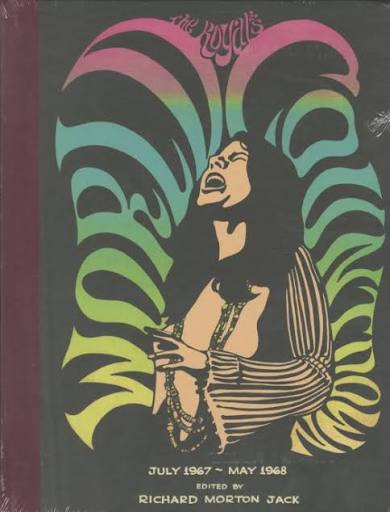
The last years of the 1960s saw the emergence of many underground, or at least alternative-ish, papers that gave far more coverage to rock music than almost any prior publications of the sort had. Most of them are now forgotten and hard to find; many were very short-lived. Some were so odd in their focus, variable writing style, and rococo graphics that they’re hard to easily describe.
World Countdown, published in California from August 1966 to July 1969, was one such magazine, and one of the hardest to classify. It’s also very hard to find, with few surviving in library or institutional collections, and not many having been preserved by private collectors. Author and rock historian Richard Morton Jack has tracked many of them down, and the 2025 book he edited, World Countdown August 1966-July 1967 (on Lansdowne Books), reprinted all of the issues from its first year, along with a lengthy introduction covering the history of the magazine. Now the second volume, World Countdown July 1967-May 1968, has appeared, reprinting all of the issues from its second year.
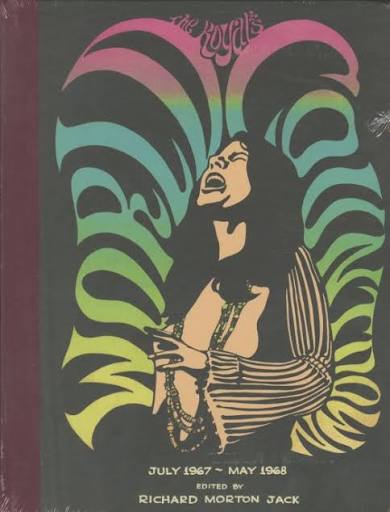
Original reporting and criticism of the era’s rock scene was not World Countdown‘s forte, although it did have some. Instead, it offered a jumble of reprints of material (ranging from entire articles to bits and pieces) from other magazines; sketchy scene reports and impressions; verbatim reprints of press releases from record labels or publicists hyping specific artists; tons of ads for records, record stores, fashion accessories, music- and fashion-related businesses, and more; and many pictures of music acts from the time, many of them seldom if ever seen elsewhere.
The range of artists covered was almost absurdly wide, from the deepest underground (including quite a few who rarely or never put out records) to the biggest rock superstars, teen pop hitmakers, and even mainstream pop singers. Quite credible early rock journalists could be read in its pages, yet such offerings were outweighed by hype-heavy copy, a good deal of it unattributed. While many of the ads boasted slick professional design, the cut-and-paste layout of many pages could verge on the amateurish.
The obscure pictures and ads are what’s really of most interest, since you really have to sift through the copy to dig out interesting bits of info that rarely surface elsewhere. Some are here (and sometimes mentioned in the interview below), however, like a piece on a group that never released a record, Spontaneous Combustion; an interview with Eric Clapton of “The” Cream, when they were still often prefaced with a definite article; a fairly long Q&A with the fairly obscure Canadian group the Paupers; and florid full-page ads for cult/rare albums like H.P. Lovecraft’s first LP. Some big names pop up among the contributors, like Beatles/Beach Boys/Byrds publicist Derek Taylor and some other industry insiders mentioned in the interview below. So do some unexpected names, like future Jefferson Airplane drummer Joey Covington in a brief bit referring to his Kim Fowley-produced single bombing.
I asked Richard Morton Jack about the compiling and editing of World Countdown August 1966-July 1967 shortly after the book was published in 2025 (see this previous post). With this post, I’m doing the same for the second volume, World Countdown Vol. 2: July-1967-May 1968. Info about the book and purchasing copies is at https://lansdownebooks.com/products/world-countdown-volume-2 (for the second volume) and https://lansdownebooks.com/products/world-countdown (for the first volume).
You might have the largest collection of World Countdown issues in the world, even though your two volumes have so far “only” reprinted the ones through May 1968. Was it harder getting the July 1967-May 1968 issues than the ones in your previous volume?
Yes! Every issue of World Countdown is scarce, but it’s easy to deduce (from which ones pop up most often) that its print run was at its largest when the San Francisco hippie/rock scene peaked in mid-1967. Many subsequent issues are barely known to survive. As for my collection, I dream of someone else having a larger one, as I live in hope of finding the three issues I don’t own, and have never seen.
What do you think are the biggest, most interesting differences between these and the earlier issues?
The range of artists it covered continued to be wide, but as the music industry tilted towards exploiting the boom in so-called “underground rock”, there are more repros of press releases, often covering acts that were barely touched elsewhere in the media. Ironically, that means that althoughWorld Countdown contains relatively little in the way of original journalism, its contents are precious because they reproduced hard information about acts like (say) the United States of America, Kaleidoscope or Fifty Foot Hose that almost no one else touched.
In addition, there’s considerable interest in the witty and incisive columns contributed by Derek Taylor, who was shortly to return to the UK to resume working for the Beatles, and certain other correspondents. I’d also venture that there’s more content by women in World Countdown than in any other underground paper of the time. Eileen Kaufman, Mary-Katherine Aldin, Jannie Franklyn, the mysterious “Sherrill” and others all frequently contributed worthwhile pieces.
Separately, there are cool live ads and lots of ephemera that I feel offer a vivid sense of what it was like to be in that place and time.
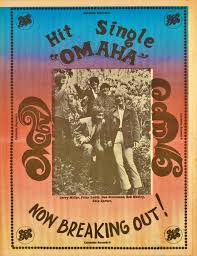
Can you always tell whether an article is original?
It isn’t always easy to figure out what’s original, what’s reprinted from other papers in the Underground Press Syndicate, and what simply parrots record company press releases. And some of the apparently original material comes across like a press release, because World Countdown celebrated music uncritically, it didn’t seek to evaluate it, so its tone isn’t hip or condescending: it has a likeably wide-eyed enthusiasm to it.
What were the most interesting / exciting discoveries for you in these issues?
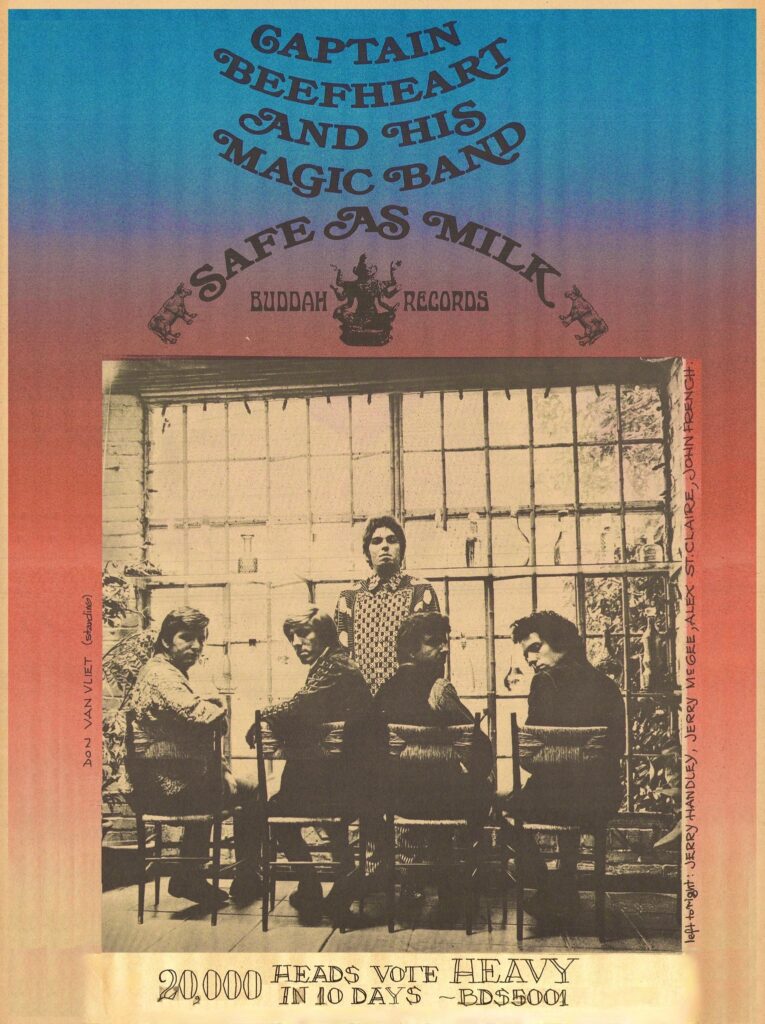
Where to start? Off the top of my head… There are early Captain Beefheart adverts and images that didn’t appear elsewhere. There’s a whole page about Spirit (including unique photographs) from well before they’d signed a record contract. There are pieces on “lost” groups such as Spontaneous Combustion (not the British prog act!) and generous coverage of obscure but interesting bands such as the Myddle Class, the West Coast Branch and the Mystery Trend. And there are fascinating “news” stories, such as the report in November 1967 that the Grateful Dead’s second album was to be titled Meanwhile Back In The Ice Ages or that the comprehensively obscure, post-Daily Flash outfit Two Guitars, Piano, Drum And Darryl had “been signed up to Atlantic Records for more money in front than Atlantic has ever paid for a group before” in April 1968. (They managed one undistinguished single that June.)
Many years ago I noticed some tiny text on the back of A Beacon From Mars by Kaleidoscope (which came out in November 1967), stating that it had been “recorded under duress” and giving an address to which you could write off for “the true unprintable story” behind the album. I’d always been curious to know what this meant, and it was somehow typical that I found the answer in the ensuing issue of World Countdown, which reprinted the privately printed handout in question, and thereby preserved it for posterity.
Part of the joy of World Countdown is that it had no agenda–it was really a cottage industry, so the artists featured in its pages were often championed by its (unpaid) contributors. Therefore acts like (say) Joni Mitchell and Jackson Browne were commented upon in World Countdown well ahead of the mainstream music press, which tended to be more in cahoots with the major label promo machine. It also covered highly obscure acts well before they had a record out, such as the Detroit duo Jan and Lorraine, usually with accompanying imagery.
There’s sometimes an uncomfortably close relation between a writer and an artist, something that would be considered unethical / unacceptable today. A Penny Nichols story is written by her manager, Billy James; Andy Wickham, who did A&R for Warner Brothers, wrote about one of the label’s less celebrated performers, David Blue; there’s an Earth Opera story by Danny Fields, who did publicity for the band’s label, Elektra…
I don’t find it uncomfortable–World Countdown was clearly a patchwork and happy to have its pages filled by hip A&R guys as much as anyone else. From memory, these pieces didn’t seek to obscure the relationships or mislead readers, and are often witty and well-written. Charles Royal’s reward probably took the form of an invitation to a press reception rather than an envelope full of cash.
Part of the fun at looking through these issues is viewing the ads. There are full-page ads for albums that probably barely sold anything, but also full-page ads for the top of the heap, like Magical Mystery Tour and Satanic Majesties. Despite World Countdown’s limited circulation and haphazard layout, do you think that record labels of all sorts realized the value of advertising in a publication that in some ways addressed the growing underground/hip audience? Might it also have been that the ads were much cheaper than they were in most publications?
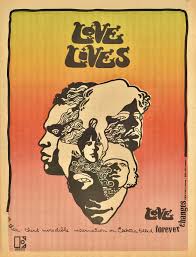
I agree – there are some beautiful full-page ads for records such as Forever Changes by Love, “Sit With the Guru” by the Strawberry Alarm Clock and Harumi that come as a nice surprise alongside the better-known ones. I imagine the record companies invited Charles Royal to launch parties and concerts in exchange for ad space, rather than him invoicing them in the conventional manner. (As Charles’s son Vince explains in my intro to the book, he wasn’t entitled to be running a business in the States, so World Countdown largely operated on an old-fashioned barter system.)
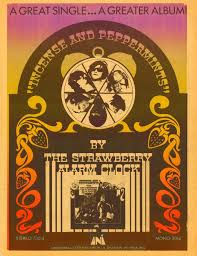
I doubt that anyone took World Countdown especially seriously–its circulation was just too small and it was too freewheeling both in terms of content and distribution to have any sort of loyal audience beyond a basic subscriber base. I imagine that Charles Royal was well-liked and therefore indulged up to a point by record labels, who had money to burn and no real idea what might persuade kids to take a chance on the latest unknown act they were trying to launch.
Similarly, part of the fun of looking through the issues are the many photographs, some of which seem pretty uncommon.
I totally agree–several World Countdown contributors carried cameras around with them and took pictures at small gatherings, launch parties, club gigs and so on, and these amateurish snaps are a consistent thread through the magazine’s run. There are shots of the Grateful Dead in the studio recording Anthem of the Sun, very early images of the likes of Alice Cooper, Quicksilver Messenger Service, Blue Cheer, Canned Heat and Jackson Browne, and promo shots of little-documented acts like the Lollipop Shoppe, West Coast Natural Gas and Tripsichord Music Box. As I always say, the main joy of World Countdown is never having a clue what’ll be over the page.
There are some ads for a short-lived sister magazine, World of Soul, Jazz & Pop. Have you been able to find any of those, and if so, how does it compare to World Countdown?
Just as he’d seen a gap in the market for a paper celebrating hippie music in the summer of 1966, a year later Charles thought there might be room for a similar paper about (for want of a better term) black music. For its first issue in June 1967 it was called The World of Soul & Jazz, but by issue #3, which appeared in November, its title had subtly shifted to The World of Soul, Jazz & Pop to incorporate coverage of underground rock. To me that suggests that Charles had difficulty marketing it. The only other issue I possess (and have ever seen) is #10, from April 1968, so it would seem that there are at least seven that have yet to resurface.
It’s very similar to World Countdown in layout and tone, but reproduces (or publishes) material relating to artists such as Aretha Franklin, John Coltrane, Wes Montgomery and Lou Rawls as well as the Doors, Clear Light, the David and others. There’s no crossover with the material in World Countdown, so I live in hope of more issues of The World of Soul, Jazz & Pop resurfacing too.
It’s sometimes frustrating that interviews in World Countdown, whether original or reprints, can be superficial. For instance, there’s a long Q&A between Derek Taylor and Herb Alpert that’s much more about life philosophy than music.
I agree, that interview is something of a lost opportunity (and Derek was almost certainly stoned as they spoke). But World Countdown simply wasn’t a “professional” paper like, say, Rolling Stone, with a systematic journalistic approach, and one has to accept that its charm comes from its homespun and unpredictable feel. And some of its interviews are remarkable, such as a marathon conversation between “Lord” Tim Hudson and David Axelrod that they printed in September 1968.
Rolling Stone started publishing in late 1967, and although its early issues weren’t as slick as they’d become, the design and proofing were far more professional and the writing and reporting far more in-depth. Do you think Rolling Stone had an impact on World Countdown (which had launched in August 1966) as far as taking readers away who wanted more substantial music coverage?
I think Jann Wenner had a similar idea to the one Charles Royal had had a year earlier: to create a fortnightly music paper that sought to encapsulate what was magical about the West Coast music scene. But Wenner had a harder head than Royal, and was more ambitious–and in a better position to develop and promote his paper, because Royal’s immigration status was far from official.
Wenner has certainly never acknowledged that World Countdown presented any sort of model for Rolling Stone, but he was certainly aware of it–practically the only article ever written about World Countdown appeared in Rolling Stone, in February 1970 (well after World Countdown had ceased publication).
More broadly, I think the advent of Rolling Stone created a major shift in the way rock and youth culture was reported, and indeed perceived. For all its faults, which, in my opinion grew in line with its circulation, I think Rolling Stone was the best written and most professional of all the many late ‘60s and early 70s American, music /underground papers, and therefore deserved to sell the most and have the most impact.
The later issues of World Countdown are harder to find. Is a future volume reprinting the post-May 1968 issues possible?
The goal of Lansdowne’s World Countdown project has always been to reproduce every page of every issue. However, there are currently three that I not only don’t possess, but have never seen: Volume 4 #4 (June 1968), Volume 4 #9 (September 1968) and Volume 5 #2 (November 1968). Until I get my hands on those, I’m reluctant to proceed with the next book. (Charles Royal’s son has suggested to me that they might never have existed, but they were touted as back issues in later copies, so I assume they’re out there somewhere…)
But hope springs eternal: I recently found Volume 4 #5 (also from June 1968), and–in keeping with everything I love about World Countdown–the very first article in it is about the Velvet Underground. Not only does it print the lyrics to “Sister Ray” in full, it includes a photo of them that, I believe, has never been reproduced elsewhere. That has spurred me on to complete the run, and this project.