Very few previously unknown compositions by any of the Beatles have surfaced in recent years. But the new Rubber Soul super deluxe box has one, found on a 1965 home tape in, according to the liner notes, “The Beatles’ vault.” This is a John Lennon solo demo of “Little Girl,” not to be confused with the entirely different Rubber Soul song “Girl” or, for that matter, Rubber Soul’s “Run For Your Life,” which has the infamous lyric of the singer wishing he’d rather see a little girl dead than with another man.
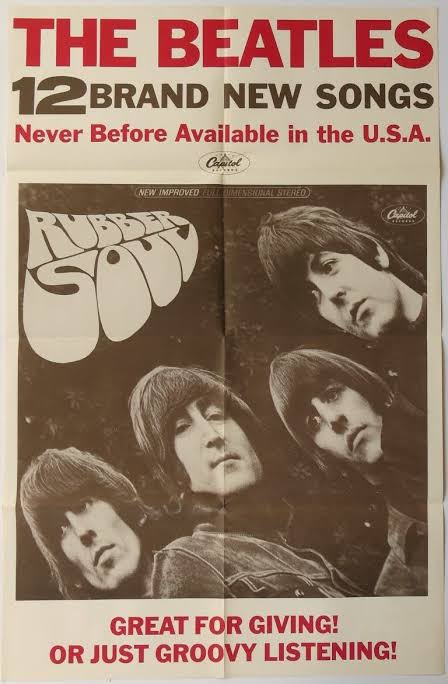
“Little Girl” is, incidentally, one of the few songs written by Lennon and/or McCartney on a Beatles release that is credited to just one of them (in this case, Lennon) in the songwriting credits. Among the others are three credited to McCartney alone on Anthology 3: the White Album demo of “Junk,” Paul’s Abbey Road-era solo outtake of “Come and Get It,” and the Get Back sessions outtake “Teddy Boy.” There’s also, on the super deluxe edition of The White Album, the demo “Child of Nature,” which is credited to Lennon alone.
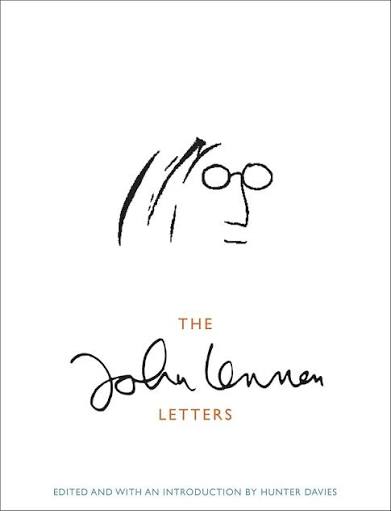
The existence of “Little Girl” was at least suspected before this tape was unearthed and exposed. In the mid-1960s Lennon wrote some words on the back of a postcard sent to George Harrison from Japan that might have been song lyrics. The Hunter Davies-edited 2012 book The John Lennon Letters reproduces the back of the card, and helpfully prints the words in regular font within the text, excepting some hard to decipher words that were crossed out on the original postcard:
“When a girl begins to be a problem/Pretty soon the girl must go/When they’re gone you find at last you love them/Pretty soon you want to know/Little girl I’ve come to stay/And this time I just have to say/I love you/If she turns you down and rejected/Try again the best you can/Call to see her when you’re least expected/Tell her now she’ll understand”
This isn’t nearly up to the level of the lyrics of “Girl,” though it hints at some of the ambiguous frustrated love of that song, and is a bit more complex than the romantic scenarios of the earliest Beatles songs. The “Little Girl” demo has such simpler lyrics that they might not be the same song on which Lennon might have been working on the postcard.
The liner notes to the Rubber Soul box state that “only a few of the words from the postcard are sung by him on the demo tape, but the lines, ‘Little girl I’ve come to say/And this time I just have to say/I love you’ indicate it is the same embryonic song.” If so, it’s odd that a song in embryo would become more simplistic in its more developed version. For the words of “Little Girl” are as basic as those of the earliest Lennon/McCartney songs on Beatles records.
The melody, however, isn’t nearly as good as those early Beatles songs, even the simplest, if you want to go back to the likes of “Misery.” Nor is it as good as some of the unreleased-at-the-time originals on their demos/home tapes/outtakes, or the songs they “gave away” to other artists like Peter & Gordon and Billy J. Kramer. Indeed, as exciting as it is on paper to read of a previously unknown original surfacing, the demo is pretty underwhelming in its fairly unmemorable tune and generally lackluster air. Had it, say, actually been picked up by someone else to cover and release, it would have vied with “One and One Is Two” (the most obscure mid-‘60s song they gave away, covered for a non-hit by Mike Shannon & the Strangers) as the least impressive of their giveaways.
For what it’s worth, “Little Girl” does join a small league of songs with the same title by a couple other mid-‘60s British rock notables. As noted the phrase “little girl” itself appears on Rubber Soul’s “Run For Your Life,” and the Beatles had done a song with a very similar title, “Little Child,” on their second album in late 1963. At their January 1, 1962 demo session for Decca Records, they recorded the early Lennon-McCartney original “Hello Little Girl,” not released by the Beatles while they were active, but a 1963 UK hit for the Fourmost. But both Them and John Mayall’s Bluesbreakers came out with tracks actually titled “Little Girl” on mid-‘60s LPs.
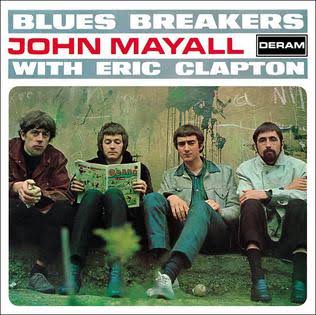
None of the aforementioned Beatles songs specified the girl’s age. But Mayall’s “Little Girl,” on the classic 1966 Blues Breakers with Eric Clapton album, did cite a girl who’d been through eighteen years of pain on this solid blues-rocker, which featured one of several electrifying Clapton solos on the LP. That girl would have been quite a bit younger than Mayall, who was in his early thirties at the time.
The Van Morrison-penned “Little Girl” was a typically brittle fusion of R&B and rock for Them, with the group’s characteristic eerie organ, spiky guitar riffs, and urgent Morrison vocal. Most often heard on Them’s 1965 debut LP The Angry Young Them (and on their first US LP, Them, which had many of the same tracks), the song was issued in a surprising variety of iterations. The rare first pressing of the UK various artists compilation album 14 had a version with an extended fadeout on which, unbelievably for 1965, the lyric “I wanna fuck you” can be heard amidst the basic vocal improvisations. After the first pressing the fade was deleted so those words weren’t heard, and a yet different, and slightly inferior, slightly shorter subsequent version (again without those words, and easily distinguished from the previous one by a pause between the first note and the following guitar riff) was on The Angry Young Them. Even the three-CD The Complete Them 1964-1967 doesn’t have the full unexpurgated F-word version, which doesn’t seem to have ever been reissued.
Whatever “Little Girl” you hear, the Beatles, or more properly John Lennon, version comes out a distant last. Which doesn’t mean, of course, that the Beatles weren’t rock’s greatest group, as fine as the Bluesbreakers and Them were.