Tag Archives: David Bowie

David Bowie and Anthony Newley

Anthony Newley’s influence on many of David Bowie’s early recordings has often been commented upon, and was no secret even when they were released. Those unfamiliar with Newley, and indeed unfamiliar with Bowie’s work predating his 1969 hit “Space Oddity,” are often baffled upon hearing what Bowie recorded for Deram Records between late 1966 and early 1968. Most of that was cut between late fall 1966 and late winter 1967, an output concentrated into just a few months.

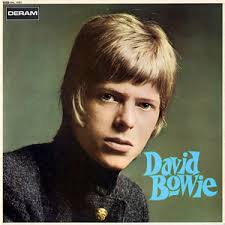
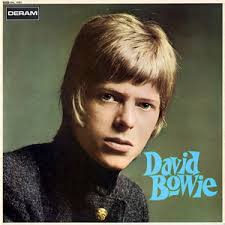
David Bowie’s first album.

There’s not just little too recognizably Bowie to listeners of his subsequent catalog, but little rock influence at all. It’s precious, dainty pop with a very heavy bent toward theatrical musicals. There’s a prevalence of story songs, whether about a “Maid on Bond Street,” a “Little Bombardier,” “Uncle Arthur,” or “The Laughing Gnome,” to take just a few examples. Only on the brooding, haunting “The London Boys,” depicting a down-and-out mod, does Bowie seem to be singing from deeply personal experience and creating a memorable mood. Accurately described by Roy Carr and Charles Shaar Murray in David Bowie: An Illustrated Record as “probably the most moving and pertinent work that Bowie produced prior to ‘Space Oddity,’” it’s the only strong hint of his future originality.

Elsewhere Bowie often comes off as a sub-Newley singer-songwriter, often even sounding considerably older than he would from the late 1960s through the 1970s. His singing is mannered and melodramatic, and not in a glam rock fashion, but in an old-fashioned fashion. That doesn’t have much appeal to rock fans, and probably not too many Newley fans, since Newley was much more accomplished in that genre, and in fact one of its main exponents.

Bowie didn’t do this under pressure from management and a record company. John Hutchinson played guitar and sang with Bowie in three different eras—1966, when Bowie was playing mod rock with the Buzz; 1969, when he and Bowie had a folky duo; and 1973, when Hutchinson played guitar with Bowie on tour. He told me:

“He liked Anthony Newley, ‘cause Anthony Newley used to sing in his own accent, in a kind of London accent. And David realized that when he sang in his London accent, he was quite a lot like him. I think he liked the theatrical kind of thing as well, and Anthony Newley was known as an actor as well as a singer. Certainly Anthony Newley himself was one of David’s favorites, and he was quite happy that people said, ‘Oh, he sounds a bit like a young Anthony Newley.’”

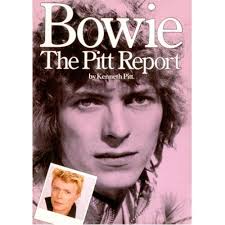
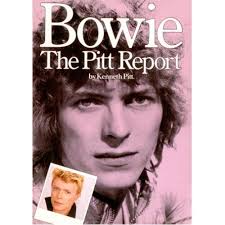
According to early Bowie manager Ken Pitt’s memoir Bowie: The Pitt Report, the resemblance didn’t escape the attention of “his very first album review. Critic Allen Evans said: “Here’s a Cockney singer who reminds me of Anthony Newley and Tommy Steele, which can’t be bad. He sings with a mild beat, about ordinary things like a Rubber Band, Uncle Arthur, and about a romance which started on Sunday and he promised to Love You Till Tuesday. Or an intelligent protest song called We Are Hungry Men. All very refreshing…and then you notice that this nineteen-year-old David Bowie [who was actually twenty when his self-titled debut LP was released on June 1, 1967] has written all fourteen tunes on the album! Yes, we have another Anthony Newley here all right. A very promising talent. And there’s a fresh sound to the light musical arrangements by David and Dek Fearnley.”

What of Newley’s and others’ reaction, if any, to the young upstart pseudo-Newley, and Bowie’s own thoughts about Newley at the time and afterward? A few items in the newly opened Bowie archive, part of the David Bowie Centre in London’s Victoria & Albert East Storehouse branch, sheds a little light on this.

The archive has a few of Bowie’s set lists from 1964-69, and it seems he actually covered very few Newley songs in concert. In what looks like a reconstructed summary list of the songs he did during these years, only one is listed. That’s one of the most famous, and perhaps the most famous, Newley song (which he wrote with Leslie Bricusse), “What Kind of Fool Am I?” It’s listed among numerous tunes he performed with the Buzz in early 1966, alongside all kinds of material, including Bowie originals; Buddy Holly hits; soul classics by Sam Cooke, Mitch Ryder, Marvin Gaye, and others; and another theatrical standard, “You’ll Never Walk Alone.” Although typewritten, one guesses this was typed or dictated by Bowie, since “Newly” is spelled out as the source for “What Kind of Fool Am I?”—not the only time he’d misspell his hero’s name.

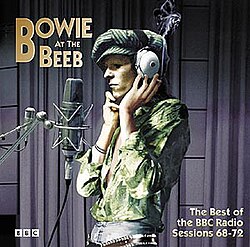
Notoriously, Bowie had failed an audition for BBC radio (backed by his group of the time, the Lower Third) in late 1965, a panel giving him five thumbs-downs to two thumbs-ups, sometimes with brusquely dismissive criticism. (The panel’s verdict notes are in the archive, and have surfaced in full elsewhere.) However, he passed his BBC audition in February 1968, based on what a February 22 letter terms a “trial broadcast” for the Top Gear radio program taped on December 18, 1967. That was actually broadcast on December 24, and the five tracks were released on a deluxe edition of Bowie’s first album in 2010. (These five songs were “Love You Till Tuesday,” “When I Live My Dream,” “Little Bombardier,” “Silly Boy Blue,” and “In the Heat of the Morning.”)

As for the Bowie-Newley connection, however, the BBC panel giving him a pass (by a majority of four-to-one) also noticed Newley’s influence. In fact, in a letter from February 1968 in the archive giving the detailed comments by the unnamed panelists, all four of the yay-sayers compared him to Newley. They said:

“A singer whose tone and intonation one cannot help listening [sic; probably the intended word was “comparing”] to Anthony Newley. He is nevertheless very distinctive in his own right giving just the right amount of feeling and emphasis to these songs that he sings and also writes. An excellent singer who deserves much more radio exposure.”

“Has a good voice reminiscent of Tony Newley which is probably not suitable to a show which is strictly ‘pop’ but would be good on any shows where there was an adequate backing orchestra.”

“More like Tony Newley than Tony Newley—it’s excellent material and he is confident and nicely personable.”

“Good professional performance with an Anthony Newley-style voice. Confident approach with good attack on lighter numbers.”

It appears that someone named Jimmy Grant gave this brief summary on February 15, 1968: “A singer compared to Tony Newley who gives effective performances of his own compositions.”

All these make for a wealth of blatant Newley comparisons, though that didn’t seem to put them off liking and approving Bowie. And what did the one nay-sayer say?

“Fetter-type singer [probably referring to Broadway lyricist Ted Fetter], using mostly his own material. He has no voice to speak of and relies upon said material. Lovely arrangements, but these may have nothing to do with the composer! I feel that he is lacking in the essential charm to get what he is trying to do across.”

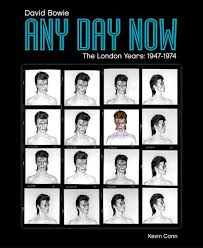
Was Newley himself aware of Bowie at the time? It seems doubtful, as Bowie was selling few records and making few live appearances during this period. Ken Pitt does write in The Pitt Report that around the time of the first album’s release, “perhaps Newley was now heartily fed up with reading and hearing about his alleged clone for when Essex Music, with whom he was associated, sent him a collection of David’s songs he displayed little interest.” Yet according to Kevin Cann’s David Bowie: Any Day Now: The London Years 1947-1974, “For his part, Newley only became aware of Bowie’s interest in him many years after the release of [the debut album] David Bowie.”

Cann also gives this quote from Newley: “The first I knew of his respect for my work was in an article, I believe in Time magazine, in which he mentioned how much my early work as a rock’n’roll singer had been an influence.” It might seem odd for Newley to refer to himself as a rock’n’roll singer, but he did cover, and not too well, the Beatles’ “I Saw Her Standing There,” on a US single in October 1963. This was one of the few instances of a Lennon-McCartney cover gaining US release before the Beatles had their first Stateside hit (“I Want to Hold Your Hand,” just three months later), though as it wasn’t issued in the UK, it’s very doubtful Bowie heard it.

In the same quote Newley went on to note, “He was most gracious in the Time article and I was very touched and wrote him a letter to which I didn’t receive an answer, but I presumed he was very busy.” This might be a letter in the archive from Newley to Bowie, dated August 17, 1973, thanking him “for the beautiful flowers…We all hope you liked The Good Old Bad Days [a 1972 musical Newley co-wrote with Leslie Bricusse], and are very touched that you thought of us.” Although Cann wrote that “the two entertainers never met,” this seems to indicate Bowie might have seen or at least been invited to a performance of The Good Old Bad Days, and certainly sent Newley flowers at the time.

While Bowie moved away from Newley-inspired material even by 1968, and into folk-rockish singer-songwriting by 1969 and hard glammish rock by 1970, he hadn’t forgotten his early inspiration. The archive has two pages of handwritten notes, almost certainly from 1971, that seem intended for possible liners to his ’71 album Hunky Dory, or perhaps a press release for that record. Like the Mothers of Invention’s Freak Out and Buffalo Springfield’s Again, it lists many of his influences and people he personally encountered. Seven names down the middle of three columns is “Anthony Newly,” right below Iggy Pop. Bowie misspelled some other names of his prime influences, as a Velvet Underground co-founder’s name is spelled “John Cayle” elsewhere on the list, and their early manager’s name as “Andy Warhole.”

Another letter in the archive, from July 17, 1983, has Newley inviting Bowie to see Newley’s musical Chaplin in Los Angeles in August of that year. “No heavy number, just if it would be fun for you,” he assures David, who at this time was at the peak of his superstardom, as his recently released Let’s Dance was on its way to becoming his biggest album, eventually selling more than ten million copies. As evidence of how the tables had turned from the days when Newley was a big name and Bowie a no-name, Anthony added, “You could watch an old singer try for a comeback!”

Bowie paid Newley explicit tribute in an undated printed page in the archive. “Anthony Newley helped me find my voice,” Bowie wrote. “Unfortunately it was his voice that I found. For the full year of 1967 I was convinced I was his natural inheritor. I have the album to prove it, my first on the now defunct Deram record label, and because of Mr. Newley’s huge influence, eccentric and ambitious.

“His quirky and comedic film persona had caught my attention ever since I saw him as the Artful Dodger in Oliver Twist. But it was the weird and off-the-wall 1960 TV series The Strange World of Gurney Slade that he directed and in which he starred, that galvanized me completely. Here was an ‘outsider,’ a misfit who saw the world around him through almost dada eyes, having mad conversations with inanimate objects. I was just 13 and to me and some of my artier friends at school, it was the zenith of hip. It was just too out-there for the comfy BBC and only lasted one season. It seems now, looking back, that its focus, picking holes in the conventional and the suburban, anticipated the wave of TV satire which was to sweep the UK later in that decade.

“One ability seemed to follow hot on the heels of another from that moment. A major film actor, he broke away for a while to be a Pop Star. Then he was on the London stage with Stop the World. This was a turning point for me. Mr. Newley had written all the songs. I could do that. I woulddo that. I could write musicals. And I’d sing in a London accent. Well, the nearest to a musical I ever got was The Rise and Fall of Ziggy Stardust and the Spiders from Mars. But even there the length of the title suggests to me that I was indebted to Mr. Newley by way of his 1969 film Can Hieronymus Merkin Ever Forget Mercy Humppe and Find True Happiness?

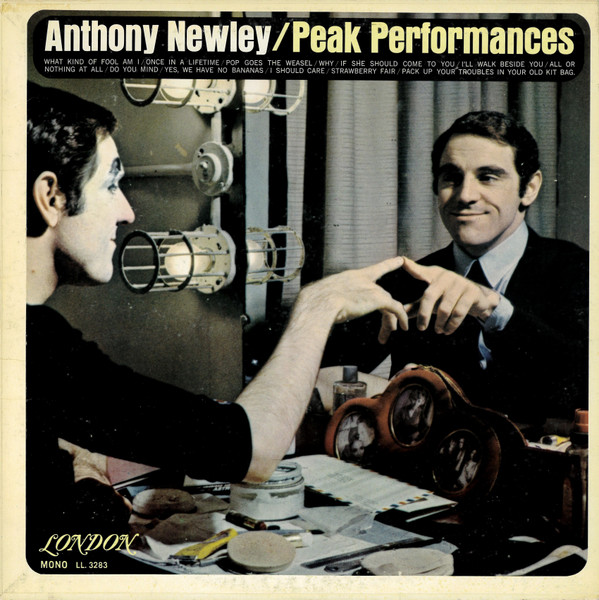
“There’s one album cover of Mr. Newley’s that will remain an indelible image for me. On the front of Peak Performances Mr. Newley sits in his dressing room in front of his mirror. He is made up in the Littlechap clown face. Staring back at him from the mirror is his own unmade up face. I think that the first time that I saw that cover, the basic seed of ‘self-re-invention’ planted itself in my psyche.

“In Paris, around 1998, I found myself eating in the same restaurant as Mr. Newley. It was a nook and cranny kind of place so we couldn’t actually see each other. A waiter came over to me and informed me that Mr. Newley was celebrating a birthday with a large group of family and friends and would I care to join them. As sometimes happens with me on these occasions I was immediately waylaid and crippled by shyness, the prospect of actually meeting a man who had had such an impact on my youth completely froze me, and I declined to go and join the party with some flimsy excuse or other. It was not too long after this that I read of his death in the papers and a wave of regret and sorrow swept over me. It’s too late now of course, but if you can hear me, Mr. Newley, I would like you to know that without the ideas that you led me to, way back when, little of what I dreamed I could do would have reached fruition. Please don’t think bad of me if I now say what I should have said a couple of years ago, happy birthday Mr. Newley, a happy birthday to you.” 


David Bowie Archive Oddities in 1968: Apple and Turquoise

Opened in September 2025, the David Bowie Centre houses the singer’s archive, which has 80,000-90,000 items, the figure varying a little according to different sources I’ve read. It’s part of the Victoria and Albert’s East Storehouse location, itself only opened a little more than a year ago in London. It does exhibit some of the archive for the public, for whom admission to the Storehouse is free. But only 200 or so items are on display at any one time, though that pretty small exhibit space will rotate ones from throughout the collection.

Fortunately, the public can also access other items in the collection, though you need to make appointments through the centre’s website. Retrieving physical objects is very popular, but if you want to stick to paper documents and photos, you can arrange to see much material at once. That’s what I did for a couple days in May, concentrating only on the first ten years or so of his professional career, spanning about 1963-73.

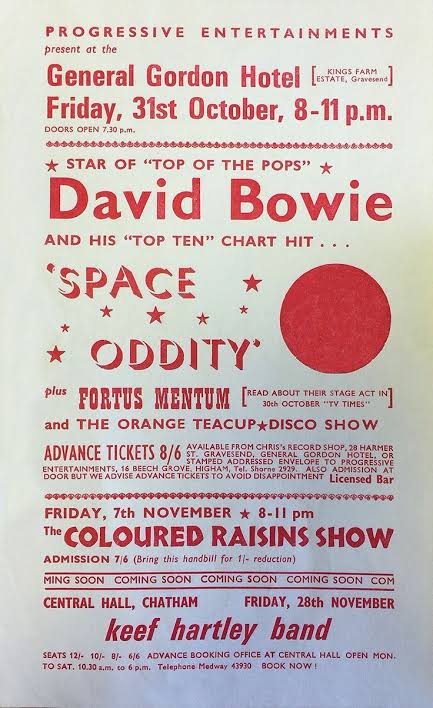
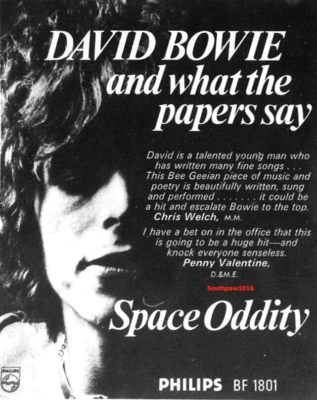
1969 ad for Bowie’s first ht, “Space Oddity”

Even being this selective, there’s too much to sum up about what I saw to include in one or even several blogposts. In addition, some of the items of most fascination to me have actually been documented in other sources, though it’s neat to see them in person, especially when they’re represented by pieces in Bowie’s own handwriting.

For instance, Kenneth Pitt reproduced or quoted from many letters he sent David when he was managing Bowie for about four years from spring 1966 to spring 1970 in his book Bowie: The Pitt Report. Many of those letters are in the archive, and again while it’s interesting to see the (usually typewritten) correspondence in person, much of the essence has been reported in that 1985 book and elsewhere. (That book is recommended to anyone interested in Bowie’s early career.)

Likewise some of the most interesting documents relating to Bowie’s early career failures have been reported or reprinted elsewhere, such as his failure to pass an audition with BBC radio in late 1965, with detailed comments from seven judges. There’s also a 1968 letter from the Beatles’ Apple organization, then just getting off the ground, politely passing on working with Bowie, and again that’s one of the more reproduced and commented upon items in the whole archive.

This post will discuss material from 1968 that hasn’t been reprinted or reported upon in many or any sources, to my knowledge. There have been many books on Bowie, and lots written about him in magazines and online, so quite possibly what I’m writing about here has indeed surfaced elsewhere. If so and any readers want to fill in some blanks, such comments are welcome. Even if coverage of these documents has appeared elsewhere, I hope at least this might be of interest to readers who haven’t encountered it.

1. Going in chronological order, we start with a letter from “Calvin,” almost certainly Calvin Lee, to Bowie on April 22, 1968:

“A friend of mine—Lou Reizner (card enclosed) is recording Warren Beatty and mentioned that he needed some story songs. Anyway I got him to buy your LP and he likes some of the material and would like you to contact him.”

Bowie’s first album, released in 1967.

This is odd, and even in some ways weird, on several levels. A rather enigmatic figure, Lee by the late 1960s had hazily documented involvement in the British music scene, particularly by the end of the decade with Mercury Records, for whom Reizner was the European Director (according to his business card, also in the archive). Lee and Bowie had met in June 1967, and this indicates that Lee was championing Bowie a good year or so before Mercury did sign the singer.

It’s notable that the letter is written on Apple Corps Ltd. stationery. Although the Apple label wouldn’t start releasing discs for about four months, it was already active as a music publisher, as well as in some other fields. I don’t recall coming across indications that Lee was involved with Apple, though maybe it’s possible he just knew someone there or filched some letterhead.

According to Kevin Cann’s detailed David Bowie: Any Day Now: The London Years: 1947-1974, Ken Pitt visited Apple Music’s Terry Doran the very next day, April 23, trying to get a new record deal for his client. The termination of Bowie’s association with Deram Records, which had issued the 1967 debut LP Lee referred to in his letter, had been confirmed just the day before. Could Lee have played a part in alerting Pitt and Bowie to possibilities at Apple?

Mercury would indeed sign Bowie – but not until June 20, 1969, more than a year later. Could Lee, again, have alerted Lou Reizner to Bowie’s potential by April 1968 at the latest?

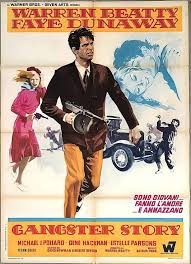
Not to ignore the elephant in the room, could Warren Beatty have played a role, if very slight, in bringing Bowie to Mercury’s attention? And what would Bowie have been doing even considering writing material for the actor, who was very hot in spring 1968, when Bonnie and Clyde had elevated the already well known Beatty to superstardom? And what was Beatty doing recording an album anyway?

One guesses this would have fallen under the dubious “Golden Throats” category of records made by celebrities—especially, but not limited to, actors—known more for their work on screen, or on the playing field or another endeavor, than their vocal abilities. Some such actors of the era had passable if unremarkable such skills, like Peter Fonda, whose 1967 single “November Night” was written by a then barely known Gram Parsons, and Goldie Hawn, whose 1972 LP had covers of songs by celebrated writers like Donovan, Joni Mitchell, Bob Dylan, and Dolly Parton, and didn’t usually stick to their more famous compositions (and who’d co-star with Beatty in the 1975 hit movie Shampoo). Other golden throats objectively couldn’t sing, most notoriously William Shatner, though his Star Trek co-star Leonard Nimoy wasn’t great shakes either.

Bowie’s first album—which did come out in the US as well as the UK, though it made barely any impact in either country—was indeed full of “story songs,” a la “Maid of Bond Street,” “Little Bombardier,” and “She’s Got Medals.” What would Beatty have sounded like had he chosen one or some of these to sing, or some other songs Bowie put on non-LP singles or studio outtakes at the time, like “The Laughing Gnome”? We don’t know, because no records by Beatty were actually released. Maybe there was a good reason for that, whether or not sessions were actually conducted. (One of the LP’s songs, “Silly Boy Blue,” was placed with a prominent real vocalist, Billy Fury, though the British singer never had success in the US, and he was in steep commercial decline by the time he covered “Silly Boy Blue” in 1968.)

Would Bowie have felt insulted by stooping to writing story songs for Beatty? Maybe not. He’d just lost his recording contract, had no track record of significant commercial success, and wasn’t even playing live much. All the way through to his true ascent to sustained stardom in 1972 with Ziggy Stardust, he was trying to place material with other artists, not all of them as credible as Mott the Hoople, who had a hit with “All the Young Dudes.” “Oh You Pretty Thing” was a 1971 British hit for Peter “Herman” Noone, lead singer of Herman’s Hermits.

2. 1968 was the least productive year of Bowie’s early career, at least as far as record releases go. There were none, and as he was performing and studying mime, as well as taking minor acting roles, he might have been weighing concentrating on a different field than music altogether. But there were still recording sessions, demo sessions, radio sessions, and some live performing, Bowie leading a couple groups. On October 20, Turquoise, also including guitarist Tony Hill and singer-guitarist (and, at the time, Bowie’s girlfriend) Hermione Farthingale, played a live show at The Country Club in London. On October 24, they recorded a couple Tony Visconti-produced songs at Trident Studios.

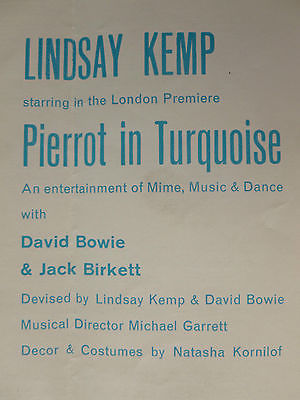
The Turquoise name was possibly at least partially inspired by a production in which Bowie was a performer, Pierrot in Turquoise, in late 1967 and early 1968. This was presented by mime artist Lindsay Kemp’s Theatre Group, and the production’s designer, Natasha Korniloff, had a brief relationship with Bowie. She’d go on to do costume design on several Bowie tours and projects after he became a star, perhaps most notably for how he appears on the cover of the 1980 album Scary Monsters, though her name’s spelled as “Natasha Kornilof” on the program for their performances at London’s International Theatre Club on January 3, 4, and 5 of 1968.

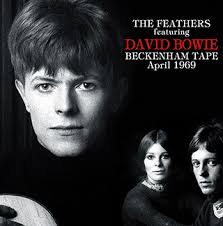
But by November 17, Bowie was leading the group Feathers at The Country Club, singer-guitarist John Hutchinson replacing Hill. A possible, and maybe probable, reason for the name change is in an October 29 letter from Pitt to Bowie: “You will recall my advising you of the unsuitability of the name Turquoise for your trio presentation because another group were already using it. More recently I asked you what you were now going to call the trio and you reaffirmed your intention to use the name Turquoise and appeared to doubt that others were using the name. I therefore send you herewith a copy of Decca’s current advertisement which announces the release this Friday of a disc by a group called Turquoise.”

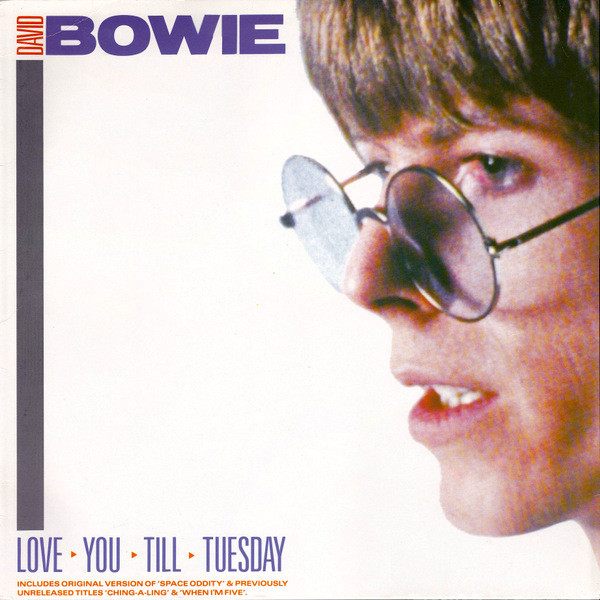
Some material by Feathers is in the soundtrack to the half-hour promo film Bowie made in early 1969, Love You Till Tuesday

What of the “other” Turquoise who might have slightly affected Bowie’s career? They didn’t become as big as Bowie, of course, but they weren’t as obscure as might be assumed. They put out two rare singles, albeit on a major label, Decca (whose Deram subsidiary had put out Bowie’s 1966-67 material on an LP and non-album singles). According to The Tapestry of Delights, a huge discography of British rock from the early 1960s through the mid-1970s, they were from the same London neighborhood as most of the Kinks, Muswell Hill, and “closely linked to Ray Davies—hence the strong Kinks influence in some of their songs. Keith Moon and John Entwistle took a keen interest in them and they were produced and managed by Tom Keylock, the Rolling Stones’ tour manager.”

All four of Turquoise’s songs have made their way onto compilations of British psychedelic rarities. They’re fair but unremarkable psychedelic-tinged pop, sometimes indeed with a late-‘60s Kinks feel without the distinguishing quality of Ray (and for that matter Dave) Davies’ songs of the time. Their first single actually came out in March 1968, predating Pitt’s letter of warning by quite a bit. It’s hard to believe Bowie could have kept getting away with using the name Turquoise and/or pretending they didn’t exist. What’s more, there was an even more obscure US act named Turquoise that put out a couple singles in 1967.

Turquoise’s second single, “Woodstock,” is an entirely different song than the famous Joni Mitchell composition of the same name that was a hit for both Crosby, Stills, Nash & Young and Matthews Southern Comfort. The Woodstock festival that inspired Mitchell’s song, of course, hadn’t even happened when Turquoise’s “Woodstock” came out in late 1968. More incidental notes: Like Bowie, Turquoise had a connection to Apple, though a stronger one, as Turquoise were actually signed to Apple’s publishing arm. A couple songs they recorded at Decca that were unreleased at the time show up on the compilation Good As Gold: Artefacts of the Apple Era 1967-1975.

3. As a side note to the Turqoise-named Bowie projects, in the program for the Pierrot in Turquoise performances at London’s International Theatre Club on January 3-5 of 1968, it’s stated that Bowie’s “songs have been sung by Anthony Newley, Peter, Paul and Mary, and match-sellers looking for leaves in the street.” Maybe Newley—the single biggest influence on Bowie on his recordings for Deram in late 1966 and 1967—sang David’s songs in concert. But he hadn’t recorded any, and was such a bigger name at the time that it seems unlikely he did. It’s not certain he even knew who Bowie was yet, though he certainly would by the time David became a star, as some other correspondence in the archive demonstrates (which might be referenced in a future blogpost).

As for Peter, Paul and Mary covering Bowie songs, they didn’t do any on their records. It seems even less likely these big US folk stars would have heard of Bowie by early 1968. It doesn’t seem impossible that Pitt or someone had tried to pitch Bowie songs to Peter, Paul and Mary, though that would have been aiming pretty high, as at that point his songs had only been covered by artists who were even less known than Bowie was at the time. 

The concluding phrase about his songs being done by “match-sellers looking for leaves in the street” indicates that these claims could have been irreverently facetious, in any case.

Part of a program for a performance of Pierrot in Turquoise

4. Turquoise—Bowie’s group Turquoise, that is—were very short-lived, seldom performed, and are generally hazily documented. A press release-type sheet in the archive fills in some details, though some might be more wishful thinking than reality. It probably dates from late summer 1968, shortly after they formed, and doesn’t post-date August, since it indicates they’d be playing a “debut” at the Roundhouse, one of London’s top venues, in late August. They would play, with several other acts, a benefit at the Roundhouse on September 14.

Subsequent to this perhaps slightly postponed debut, performances at Middle Earth, one of London’s top psychedelic venues; “Arts Lab”; and the Country Club Hampstead are listed. The act are described as “a mixed-media group. Folk-song, mime, poetry, blues, jazz.” A November single release on the Regal Zonophone label pairing Bowie’s composition “Ching-A-Ling” with Tony Hill’s “Folly Fayre” is listed under the “present position” section.

That single didn’t appear, and it doesn’t seem Bowie or Turquoise ever had a deal with the Regal Zonophone label, a division of EMI Records. Regal Zonophone would have been a logical possible home for a more-or-less hippie rock act like Turquoise, as it had success in the late 1960s with the Move, Procol Harum, and Joe Cocker. At a guess, it was hoped they could release discs on Regal Zonophone since “Ching-A-Ling” was produced by Tony Visconti. Visconti had already produced the first two Tyrannosaurus Rex albums (featuring Marc Bolan) for Regal Zonophone, the first having already reached the UK Top Twenty. Maybe Bowie and Visconti hoped Tony’s connection to Regal Zonophone could lead to a deal with the label.

“Folly Fayre” might be a Tony Hill composition that was recorded under the title “Back to Where You’ve Never Been” at Turquoise’s sole recording session, produced by Visconti, on October 24 (where a version of “Ching-A-Ling” was also cut). But no Turquoise version of a song titled “Folly Fayre” or “Back to Where You’ve Never Been” has surfaced. When John Hutchinson replaced Hill and the trio name changed to Feathers, the backing vocals for “Ching-A-Ling” were re-recorded on November 27, and the revised track used in the 1969 Bowie half-hour promo film Love Me Till Tuesday. That version ultimately found release quite a few years later on the Love Me Till Tuesday soundtrack album.

Going back to the “Present Position” part of the press release, some perhaps more optimistic, even outlandish, future activities are listed. There’s a “30 min. television show commissioned by German/Austrian TV “No Smoking Allowed in the Exhibition Hall” also to be shown on the BBC,” though this would not be filmed. On his own, Bowie did film appearances on German TV for the Music for Young People program on September 20 and Music for Everyone on November 11, though these seem to be different productions from “No Smoking Allowed in the Exhibition Hall.”

Even more improbably, there’d be a “college and university tour of U.S.A. in March 69,” and an LP titled simply Turquoise in February 1969. And also a “Roundhouse” film for BBC2 television. Maybe Bowie and/or Pitt were pitching these ideas, but it seems unlikely any got far into actual development.

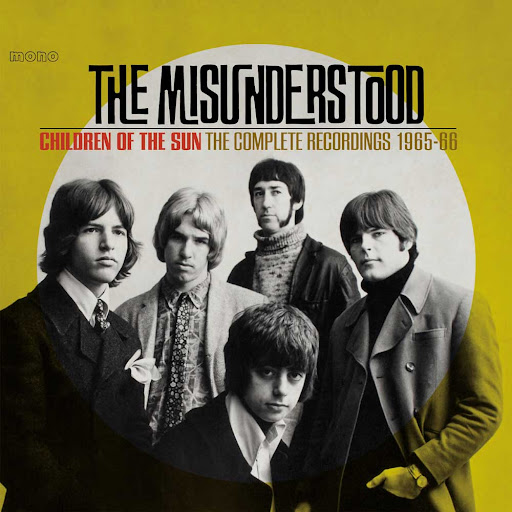
The brief sketch of Tony Hill, then 24, describes him as a “highly rated blues/folk guitarist. Founder member of one of Britain’s first underground groups the Misunderstood. Much poetry, many songs. Own record to be released soon on Apple.” This is one of the most intriguing notes, and quite possibly claims, of the release. Hill was indeed a key member of one of the greatest overlooked early psychedelic rock groups, the Misunderstood, who had moved to Britain from southern California before Hill joined. Falling rather in the area between the psychedelic Yardbirds and early Pink Floyd, they tragically broke up after just one single when the lead singer was drafted, though the 45 and other tracks they recorded in late 1966 (since reissued on Misunderstood compilations) testify to the band’s brilliance.

Compilation of recordings by the Misunderstood; Tony Hill is the tallest guy in the back

Did Hill actually record his own record for Apple? One thread of possibility is that the group Hill joined after leaving Turquoise, High Tide, did sign to Apple Publishing in early 1969. Maybe Hill was already in contact with Apple, or at least hoped to be signed by Apple as a writer and/or recording artist, by the time of this press release. A Tony Hill solo album from 1968 would certainly be interesting to hear, or at least of interest to Misunderstood fans. But if he did any recording for Apple (or at all on his own), it hasn’t surfaced, though High Tide would indeed put out LPs (though not for the Apple record label).

“Turquoise are fast becoming a much sought-after group on entertainment value alone,” boasts the final sentence, though this again seems highly unlikely for an act that had just formed. “Their angelic appearance belies the prolific and hard-hitting quality of their material.” This sort of hype was hardly rare in the music business then and isn’t now, but it was hype nonetheless, as nice as it might be to hear an LP documenting Turquoise’s brief existence.

***********************************************************************

There are of course more rare items from note that I saw in the archive, even from 1968 itself, if we count set lists, which I’ve not covered in this post as I might discuss a few from several different years in a subsequent one. And I’ll discuss other material from the archive in other posts later this year.

Moonage Daydreaming

As kind of a follow-up to my recent post “David Bowie Byways,” which covers some of the less discussed aspects of his career, here’s a much shorter one that my viewing of the new documentary Moonage Daydream sparked. This isn’t a review of the film; I’ll have a multi-paragraph one in my year-end rock documentaries wrap-up. My basic assessment of how much I liked the movie, to quote from Rip Torn’s response to the question from Bowie’s character in The Man Who Fell to Earth as to whether Torn likes the album Bowie makes in that film: “Not much.” 

However, Moonage Daydream has some material here and there that perked up my interest. Here are a few such items:

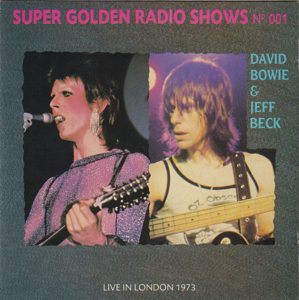
Jeff Beck’s guest appearance at Bowie’s “retirement” concert in London on July 3, 1973. Most of this concert appears in D.A. Pennebaker’s documentary of the event, Ziggy Stardust and the Spiders from Mars. Beck guested with Bowie on a medley of “The Jean Genie” and the Beatles’ “Love Me Do,” as well as a cover of Chuck Berry’s “Around and Around” (a studio version of which was used as a Bowie B-side, though it didn’t make it onto his LPs of the era). Some of the “Jean Genie/Love Me Do” bit appears in Moonage Daydream, though not much. Actually most of the musical performances in Moonage Daydream are pretty brief snippets.

Several explanations have been given for why Beck didn’t allow these performances to be included in the Ziggy Stardust documentary. These include dissatisfaction with his performances and his wardrobe, especially his shoes. He didn’t know he was being filmed, either, which might have contributed to his reservations. 

Inclusion of this footage in Moonage Daydream is welcome, but it’s not as rare as many would think. Beck’s appearance was included in a different version of Ziggy Stardust shown on ABC television in 1974 and, according to some online sources, an Italian print of the film. The sequence also made it onto Youtube, though the quality of what’s seen in Moonage Daydream is better.

Something not discussed in the film is a story that a groupie tells in Dylan Jones’s oral history David Bowie: A Life. She remembers Bowie telling her he would have rather had Beck in his band than Mick Ronson, himself a very Beck-influenced guitarist. Ronson’s on stage with Beck and Bowie in this retirement concert footage. I wonder if Ronson ever knew the story of Bowie preferring Beck to him, if true?

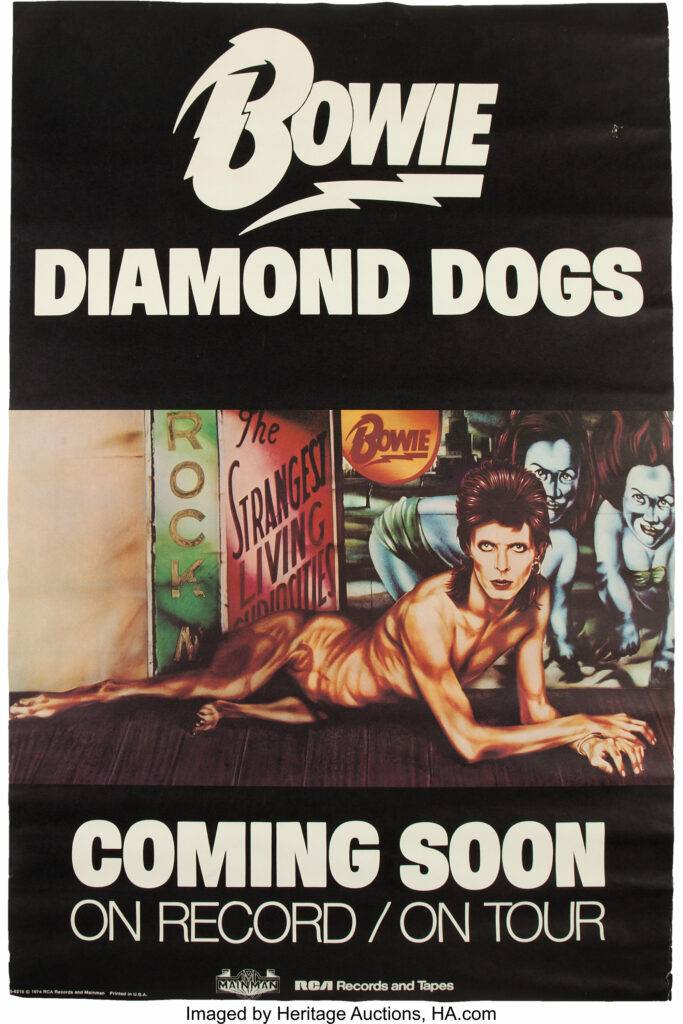
Diamond Dogs script. Some memorabilia in Moonage Daydream flashes by so quickly you barely have time for it to register. One such piece is a script for a Diamond Dogs movie. Diamond Dogs, of course, was a big 1974 hit album for Bowie, but no movie was or has been made based on it.

While details on a Diamond Dogs film aren’t abundant, a post at https://www.davidbowienews.com/2021/03/david-bowie-diamond-dogs-an-unfinished-film/ has some. Diamond Dogs grew out of a stage adaptation Bowie hoped to make of 1984. George Orwell’s widow didn’t give him the rights, but songs that might have been involved (most obviously “1984”) evolved, at least in part, into the Diamond Dogs album.

Bowie also wanted to have a television adaptation of 1984. When that wasn’t possible, he worked on a film that would have been produced in conjunction with the Diamond Dogs album. According to davidbowienews.com:

“Combining the influences of Orwell’s novel together with German expressionism and the silent movies The Cabinet of Dr CaligariMetropolis, and Tod Browning’s Freaks, Bowie had also planned a film to accompany the new album. The film was storyboarded in detail and character parts were written, to be played by Bowie himself, Iggy Pop, Lyndsey Kemp and Cyrinda Fox, among others.

In early 1974 and during his stay at New York’s Pierre Hotel, Bowie together with supervision from cameraman John Dove began work on a short demo video for the Diamond Dogs film. The demo video was shot with a single RCA video camera, and included very basic opening titles, simple special effects and superimposed scenes and figures using cardboard cutouts. Unfortunately the film project was never finished.”

Just a little more than a minute or so of demo footage can be seen on Youtube, some of it containing what looks like a credits sequence. It’s highly abstract and Bowie isn’t seen much. You can’t get much of a sense of what the film as a whole might have been, and note that the electronic-flavored music isn’t by Bowie. It’s unknown whether the music (by Erkki Kurenniemi) was intended for the original movie, though my guess is it wasn’t.

A bigger question is whether the Diamond Dogs script will ever be published for public reading. Even if it’s not that good, it would at the least make for interesting additional Bowie history. As an example for comparison, the seldom seen 1970 movie starring and co-directed by Jim Morrison, HWY: An American Pastoral, isn’t very good, but the shooting script (by Morrison) did make it into the recent book The Collected Works of Jim Morrison.

Diaries. Some other memorabilia briefly glimpsed in Moonage Daydream include a page, or pages, from a diary. This material shoots by so fast that it’s hard to say for certain when it’s from, let alone what it contains, at least until this is on home video and you might be able to decode such info from a freeze frame. My impression was that the shot or shots were from a diary around 1974.

Again, these would have valuable historical information if they’re ever published or accessible to the public. I’m reminded of how Martin Scorsese’s George Harrison documentary made fans aware that Harrison was keeping a diary in the late 1960s, though what entries have circulated are pretty mundane. Even for the day he (temporarily) quits the Beatles in January 10, 1969, he devotes three words to the incident: “Left the Beatles.”

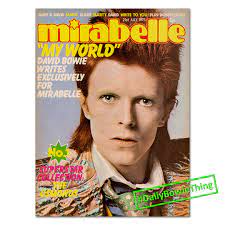
There were some diary entries of Bowie’s from 1973-1975 that were actually published in a British teen music magazine, Mirabelle. These can be seen on the bowiewonderworld.com site. It turns out, though, that they’re hardly useful items for Bowie biographers and researchers. In 1998, he admitted they were ghost-written by his American publicist, Cherry Vanilla. Presumably the diaries briefly seen in Moonage Daydream were legit.

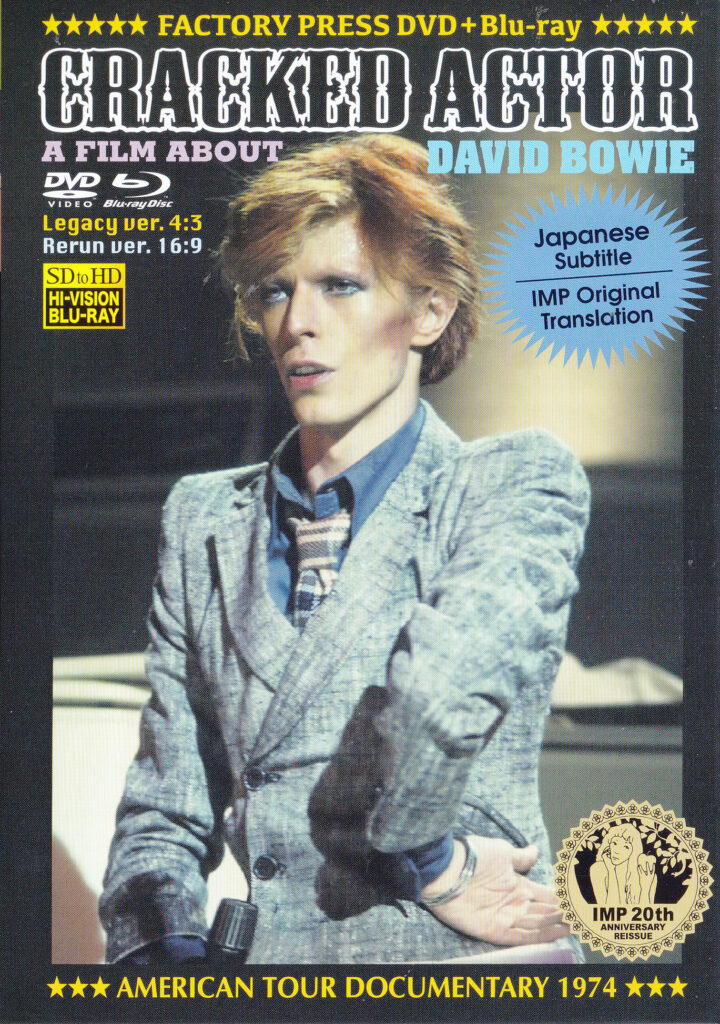
Cracked ActorFor a film that’s never been on home video, this hour-long 1974 BBC documentary is pretty well known. It’s not only for the concert footage from his US tour just after mid-1974, but also for quite a few backstage/offstage/interview sequences. There are some obvious similarities between how he acts and looks and his character in The Man Who Fell to Earth, made not long afterward. 

I actually don’t like it as much as many Bowie fans do. The concert performances and material are dimly lit and not-so-sensational. The offstage portions are often fragmentary and fairly unrevealing. Some parts of Cracked Actor do make it into Moonage Daydream for a wider and contemporary audience, however. While I can’t be entirely uncertain, footage of a live performance of “Rock and Roll with Me,” one of the better rare bits in Moonage Daydream, seems to come from the pool of footage shot for Cracked Actor, and has not circulated before to my knowledge.

Cracked Actor hasn’t been all that hard to see. Unauthorized copies have circulated for a long time, and clips show up on Youtube. When I’ve seen the material in this form, however, it’s had subpar sound and image quality. There’s an obvious market for an official, cleaned-up edition of the documentary, with some bonus footage, on the reasonable assumption some exists. It’s not clear why this hasn’t happened, though at a guess there could well be rights issues and legal obstacles involved.

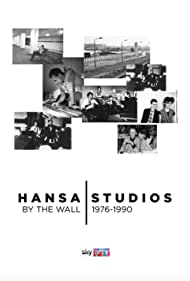
Hansa Studios. Speaking of documentaries that aren’t as accessible as they could be, there’s a 2018 one on the studios where Bowie worked in the late 1970s in Berlin. Titled Hansa Studios: By the Wall 1976-90, it was broadcast on the British Sky Arts television channel, and given a positive review in The Guardian. Although Hansa’s most known for its Bowie association, other acts who made a mark recorded there, including Wire, the Birthday Party, and U2.

There are some still photos of Bowie working in Hansa in Moonage Daydream, but not much specific commentary on what he did there (and the film doesn’t have that much specific commentary on what Bowie did in general throughout his career). This would make the Hansa Studios valuable viewing, but I only know a couple people in the US who’ve managed to see it. It doesn’t seem available to stream or to buy as a DVD or Blu-ray, and it’s been four years since its Sky Arts broadcast. Why isn’t it accessible?